Showing posts with label Cars 2012. Show all posts

20 Nov 2011

2012 Audi A4 Avant Wagon

2012 Audi A4 Avant Wagon
Basic Specs
City (MPG) : 21/Hwy (MPG) :29  Horsepower : 211@4300-6000  Torque (lb-ft) : 258@1500-4200

Audi took the wraps off its redesigned A4 Avant station wagon for the latest model year. Based directly on the new A4 Sedan, the Avant model is larger and more advanced than its predecessor.
Compared to the old model, the proportions have been adjusted noticeably. The front overhang has been shortened, and the hood and the wheelbase have gained considerably in length. The newly developed five-link front axle has been shifted farther forward. This ensures that the axle loads are better distributed, thereby improving handling.
The new A4 Avant measures 15.42 feet in length, 4.72 inches longer than the previous model. The body structure is considerably more rigid and stronger, yet is around 10 percent lighter at the same time.
Visually, the Avant is very similar to the new Sedan. The flat D-pillars create a more dynamic silhouette than those of past A4 wagons. The new A4 Avant will roll off the production line on 16 inch and 17 inch alloy wheels.
As with the sedan, the interior is all-new, featuring more legroom, improved materials, and more comfort overall. The driver-oriented cockpit borrows many features from the larger A8, Audi says. Thanks to the new electro-mechanical parking brake, the manual parking brake was no longer necessary, creating more space in the center console area.
Audi claims a maximum storage space of 50.50 cubic feet is the largest luggage capacity in the wagon's competitive field. The 60/40 split-fold rear seats also come with the option of a load-through hatch with separate ski and snowboard bag.
2012 Audi A4 Avant Wagon interior
Engine
While Europe will get the Avant with a choice of three diesel engine and two gasoline ones, Audi says the sole engine for North America will be a new turbocharged four-cylinder.
Gone are the multiple engine offerings, and in place of six and four-cylinder offerings is a single, 2.0-liter TFSI engine. This turbocharged four-cylinder engine is good for an impressive 211 horsepower from 4,300 to 6,000 rpm, and 258 lb-ft of torque from 1,500 to 4,200 rpm.
For the A4 Avant, the only transmission choice is the Tiptronic eight-speed transmission, rated at 21 city, 29 highway miles per gallon. This model is only available with quattro all-wheel drive.
Safety
Collision safety is improved by a combination of adaptive airbags, belt tensioners with variable belt force limiters and seat position sensors on the front seats to best protect occupants. In case of a rear-end collision, the backs of the front seats and the head rests support the upper body.
An electronic stabilization program (ESP) is standard, and can be partially switched off when driving under 44 mph. A new variable steering ratio system adjusts by nearly 100 percent depending on the speed driven.

High-tech features
Optional high-tech systems include the Audi parking system (a parking aid; standard for the A4 Avant Ambiente), Audi lane assist (the lane departure warning system) and Audi side assist (which warns of hazards when changing lane). Adaptive cruise control maintains the distance to the vehicle in front.
The Audi Music Interface (AMI) allows iPods and similar devices to be connected. The navigation systems with MMI Basic plus or with DVD including MMI are also further upgrade options. They permit the integration of cell phones as Bluetooth car phones and are combined with the MMI operating system. A high-performance Bang & Olufsen audio system is available with a 505 watt, ten-channel amplifier that controls 14 speakers.

Packages
The new Audi A4 Avant will roll off the production line in the Attraction, Ambition, and Ambiente equipment lines. The dynamic S line offers the options of an exterior package and a sports package. The range of options includes luxury-class features such as air-conditioned comfort seats, the triple-zone climate control system, the advanced key which allows keyless access to the vehicle and vehicle start-up at the press of a button, and the dynamic cornering light system known as adaptive light. The large panoramic glass sunroof lights up the interior.

WATCH VIDEO

»»  read more

10 Nov 2011

2012 Aston Martin Virage/Review

2012 Aston Martin Virage
One of Aston Martin's endearing traits has been its ability to make more from less -- especially when it comes to its VH (Vertical/Horizontal) platform strategy that uses basically the same chassis bits to produce all its cars from the V8 Vantage up through the four-door Rapide.
With the introduction of the 2012 Aston Martin Virage, the British sports car maker now offers three distinct V-12 models on the same 107.9-inch wheelbase and positions the car as a way for customers to split the difference between the sporty DB9 and the sportier DBS. Or better yet, the new lineup should be described as sporty (DB9), sportier (Virage), sportiest (DBS).
There is much of the Virage besides its name that is shared with the DB9 and DBS, which starts with the same 6.0-liter V-12 engine. This front mid-mounted powerplant produces 490 bhp and 420 lb.-ft. of torque. Like the DB9, it's mated to a Touchtronic 2 six-speed ZF automatic gearbox with a paddle-shift feature that gives rev-matched downshifts. The DBS differs in that it offers only a six-speed manual. With a similar curb weight and dimensions, the Virage offers comparable performance to that of the DB9 with zero-to-62 mph acceleration of 4.6 sec. and a top speed of 186 mph.
2012 Aston Martin Virage interior
The Virage is offered as a 2+2 coupe, with a rear-seat delete option. The Volante (convertible) variant is only a two-seater. In splitting the difference between DB9 and DBS, Aston offers a number of standard features such as a new Adaptive Damping System that has five stiffness settings in the normal mode and five settings within the stiffer sport mode. The system automatically reacts to road irregularities to provide optimum levels of ride and handling. Also standard on the Virage are carbon ceramic disc brakes.
Sharper Styling
While the silhouette of the Virage is pure Aston Martin, changes to the front clip give the car a more aggressive and finely chiseled look. According to Marek Reichmann, Aston's director of design, "We have sculpted a new face which sharpens and refines the Virage, whilst still being instantly recognizable as a pure Aston Martin sports car. The whole car looks as if it were precision machined from a single billet of aluminum, emphasizing the attention to detail and exquisite surface language."
2012 Aston Martin Virage back view
Contributing to this new look is a new grille inspired by the One-77 supercar. The opening is divided by five horizontal chambered vanes that give the Virage a shark-nose appearance. The minimalist front bumper is offset by small winglets in the fascia that sweep rearward and has its line picked up by the car's rocker extensions. The signature vent in the front fenders has also been redesigned to incorporate six LED side marker lights. The new front end is further enhanced by the use of a new single lens bi-Xenon projector beam lights. The new headlamp bezels also include an LED light bar along the side which adds to the carís subtle, yet distinctive look.
New 20-inch 10-spoke alloy wheels are also unique to the Virage, which also offers customers the option of color coordinating the brake calipers to the car's exterior paint scheme. The calipers can be ordered in a choice of black, gray, red or yellow.Production of the 2012 Aston Martin Virage has already begun with pricing expected to be between the $180,000 DB9 and $266,000 DBS.
Watch Video Review
»»  read more

4 Nov 2011

2012 Toyota Camry Hybrid /Review

MSRP: $25,900 to $27,400
Invoice Price: $23,829 to $25,208
EPA Fuel Economy (MPG): 41 - 43 City/38 - 39 Highway

Redesigned for 2012, the Camry Hybrid is the greener version of America’s best-selling mid-size sedan. If you’re looking for a vehicle with a comfortable interior, adequate power, and extraordinary gas mileage, the Camry Hybrid should be on your short list.
One of the major improvements for the Camry Hybrid has been an upgrade to its Hybrid Synergy Drive system. Electric motor output has grown substantially from 30kW up to 105kW, while the gasoline engine gets a bump from 2.4- to 2.5-liters and now outputs 156-horsepower from its four cylinders. Total system output is rated at 200-horsepower combined. The power is routed through a continuously variable transmission to the front wheels. The battery pack has increased in voltage (now rated at 245 volt battery pack) while decreasing in size which allows trunk space to increase to 13.1 cubic feet.
Fuel economy has gone up significantly from last year’s model (which was rated at 31 mpg/city and 35 mpg/highway). EPA ratings now place the Camry Hybrid at 43 mpg in the city and 39 mpg on the highway with a combined 41 mpg rating, which brings the Camry Hybrid to the front of the pack for fuel economy, besting cars like the Ford Fusion Hybrid and Hyundai Sonata Hybrid. This was accomplished by changes to the hybrid system, a weight reduction of about 250 pounds, adding lower rolling resistance tires, and creating a more aerodynamic shape. Toyota also offers Eco and EV driving modes on its hybrid. Eco mode maximizes fuel economy across all driving conditions and the EV mode keeps the vehicle in electric drive as long as possible (up to 25 mph). And with a fuel range of greater than 650 miles per tank, you’ll be able to spend more time on the road and less filling up.
The interior has also been redesigned for 2012, and the Camry Hybrid adds its own unique three-gauge instrument cluster. Information presented includes a power-flow display which shows energy flow, cruising range, and real-time fuel economy. Included in the redesign are gains in the rear seat leg and hip room.
The Camry Hybrid comes in two trim levels: the nicely configured LE and the higher level XLE. The LE comes with a long list of standard features, including dual-zone automatic climate control, keyless entry and ignition, and USB/iPod and auxiliary audio input jacks. The XLE adds a leather wrapped steering wheel, eight-way power driver’s seat, and six-speaker Display Audio System with audio controls on the steering wheel. Further options include a sunroof, rearview camera, heated front seats, power passenger’s seat, navigation system, and an Entune System that integrates smartphone and web functions.
The Camry Hybrid comes with all the standard safety items we’ve come to expect from a Toyota.  Toyota’s Star Safety System integrates stability control, anti-lock disc brakes and the traction control system. There are 10 airbags in the cabin, including driver and passenger front knee airbags, head-protecting curtain side airbags, and torso-protecting rear seat mounted outboard-side airbags. A blind-spot monitoring system is available as an option on the XLE.
The 2012 Toyota Camry Hybrid comes back with better fuel economy and a more comfortable cabin, which makes going green better than ever.
»»  read more

1 Nov 2011

2012 MINI Roadster unveiled

MINI has unveiled the final production version of its MINI Roadster which is set to join the company's rapidly-expanding lineup next year. Looking pretty similar to the Roadster concept unveiled alongside the MINI Coupe concept at the 2009 Frankfurt Motor Show, the sixth model to join the current MINI line-up is the first open-top two-seater in the company's history. It features a manually-opening soft-top roof and will be offered in four different engine variants.
The MINI Roadster stands more than 20 mm (0.78 in) lower than the MINI Convertible and features a more steeply raked windshield. A low center of gravity, torsionally rigid body and optimized aerodynamic performance combine to give the vehicle what MINI calls a "full-blooded go-kart feeling."
There's stowage room behind the driver and passenger seats and a through-loading system and 240-liter (63.4 US gal) luggage area with wide-opening tailgate for easier loading. MINI also offers an optional wind protection insert between the polished stainless steel roll-over bars.
Like the Coupe, the Roadster is based on the current MINI hatchback so shares similar dimensions. The base Roadster model measures 3,728 mm (146.77 in) long, 1,683 mm (66.25 in) wide, and 1,384 mm (54.48 in) high, with a wheelbase of 2,467 mm (97.12 in). The SD and S Roadsters are slightly longer and higher at 3,734 mm (147 in) and 1,390 mm (54.72 in) respectively, while the aerodynamic kit found on the John Cooper Works model results in a length of 3,758 mm (147.95 in) and height of 1391 mm (54.76 in).
All models come with electric power steering, Dynamic Stability Control (DSC), electrically adjustable exterior mirrors, Park Distance Control, speed-sensitive steering assistance and an active rear spoiler that extends automatically at 80 km/h (50 mph) as standard, with all but the base model also coming with air conditioning. Dynamic Traction Control (DTC) with Electronic Differential Lock Control (EDLC) is standard on the John Cooper Works model and available as an option on other models.
Other options include black headlight housings, xenon Adaptive headlights, automatic climate control, Harman Kardon hi-fi speaker system, MINI navigation system, and MINI Connected features, such as web radio, Google services, RSS news feeds, Mission Control and in-car use of Facebook and Twitter.
»»  read more

22 Oct 2011

2012 Lincoln MKT


Pricing : $44,300 to $46,295 MSRP/$41,674 to $43,529 Invoice Price
EPA Fuel Economy (MPG):16 - 17 City/22 - 24 Highway

With seating for up to seven people, the MKT full-size crossover shares its platform with the Ford Flex, but it has significantly different exterior styling and a more luxurious interior befitting its starting price of more than $40,000. The MKT is available with front- or all-wheel drive and is offered with a choice of V-6 engines. Competitors include the Buick Enclave and Acura MDX.
New for 2012
The price of the EcoBoost V-6 model has been lowered by approximately $3,000. Order combinations have also been simplified; otherwise there are no significant changes for 2012.
Exterior
While the Flex is all angles and flat surfaces, the MKT features a flowing design. The MKT has a version of Lincoln's toothy chrome grille that dominates its face, much like the grille on the MKS luxury sedan does. The MKT's rear sports a distinctive liftgate that incorporates large horizontal brake lights that p its width. Exterior features include:
•    Standard adaptive xenon high-intensity-discharge headlights
•    Keypad entry
•    Standard 19-inch aluminum wheels
•    Optional 20-inch aluminum rims
•    Standard two-panel moonroof
Interior
The MKT's interior is a big step up for the brand in terms of materials quality. The use of soft-touch dashboard materials and an intricately designed gauge cluster contribute to the luxurious space. Leather-covered seats are standard.
The seven-person seating configuration features front bucket seats, a second-row bench seat and a two-person third row. Available bucket seats for the second row drop seating capacity to six. A refrigerated center console that goes between the seats is optional.
The second row has ample legroom and comfortable seats. The third row, meanwhile, suffers from a lack of headroom that makes it impossible for tall passengers to sit with their heads upright. The MKT's sleeker styling is likely to blame, as third-row headroom in the Flex is fine. Standard interior features include:
•    Power-adjustable pedals
•    Sync communication system
•    MyKey programmable system
•    Heated and cooled front seats
•    Power tilt/telescoping steering wheel
Under the Hood
MKT buyers have a choice of two V-6 engines. The base 3.7-liter V-6 produces 268 horsepower and teams with a six-speed automatic transmission. The optional EcoBoost V-6 is slightly smaller — 3.5 liters — but makes significantly more power (355 hp) thanks to direct fuel injection and two turbochargers. It also drives a six-speed automatic. In both instances, the MKT comes with steering-wheel-mounted paddle shifters for driver-initiated gear changes. Mechanical features include:
•    268-hp, 3.7-liter V-6 available with front-wheel drive
•    355-hp, turbocharged 3.5-liter EcoBoost V-6 available with all-wheel drive
•    4,500-pound towing capacity with Class III trailer hitch
Safety
The MKT is available with Collision Warning with Brake Support, which can alert the driver to vehicles ahead and ready the brakes. An optional blind spot warning system is also available. Standard safety features include:
•    Antilock brakes
•    Side-impact airbags for the front seats
•    Side curtain airbags for all three rows
•    Electronic stability system with Roll Stability Control
•    Rear parking sensors and a backup camera
»»  read more

15 Oct 2011

2012 Volkswagen GTI/Review

Pricing  $23,695 to $30,535 MSRP/$22,747 to $29,313 Invoice Price
EPA Fuel Economy (MPG): 21 City/31 Highway
Overview
The Volkswagen GTI is a high-performance sibling of the Golf. It comes as a two- or four-door hatchback, both with an optional Autobahn Package that consists mostly of interior upgrades. The GTI seats five and competitors include the Mazdaspeed3, Subaru Impreza WRX and Mini Cooper S.
New for 2012
LED daytime running lights are newly available for 2012, but little else of significance has changed.
Exterior
The GTI is based on the VW Golf, and both received new exterior styling a few years ago that made them more angular and menacing. The GTI has some unique features, including a thin, blackened honeycomb grille with two red outlining stripes; different front and rear bumpers; side skirts; and GTI badging. It also rides slightly lower than the Golf. Exterior features include:
•    Standard 18-inch alloy wheels
•    Dual tailpipes
•    Optional xenon high-intensity-discharge headlights
Interior
The GTI can seat up to five. Bolstered, ribbed sport seats are standard in front, and there's a 60/40-split bench in the rear. Seating surfaces have a retro plaid design — VW calls it "Interlagos" — on the cloth trim; both front seats employ seat heaters and seat-height adjusters. Leather upholstery is optional.
Interior features include:
•    Standard leather-wrapped steering wheel and gearshift
•    Standard power windows, locks and side mirrors with keyless entry
•    Standard air conditioning and cruise control
•    Standard height-adjustable, heated front seats
•    Standard USB/iPod-compatible stereo
•    Optional steering-wheel audio controls, upgraded touch-screen stereo, navigation system and moonroof
•    Autobahn Package adds all above options and a Dynaudio premium stereo, leather upholstery and a keyless access system with remote start
Under the Hood
A turbocharged 2.0-liter four-cylinder is standard. With either the manual or automatic transmission, the front-wheel-drive GTI can hit 60 mph in less than 7 seconds, Volkswagen says. Mechanical features include:
•    200 horsepower and 207 pounds-feet of torque
•    Six-speed manual or six-speed dual-clutch automatic
•    Electronic limited-slip control system helps control wheelspin during sharp turns

Safety
Standard safety features include:
•    Antilock brakes
•    Traction control and electronic stability system
•    Front-seat side-impact and side curtain airbags
»»  read more

20 Sept 2011

2012 Dodge Charger SRT8/ Review

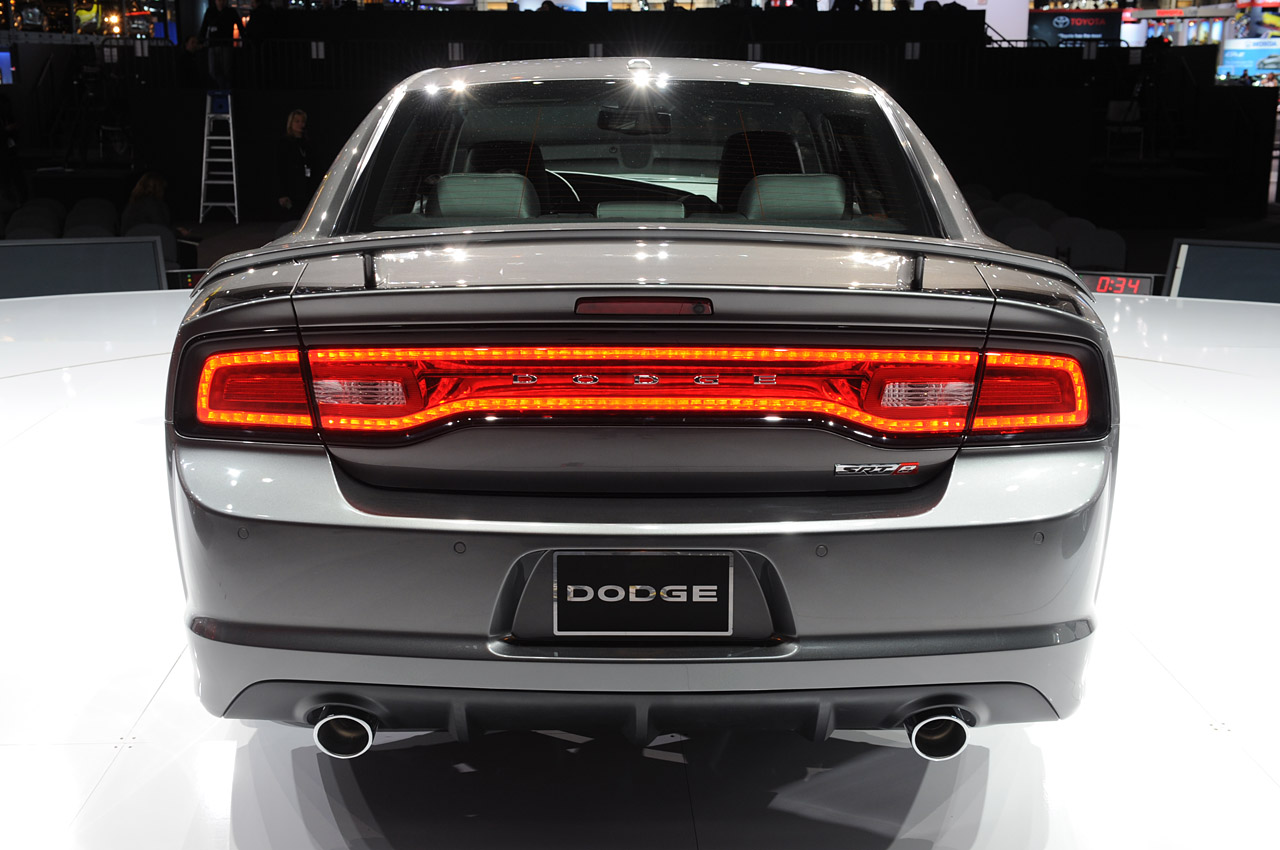
Ralph Gilles, SRT brand president and CEO, calls the Dodge Charger SRT8 the extrovert of the 2012 SRT8 class--and with good reason. The aggressive SRT exterior treatment includes a gloss black grille, sculpted hood with black air exhauster, rear spoiler and dual four-inch exhaust tips make the car look menacing.
But with any SRT vehicles, it begins with the engine. A new 6.4-liter Hemi V8 powers the menacing sedan, replacing the previous 6.1-liter Hemi V8. With a total of 470-hp and 470 lb-ft of torque on tap, it provides and additional 45 hp and 50 lb-ft of torque over the old powerplant. Power is up, but fuel efficiency also improves with a new active valve exhaust system (as found all 2012 SRT8 models) to allow the Hemi to operate in four-cylinder mode over a wider rpm range. Bolted to the V8 is the tried and true five-speed automatic with manual shift function.
On the suspension front, 2012 marks the additional of a new adaptive damping suspension offering two modes: auto and sport. Auto monitors speed, steering angle, brake torque, throttle and acceleration and adjusts damping accordingly, while sport locks in a stiffer, track-ready setup.
SRT partner, Brembo, provides four-pot brakes at all corners, with the entire package riding on 20-inch, split five-spoke forged wheels with black painted pockets.
Touches in the cabin included the leather-wrapped, flat-bottom SRT steering wheel with paddle shifters, aluminum interior trim and heavily bolstered SRT front bucket seats. An updated Performance Pages readout can be seen on the standard 8.4-inch color touchscreen, which has been upgraded to include steering angle, horsepower and torque outputs and various gauges.

While the Charger SRT8's suspension tuning isn't as aggressive as the Challenger's, it still helped the Charger blaze around California's Willow Springs Raceway with little trouble. In corners, the car stays natural and easily sticks to your desired line and is never a handful. As in the 300 SRT8, with sport mode engaged, the traction aids allow for a good amount of slip before cutting in to kill the party. There's very little roll to speak of in turns, and the Hemi V8 brings plenty of power. Upshifts from the five-speed autobox were quick while using the paddles, but again, the transmission suffers from harsh downshifts without rev matching capabilities. Steering weight is also on the light side. As expected, the Brembo brakes were up to task, easily slowed things down and were good throughout the hot day.
On the road, the Charger SRT8 is quiet and rolls down the ride comfortably. Even in sport mode, the suspension isn't overly harsh with only bigger road hazards able to jolt occupants. In auto, it's even more comfortable.

If you like standout styling and horsepower (and who doesn't?) then yes, the Charger should be your SRT8 of choice. The variable damping suspension opens the SRT8 vehicles up to a broader audience, while keeping the hardcore enthusiast happy. The new Hemi V8 still sounds the part under wide-open throttle, but is quiet and docile when you're idling around town.
Now if SRT figures out a way to add rev matching to the transmission and tune in a little more weight into the steering, it would really have a winner on its hands.

2012 Dodge Charger SRT8
Base Price: $48,000 (est)
Drivetrain: 6.4-liter 470-hp, 470 lb-ft V8; five-speed automatic
Curb Weight: 4,365 lb
0-60 mph: 4.8 sec (est)
Fuel Economy (EPA): 16 mpg (est)
»»  read more

14 Sept 2011

2012 Scion iQ/Review

Driving Performance of a Larger Car
With a 78.7-inch wheelbase and a unique suspension design - consisting of MacPherson struts up front, and a compact torsion beam rear suspension - the three-door hatchback can deftly maneuver through city traffic. In addition, its overall length of only 120.1-inches, and short front and rear overhangs allows the Scion iQ to fit into virtually any urban parking scenario. Although short in length, the iQ has a wide stance at 66.1-inches, giving it a confident stance that handles like a much larger car.
Smooth Drivetrain and Better Fuel Efficiency
The 2012 Scion iQ is equipped with a 1.3-liter, four-cylinder engine that produces 94 horsepower and 89 lb.-ft of torque. It features the latest dual VVT-i, which allows the engine to be efficient, providing a broader powerband yet requiring less fuel and generating fewer emissions.
The engine is paired with a Continuously Variable Transmission (CVT) that helps deliver smooth acceleration and excellent fuel efficiency. The iQ is rated an Ultra Low Emission Vehicle (ULEV-II) and achieves an EPA-estimated combined fuel economy rating of 37 miles per gallon, comparable to similar vehicles of its size.
Small in Size but Big on Safety
In order to be considered a premium micro-subcompact, the Scion iQ comes standard with safety features that drivers expect and demand. The iQ is packed with an industry leading 11 standard airbags, including the world's first rear window airbag. Other airbags include driver- and front-passenger airbags; driver- and front-passenger seatmounted side airbags; side curtain airbags; driver- and front-passenger knee airbags; and a Scion-first driver- and front-passenger seat-cushion airbags.
All iQs will come standard with the Star Safety System, which includes antilock Brakes (ABS), Electronic Brake-force Distribution (EBD), Brake Assist (BA), Traction Control (TRAC), Vehicle Stability Control (VSC) and Smart Stop Technology brake-override. A tire-pressure monitoring system is also standard equipment.
Iconic Styling
The iQ's profile, defined by a strong and high beltline, glides from the large, stout headlamps, up the A-pillar, across the roof and wraps around the rear, emphasizing the iQ's geometric shape. Side mirrors with integrated turn signals accent the clean design and give it a premium look.
The rear emphasizes the vehicle's modern style. Trapezoidal lines run toward the wheels, from the hatch to the bumper's rear diffuser-like accent, creating a substantial presence.
The iQ will be available in seven exterior colors, including Blizzard Pearl, Classic Silver Metallic, Magnetic Gray Metallic, Black Sand Pearl, Hot Lava, Pacific Blue Metallic and Black Currant Metallic.
High-Tech Interior
The iQ's functional "3+1" seating equates to the world's smallest four-passenger vehicle. The four-seat configuration is made possible because the driver and frontpassenger seats are slightly off set.
The rear seats are extremely versatile, featuring a 50/50 split and the ability to fold flat, creating enough storage to accommodate large suitcases. The iQ comes standard with a leather-wrapped steering wheel with red stitching, and features a flat bottom that provides additional thigh room. The steering wheel incorporates audio controls to manage the iQ's impressive sound system.
The Scion iQ comes standard with a Scion Drive Monitor that displays information like outside temperature, average MPG and an ECO-drive indicator that helps the driver maximize the iQ's fuel efficiency.

Impressive Audio with Standard Bluetooth® and HD Radio™ Technology
The iQ truly focuses on youth with its all-new standard AM/FM/CD/HD/USB 160-watt maximum output Pioneer™ audio system. Standard features for all 2012 Scions include Bluetooth connectivity, which allows both hands-free phone connection and streaming audio capability, and HD Radio technology. Streaming audio allows compatible phone or personal media devices to pair with the audio system and deliver music through the vehicles sound system. The audio system also features an organic electroluminescent (OEL) screen with a personalized welcome screen, iPod®/USB connectivity, Advanced Sound Retriever (ASR), and a subwoofer RCA output. The USB port and universal auxiliary (AUX) port are located on the center console, which allows users to listen to their portable music collection through the iQ's four Pioneer speakers.
The optional 200-watt maximum output Pioneer Premium audio system has the same features as the standard Pioneer audio, but it is enhanced with a 5.8-inch LCD touch-screen display, features iTunes® tagging, Pandora® internet radio connected through iPhone
 This 2011 Kia Optima hybrid is a heck of a good car--period. I would argue that it's one of the best hybrids on the market because it's the total package. It looks good. It drives with some panache, and it feels like a real car. That's important in 2011. People want automobiles that drive normally and have function, and this Kia has that in spades.
A Scion Navigation audio system is also available for urban drivers who would like the added convenience of easily finding their way around the city. The 200-watt SNS 200 system has all of the features of the standard and premium audio systems but it adds a navigation system and DVD player that are accessible through an easy-to-use seven-inch touch-screen LCD display. Navigation functions include a Global Positioning Satellite (GPS) system with comprehensive U.S. and Canada map coverage, plus guidance to millions of points of interest.
All three of the audio systems retain key Scion audio system features such as Scion Sound Processing® (SSP), where listeners can choose from three pre-set equalizer settings, satellite radio compatibility and MP3 and WMA capability. In addition, all units have the capability to adjust the volume control based on driving speed.
Pricing
The 2012 Scion iQ will begin arriving at dealerships on the west coast starting this October. The car will be available in other regions of the country beginning in early 2012. The Manufacturer's Suggested Retail Price (MSRP) for the 2012 Scion iQ is $15,265. The delivery, processing and handling (DPH) fee for all Scion models is $730 and is not included in the MSRP. DPH fee for vehicles distributed by Southeast Toyota (SET) and Gulf States Toyota (GST) may vary.
»»  read more

11 Sept 2011

2012 Volvo C30 /Review

With the C30, Volvo made its debut in the segment for two-door premium cars. The sporty design, with two doors, four individual seats, and a glass tailgate, gives a young and dynamic group of customers "a Volvo of their own".
The C30 personality has been boosted with a new, confident front, a bold styling kit for those who want even more attitude - and a new razor-sharp sports chassis.
EXTERIOR
The Volvo C30 displays clear elements of other classic Volvo models with a sporty pedigree, such as the Volvo 1800 ES. Anyone who recalls the acclaimed Volvo SCC (Safety Concept Car) will recognise the exclusive and convenient glass tailgate.
The grille has a unique pattern with the enlarged iron mark in the centre. The air intake resembles that of the XC60. Viewed from the side, the pronounced wheel housings and the sloping roof give the C30 a fast silhouette that is further enhanced by the markedly boat-shaped side windows. This has been created through the narrowing roof and the wide shoulders. The shoulders at the rear are powerfully rounded and accentuated by both the horseshoe-shaped lighting pattern of the tail lamps and the glass tailgate.
INTERIOR
Four-seater with iconic centre stack
The C30 has room for four adults thanks to the two separate seats in the rear, with generous head- and legroom. The rear seats are slightly centred to provide a feeling of space and a good forward view. It also makes communication between front and rear occupants much easier.
The space between the seats also makes the thin, visually floating centre stack clearly visible from the outside through the glass tailgate.
The interior is inspired by Scandinavian product design with the emphasis on uncluttered surfaces, honest materials and functionality.
Guitar-inspired centre stack
Volvo's ultra-thin centre stack is available in a Oyster Burst Déco version, inspired by the surface texture of the classic Swedish Hagström guitars that became world-famous in the hands of stars such as Elvis Presley back in the 1950s.
The centre stack's floating theme flows smoothly with similar elegant soft curves all the way to the rear seat. The storage space between the seats has also been designed with the help of Scandinavian design tradition's most renowned hallmark - smart functionality.
The sliding cover over the larger storage compartments, in which there are also two holders that provide secure support for large and small cups, is complemented by a flexible armrest for the driver.
Audio and information
The Volvo C30 can be equipped with Bluetooth® technology that enables wireless communication. The Bluetooth connection has been upgraded to allow not only hands-free phone conversations but also music streaming from your preferred Bluetooth enabled portable music player. Volvo is actually the only brand to offer Bluetooth music streaming throughout the entire vehicle range.
The High Performance and Premium Sound systems have a USB port, making it easy to attach an iPod® or other MP3 player or even a digital camera to the audio system.
Keep in touch via mobile application
New is also a mobile application that makes sure that the driver can stay in touch with the parked car via an iPhone or Android smart phone. The mobile application is an extension of Volvo On Call, which is presently available in 12 European countries plus Russia and Brazil.
Now, the system has been reinvented. Owners of all new Volvos from Model Year 2012 with Volvo On Call can download the new application that opens up a range of connectivity possibilities. The mobile app is free and downloaded via the iPhone and Android application stores. The app is designed to offer the owner an intuitive, easy-to-use relationship with the car from a distance.
CHASSIS
Thanks to its small size, the Volvo C30 is very nimble to handle, even in limited space. It is built according to the same principles as the rest of the cars in the Volvo range.
A very torsionally rigid body, a wide track and a relatively long wheelbase all help give it responsive and stable driving characteristics.
The chassis, with spring struts at the front and Multilink axle at the rear, is set up for controlled, reassuring driving manners and alert steering response. The Multilink rear axle is an independent rear suspension system featuring a number of links and it is designed to offer a good combination of controlled wheel movements and a high level of ride comfort.
DSTC standard
Volvo's advanced DSTC (Dynamic Stability and Traction Control) stability-enhancing system is fitted as standard. DSTC intervenes and helps stabilise the car if it registers any tendency to skid.
Optional sports chassis
The optional sports chassis (also available together with R-Design) has been modified in several areas. The steering is more precise owing to the installation of stiffer bushings. The steering ratio is lower, giving 10 percent faster response to steering wheel input. Spring stiffness has been increased by no less than 30 percent in order to improve the car's poise in enthusiastic driving. The dampers are also stiffer and the exclusive mono-tube technology builds up pressure much more quickly. The roll stabilizers are stiffer to reduce any leaning tendency when cornering.
The new sports chassis makes the C30 a better-balanced and more agile car. Road contact is more distinct and feedback from the wheels is faster and clearer, promoting a more alert feeling while driving. This is something that also benefits safety.
DRIVELINE
Transverse engines
The engines in the Volvo C30 are transversely installed in-line units. Together with large displacement, the five-cylinder configuration provides high torque across a broad rev band, and thus also swift acceleration and excellent driveability within a wide speed range. Four-cylinder engines are also available.
T5 with 230 hp The Volvo C30 T5 is the top model, featuring a turbocharger and five-speed automatic transmission or a six-speed manual gearbox. It produces 230 hp and 320 Nm of torque.
Other petrol engine versions are also available, as well as a 2.0-litre bio-ethanol Flexifuel variant on certain markets.
2-litre diesel The five-cylinder 2-litre turbodiesel introduced in the all-new Volvo S60 is now available throughout Volvo Cars' model range. The five-cylinder D3 is in principle the same engine as the well-established 2.4-litre diesel, but its displacement has been reduced with a shorter stroke to optimise fuel consumption. The engine has been optimised for low fuel consumption and the injection system has a different type of piezoelectric fuel injector compared with the D5 engine. These injectors minimise consumption with exceptionally rapid and precise injection pulses under high pressure. This promotes extremely efficient combustion.
In the Volvo C30 the 2-litre turbodiesel is available in two variants:
D4 with 177 hp and 400 Nm of torque.
D3 with 150 hp and 350 Nm of torque.
Both the D3 and D4 meet the Euro 5 emission standards. All the variants of the two-litre turbodiesel can be specified with a six-speed automatic transmission or six-speed manual gearbox.
D2 with 114 g CO2 emissions
The S40 is in addition available with the 1.6-litre D2 diesel engine, which also complies with the Euro 5 standards. Fuel consumption is 4.3l/100 km (EU Combined), which corresponds to CO2 emissions of 114 g/km.
The engine produces 115 hp and 270 Nm of torque and now comes with a six-speed manual gearbox.
DRIVe with 99 g CO2 emissions
The can also get the upgraded 1.6-litre diesel engine that meets the Euro 5 exhaust emission regulations being implemented in January 2011. The further-developed engine combined with a six-speed manual gearbox and start/stop function keep CO2 emissions down to 99 g/km.
SAFETY AND SUPPORT
IDIS promotes safer driving
Volvo Cars has developed various information systems and functions designed to help the driver while on the move. One such system is IDIS (Intelligent Driver Information System), which for instance delays incoming phone calls in complex traffic situations that require the driver's undivided attention.
Systematic safety approach
Protective safety in the Volvo C30 is structured around a network consisting of exterior and interior safety systems that interact with one another to reduce the risk of occupant injury in a collision.
The body of the Volvo C30 features immense torsional rigidity and the car has a sturdy chassis, a combination that results in consistent, predictable behaviour on the road.
Incoming collision forces are distributed so the passenger compartment remains as intact and undamaged as possible. The car's body is therefore built in the form of a metal cage made from different grades of steel, where all the components interact with one another to ensure controlled deformation.
»»  read more

7 Sept 2011

2012 Hyundai Veloster/Review

Hyundai introduced its cutting-edge Hyundai Veloster three-door coupe in a world debut at the 2011 North American International Auto Show. The 2012 Veloster delivers innovation to the compact coupe segment with a unique third door for easy rear-seat access, Hyundai's Blue Link telematics system, Pandora internet radio with seven-inch touch-screen display, and a new 1.6-liter direct-injected four-cylinder engine mated to Hyundai's first dual-clutch transmission.
MOTORCYCLE INSPIRATION
Hyundai Veloster's unique design takes inspiration from a high-performance sport bike. Veloster has distinctive black A-pillars that give the glass a motorcycle helmet visor appearance. In the front is an aggressive form of Hyundai's signature hexagonal front grille, hood scoop detailing, and unique Hyundai-signature LED position lights. Optional packages add a chrome grille surround, piano black highlights, fog lights, and a massive panoramic sunroof.
In profile the Hyundai Veloster features "Fluidic Sculpture" character lines, muscular wheel arches, bodycolor door handles and mirrors, and wraparound headlights and taillights. Hyundai Veloster comes standard with 17-inch alloy wheels and offers two types of 18-inch wheels. The top-of-the-line 18-inch wheel comes with painted inserts, a segment first.
Hyundai Veloster's dynamic rear design has a distinctive glass hatch, dual centered chrome exhaust tips and black lower fascia that complements the assertive front fascia.
Inside, the center stack and controls resemble a sport bike fuel tank and incorporate an available push-button starter. The air vents are inspired by motorcycle tailpipes, while the floor console mirrors the seat of a bike. Metallic accents abound throughout the interior. Alloy pedals and a leather wrapped steering wheel and shift knob are also available.
THE THIRD DOOR
Hyundai Veloster combines the style of a coupe and the functionality of a hatchback, while also incorporating an additional passenger-side door. In the past, some coupes have used smaller rear-hinged access doors. These coupes have always been compromised by having to open the driver-side door before the rear door could be opened, proving to be inconvenient for both the driver and passenger, and extremely difficult to operate in tight parking lot situations. Hyundai's fresh take here implements a conventionally hinged door on the passenger side of the Hyundai Veloster, providing safe and ready access to the surprisingly spacious rear seats. The passenger-side rear door handle is hidden to maintain the coupe design.

GAMMA 1.6-LITER GDI ENGINE
The all-new Gamma 1.6-liter four-cylinder engine is the smallest Hyundai engine to use Gasoline Direct Injection (GDI). GDI technology helps deliver estimated highway fuel economy of up to 40 mpg, lower emissions and higher reliability.
"Gasoline-direct-injection technology allowed Hyundai engineers to create an engine that is powerful, fuel-efficient, and has fewer emissions," said Hyundai American Technical Center Inc. (HATCI) powertrain director, John Juriga. "Despite its small size, it generates some big numbers, with both impressive horsepower output and up to 40 mpg on the highway."
Through the use of GDI, the Gamma 1.6-liter engine delivers an estimated peak output of 138 horsepower at 6,300 rpm and maximum torque of 123 lb.-ft. at 4,850 rpm. But GDI is only part of the story as the new Gamma also features Dual Continuously Variable Valve Timing, an electronic throttle control, a roller timing chain, variable induction and innovative anti-friction coatings such as CrN Physical Vapor Deposition (PVD) coating and Diamond Like Carbon (DLC) coating.
NEW SIX-SPEED DUAL-CLUTCH TRANSMISSION
Hyundai's commitment to making the Gamma engine extremely fuel efficient continues by pairing it with a standard six-speed manual transmission or an all-new, six-speed dual-clutch transmission (DCT) developed by Hyundai.
Hyundai's new DCT takes the benefits of a manual transmission, including low fuel consumption and sporty driving, and blends them with automatic transmission benefits, such as high comfort levels and smooth shift quality. In addition, the DCT enables direct connection for high efficiency and uninterrupted torque transfer during shifts. Automatic transmissions lose power and fuel economy in the torque converter.
Other improvements of a DCT over a traditional automatic include a five to six percent improvement in fuel efficiency as well as a three to seven percent improvement in acceleration performance.
Hyundai Veloster's DCT can be thought of as two traditional manual transmissions, each with its own clutch operating in parallel and alternating shifts. Hyundai Veloster is a six-speed with one clutch acting on gears one, three and five and the other used for two, four, six and reverse. This shifting process results in quick smooth transitions with none of the efficiency loss normally associated with torque convertors. The clutch actuator assembly features electric motors for actuation, and an external damper improves NVH.
This powertrain also has an Active Eco mode which modifies engine and transmission control for improved fuel economy that translates into more than a seven percent improvement in real-world fuel economy.
WORLD-CLASS WEIGHT EFFICIENCY
World-class weight efficiency is a program target for all Hyundai models. This strategy delivers outstanding fuel economy and performance simultaneously. At just 2,584 pounds, Hyundai Veloster is more than 400 pounds lighter than the Scion tC. This priority on weight efficiency allows the Hyundai Veloster to deliver a great combination of agility, performance, and fuel efficiency.
ADVANCED STANDARD SAFETY TECHNOLOGIES
Veloster has an exceptional level of standard safety features for the sporty car segment. Hyundai Veloster has a Vehicle Stability Management (VSM) system which optimally manages ESC (Electronic Stability Control) and the Motor-Driven electric Power Steering (MDPS).
VSM works to control two effects. The first is when a driver accelerates or brakes on a split-mu surface (slippery on one side, dry pavement on the other) and the vehicle wants to pull in one direction. VSM detects this condition and sends a signal to the MDPS to apply steering assist. VSM counters the pull and automatically provides eight Newton meters of counter steering. VSM reacts the same way during sudden lane changes or fast cornering.
Hyundai Veloster features six airbags—including dual front, front seat-mounted side-impact, and front and rear side curtain airbags.
The Hyundai Veloster also features a state-of-the-art braking package. The package includes four-wheel disc brakes and an Anti-Lock Braking System (ABS) including Brake Assist, which provides maximum braking force when a panic stop is detected, and Electronic Brake-force Distribution (EBD), to automatically adjust the braking force to front and rear axles based on vehicle loading conditions.
CONNECTIVITY/TECHNOLOGY
In the digital age everyone wants to be connected to their electronics at all times, so Hyundai Veloster comes standard with a multifunction seven-inch touch-screen display. At engine start-up, the screen comes to life with a Hyundai Veloster image and a unique sound. There are three interface layouts the user can choose from.
Pandora internet radio is integrated into Hyundai Veloster. The display screen has a Pandora icon to stream internet radio from an iPhone, Android or Blackberry. Pandora can also be viewed on the display screen and songs can be given the familiar Pandora thumbs up or thumbs down by pressing an icon.
Gracenote improves how Hyundai Veloster drivers access and manage their music through licensed cover art, enhanced voice recognition capabilities and "More Like This" automatic playlisting. Gracenote helps organize song metadata from a driver's music collection, and associates specific genre classifications (e.g. Indie Rock, R&B, Classical) with the identified tracks. This lets Hyundai Veloster drivers create targeted similar music playlists with a single button or voice command using Gracenote's Playlist Plus™ technology.
Gracenote MediaVOCS® technology improves the accuracy of the system's voice recognition capabilities for music search and navigation, letting drivers pinpoint bands, artists and albums with hard-to-pronounce names, irregular spellings and nicknames. For instance, Gracenote MediaVOCS helps the system understand artist names like Beyoncé and AC/DC. And drivers can use "The Boss" as a voice command to access tracks from Bruce Springsteen.
Gracenote also powers the Hyundai Veloster's 3D carousel of album cover art, producing a driver-friendly interface that makes it easy to search for music, select albums and display cover art during playback. The combination of these Gracenote technology features provides Veloster drivers a safe and easy way to manage and enjoy their music on the open road.
The head unit features virtual CD downloading which is like having a 10-disc CD changer on board. This feature allows for up to 10 CDs to be stored on the systems memory. The systems memory also allows for viewing and storing of jpeg images, AVI videos and Mpeg videos from a USB stick.
One of the display's unique features is an Eco Coach scoring system. This system acknowledges fuel-efficient driving with an eco rewards score and it accumulates points over time for a total Eco Score. The Eco Coach also provides instant fuel economy feedback so drivers can compare their average fuel economy with other Veloster owners.
With video games being an important element of entertainment, Hyundai integrated a USB jack, RCA jack and 115-volt power outlet in Hyundai Veloster to support gaming consoles for ultimate gaming sessions when in park.
Hyundai Veloster is available with two audio systems. Standard is a 196-watt AM/FM/Satellite Radio/CD/MP3 audio system with six-speakers and iPod®/USB/auxiliary input jacks. A 450-watt Dimension Premium Audio system with eight speakers including an eight-inch subwoofer and external amplifier is available. An XM Satellite Radio interface is also integrated into the head unit and features channel logos and XM Data services, such as XM NavWeather®, XM Stock Ticker and XM Sports Ticker.
A Bluetooth hands-free phone system with voice recognition, address book download and audio streaming is standard. Touch-screen navigation is optional. The system also integrates a rear-view camera, which cannot be found on the CR-Z or tC.

»»  read more
Related Posts .