Showing posts with label Amazing gadgets. Show all posts

2 Dec 2011

Toshiba’s latest 32-inch TV Regza 32BE3 (special gadgets)

Toshiba’s 32-inch TV Regza 32BE3
Toshiba has launched a new 32-inch TV called the Regza 32BE3, carrying a new Eco Chip that uses zero power in standby mode.
When in standby mode there is no power drawn from AC at all. Instead the Eco Chip has been combined with a large-capacity capacitor, capable of providing enough electricity to power the chip and therefore accept input from the remote. So you still get that instant-on functionality by pressing a button on the remote, but you lose the constant power draw required to make it happen.
Toshiba has also tried to make the Regza 32BE3 very low power even when in use. There are two backlight modes that not only cut the backlight by 50% and 75%, but auto-adjusts the image to cater for the lower light level. You can also set the TV up to automatically go into zero-power standby mode if no input is received for 3 hours.
Overall, using this TV should see your power use drop compared to an equivalent model not using the Eco Chip. Toshiba compares it to the previous 32-inch TV they released (the Regza 32A2) and claim a 27% power saving.
»»  read more

1 Dec 2011

Hidden Radio & Bluetooth Speaker (special gadgets)

Hidden Radio & Bluetooth Speaker
This tiny and sleek canister hides an AM/FM radio and 80 dB Bluetooth speaker in its modern form.
Industrial designers John Van Den Nieuwenhuizen and Vitor Santa Maria designed the Hidden Radio & Bluetooth Speaker ($119), which appears to be perfectly simple in the best way.
The sleek and small canister is a Bluetooth speaker and radio that is turned on when the user simply twists the top. From there, the more the user twists the canister open, the louder the internal volume, which can get all the way up to a loud 80 decibels when opened all the way. The speaker was designed specifically for Bluetooth use with your smartphone or other devices, but there is also an old-school AM/FM radio and a line-in connection should you not want to go wireless just yet. The battery life of the device is rated at 30+ hours, which is plenty of time for a week of at-home use or a long-weekend vacation. The project is currently still gaining funds on Kickstarter, but we don’t see the designers having trouble meeting their goal.
»»  read more

23 Nov 2011

Spray-on Skin Kit Could Heal Wounds Faster

Recell Credit: Avita Medical
The idea of spray-on skin conjures up memories of Halloween costumes past. But in the case of ReCell, it’s actually a kit that can do a lot of good. The ReCell Kit has been developed by Avita Medical to treat burns, wounds, and hyper or hypo pigmentation caused by disease, and to improve the look of scars. It works by harvesting a patient’s keratinocytes and melanocytes, the building blocks of skin cells, and putting them in a suspension solution that allows them to multiply. Because the cells are from the same patient, there is no risk of rejection or disease.
An area about 80 times as large as the original sample can be produced in under a half hour. After that, the new cells are sprayed over the burn, where they will multiply even more. The company claims this type of application will result in less scarring (as compared with skin grafts) and make the skin look as if it were never damaged, especially in younger patients. The kit has been approved for use in Europe, Australia and Canada, but is still undergoing clinical trials in the United States.
Via: Gizmodo
------------------------------------------------------------------------------------------------------
»»  read more

20 Nov 2011

Special Gadgets/BenQ BL2201PTE 22″ monitor

BenQ BL2201PTE 22″ monitor
BenQ has unveiled their BL2201PTE monitor that comes with several interesting features that you may find to be rather interesting. The monitor will be 22” in size and sport a max resolution of 1650×1080 (aspect ratio of 16:10). It will also feature a 5ms response time, a dynamic contrast ratio of 12,000,000:1, a typical brightness of 250cd/m2, D-Sub, DVI and DisplayPort connectors. It will also come with a pair of 1W speakers built-in.

Some interesting features of the BenQ BL2201PTE would be the Eye-Protect Sensor and an Eco sensor. The Eye-Protect Sensor, which you might have already surmised, will automatically adjust screen brightness in order to reduce any form of eye strain, which could come in handy especially for those who may spend hours on end in front of the computer. The Eco sensor will be able to detect when the user has left their desk, thus putting the monitor into standby mode, which we guess is eco-friendly since it would consume less power in standby. The BenQ BL2201PTE monitor is expected to retail for €209.

-------------------------------------------------------------------------------------------------------------
»»  read more

Awind McTiVia/ Review

 Awind McTiVia frontal view
Price: $200
This tiny Wi-Fi-enabled device promises to shuffle both the audio and video on your Mac (or PC) straight to your HDTV, with zero limitations on content or services. Take that, Apple TV!

The actual mirroring device, which supports 802.11b/g/n and resembles a miniaturized cable box, can be set up in various configurations. As Awind points out, the best way to proceed is to use Ethernet to connect the McTiVia box to your computer. This will produce the zippiest data speeds and throughput. Of course you can also connect your McTiVia to an Ethernet router and then access it wirelessly from your computer. And if you abhor wires, each device can simply use Wi-Fi to speak to each other.

While streaming boxes like the Apple TV and Roku 2 at least have some level of straightforwardness to them, the McTiVia required over an hour of tinkering on my part to get it to work properly. After hooking up the box directly to the TV with an HDMI cable, I had to install what turned out to be some very buggy software. Then it was off to download a patch as well as a new version of said software from Awind’s site.The MirrorOp software you install has an annoying habit of reformatting your computer screen’s resolution each time you connect to your TV. If you don’t like that default resolution (I didn’t) you’ll have to change it on both your TV and computer.
 Awind McTiVia
Once things were up and running, there was little pay off for all that effort. While the McTiVia supports 720p video (same as the Apple TV) and 44.1kHz audio, everything I played, from Netflix streams to native movies, looked like DVD-quality at best. Add to that the fact that many of my iTunes-purchased movies and TV shows wouldn’t display, and I was pretty much ready to throw in the towel after 90 minutes.Almost every aspect of the McTiVia feels rushed and/or unrefined. Whether it’s the somewhat comical grammatical errors on the FAQ page and quick installation guide or the temperamental software setup, the McTiVia just isn’t as polished as other streaming options. This left me wondering not only how it managed to win the Best in Show award at Macworld 2011, but also why the device exists in the first place.

A wireless keyboard and mouse can be used to control things, but the UI experience on a PC doesn’t really translate to bigger screens. And while it’s certainly nice to occasionally beam your desktop to a bigger screen, building an entire product around this one feature and then charging twice as much for it as other streaming boxes is perhaps not the way to go.
Not to mention the fact that for far less money, you can simply buy an adaptor (Mini DisplayPort to HDMI) for your MacBook or Mac Mini and just physically hook them up to your TV. Voila! You can still control everything wirelessly and you’ll get infinitely better video and audio results since you’re not dealing with any latency.

The Good : A decent option for heavy online video watchers or those who want to play PC games on a bigger screen. Comes with a USB port for hooking up a mouse or keyboard. Doubles as a wireless access point for your home network.

The Bad: Grossly overpriced for what it does. HDMI cable not included. Complicated set-up (basically trial and error) and lackluster results. No extended display options. Audio limited to two channels. Wouldn’t stream iTunes-purchased movies or TV shows after OS X Lion update.

»»  read more

15 Nov 2011

Fujitsu announces global availability of PRIMEHPC FX10 Supercomputer

PRIMEHPC FX10 supercomputer
Fujitsu has announced worldwide availability for its new PRIMEHPC FX10 supercomputer, which can be scaled up to a 1,024 rack configuration for 23.2 petaflops of theoretical processing power
It's only been just a few short years since the Roadrunner supercomputer broke the petaflop processing performance barrier - that's a quadrillion floating-point operations per second. Shorter still since Fujitsu 's K computer secured the world's top ranking with an incredible performance of 8.162 petaflops. Now, the company has announced global availability for its PRIMEHPC FX10 supercomputer, which can be scaled up to a 1,024 rack configuration for 23.2 petaflops of theoretical processing power.
Petascale computing systems consist of thousands of computing nodes connected via high speed interconnect. Fujitsu's newest system will be made up of 98,304 nodes running on the new SPARC64 IXfx 1.848GHz processor, and will contain 6 petabytes (6,291TB) of high bandwidth memory at its largest potential configuration. Each processor has 16 cores and is capable of standalone performance levels of 236.5 gigaflops, and performance per watt of over 2 gigaflops.
The PRIMEHPC FX10 uses the Tofu interconnect (which stands for Torus Fusion and not the popular bean curd made from soya) - a highly-flexible 6-dimensional Mesh/Torus architecture that has 10 links at each node and is capable of low latency 5GBps bandwidth performance in both directions.
PRIMEHPC FX10 supercomputer-ii
Fujitsu says that the new supercomputer includes the same built-in RAS functions found in mainframes for proven reliability, and benefits from direct water-cooling of components such as processors (although there is also an optional exhaust cooling unit), which reduces overall cooling costs in the equipment room. The company also says that in order to ensure high levels of reliability and operability, all of the components - from processors to original HPC middleware - have been developed in-house.
On the software side, the FX10 operates on a Linux OS with a Technical Computing Suite made up of a high-performance distributed file system called FEFS (capable of sharing across 100,000 nodes) and Fujitsu's own VISIMPACT technology. The latter is said to make automatic implementation of a hybrid parallel programming model a relatively simple affair, enhancing scalability by combining threads - where a process is broken down into multiple threads - with Message Passing Interface (MPI) - which divides a program into multiple processes.
The end user accesses the system via a web-browser-based HPC Portal - to edit files, compile or submit/monitor/kill jobs - while an Operation Management Portal allows admins to monitor and operate the system.
Fujitsu plans to shift at least 50 PRIMEHPC FX10's over the nest three years and sees the system being useful for demanding computer simulation applications like the development of new drugs, disaster prevention and mitigation, advanced product and material development, and the development of new sources of energy. Shipping is set to start in January 2012.
Via GIZMAG
»»  read more

12 Nov 2011

Device that harvests water from thin air wins the James Dyson Award

Young Melbourne-based inventor Edward Linacre has won the 2011 James Dyson Award, making it the second year in a row where the prestigious prize has gone to an Aussie. Linacre stole this year's competition with his Airdrop irrigation concept that collects water from thin air. The Swinburne University of Technology design graduate was driven to transform an ancient cooling technique into a new sub-surface irrigation system, following the enduring Australian drought that saw high levels of farmer suicide along Australia's Murray- Darling Basin.
The Airdrop irrigation concept is a low-tech design that uses the simple process of condensation to harvest water from the air. Utilizing a turbine intake system, air is channeled underground through a network of piping that quickly cools the air to soil temperature. This process creates an environment of 100-percent humidity, from which water is then harvested. The collected water is stored in an underground tank, ready to be pumped out via sub-surface drip irrigation hosing. The Airdrop design also features an LCD screen displaying water levels, pressure strength, solar battery life and system health.
Although the backyard trial was successful on a small scale, Linacre did prove that it could be implemented on a large agricultural scale
The James Dyson Award is an international competition that attracts designs and inventions from young creators all over the world. As the winner, Linacre will receive GBP10,000 (US$14,000), with a further GBP10,000 (US$14,000) going to Swinburne's Faculty of Design.
»»  read more

10 Nov 2011

The 'See What You Print' (SWYP)Printer

(SWYP) Printer
Our familiarity with printers has simultaneously bred both apathy and contempt. It's always been a cumbersome process: Hook up a machine occupying too much space; poke around its innards installing ink cartridges; then cross our fingers hoping only what we saw on the screen translates to the page -- which is ideally loaded, facing the right way and doesn't jam on its way out. Dissatisfied with the status quo, Seattle-based Artefact Group designers set out to create a slimmer box, one proportionate to a ream of paper, that prints without waste or frustration.
The result of their revolutionary rethinking is the SWYP (See What You Print) printer. Remember how futuristic the tech in AT&T's "You Will" ads looked 20 years ago? It's a similar feeling watching the SWYP video -- except we actually have the technology today to make SWYP happen.
Simply opening the paper tray turns the printer on, bringing you to a personalized start screen of wirelessly networked devices and online sources. To print only what you intend, you can format margins, edit pictures and ditch unwanted printing areas all with the flick of a finger on the 17-inch display. How's your ink supply looking? Select the ink icon and the interface fades, giving you a view inside the machine, augmented with superimposed ink level and inserted paper type information.
Most important, having the 1:1 preview screen continuously calibrated to the printer ensures the color results are consistent and predictable. Come to think of it, wouldn't this peripheral perhaps be better named the PWYS printer? Then again, better questions are when, where and for how much this disruptive concept may eventually come to market.
Credit: Discovery News
»»  read more

8 Nov 2011

Special Gadgets/ Scarlet X camera

Scarlet X camera
It would be hard to imagine a greater contrast between today's launch by Canon of its EOS C300 digital cinema camera and the launch of RED's long-awaited Scarlet. Canon's event was huge and long-winded with a string of cinematography heavyweights on stage. At the RED gathering half an hour later, an ad hoc bunch of the faithful turned up at RED studios, ostensibly just to watch the same web page update as the rest of the world. Alas it didn't quite work out like that.
Due to what RED believes was a malicious attack, their servers (beefed up for the occasion) collapsed and red.com went dark. Head Honcho Jim Jannard had to come out and address the gathered 300 or so himself whilst the rest of the world gleaned tidbits over twitter. This sort of thing is part of the fun of RED that is both enjoyable and infuriating in equal measure. Let's not forget though that RED is, by far, the most successful manufacturer of digital cinema cameras with nearly 10,000 units in the wild and they are in use on the majority of Hollywood films in production.
The news of Scarlet itself was quite simple yet quite significant, and an interesting counterpoint to Canon. The concept for Scarlet announced three years ago envisaged a video-sized chip (2/3-in) providing a 3K picture for 2K deliverables after processing. All that has gone away. What the world wants, argues RED, is an EPIC (RED's flagship 5K cinema camera) for less money. So that's what's happening. Jim Jannard explained that the ASICs (Application Specific Integrated Circuits) in the Epic are expensive and advanced and many of them fail to reach the high performance required for the Epic's stellar spec's. These are of course rejected and just sit on a shelf. By matching these chips with less complex electronics and accepting the lower data rates and capabilities, RED's per unit costs drop dramatically and a baby Epic can be manufactured at a reasonable cost. So that's what Scarlet X is.
At 5K resolution Scarlet X will shoot 6 fps, suitable for high quality stills photography (similar resolution to Canon 7D, 60D, 600D etc.). At 4K resolution Scarlet X will shoot 1 to 24 fps, suitable for film making, and at QuadHD it will shoot 30 fps. At 2K it will shoot up to 60 fps, and at 1K it will shoot at up to 120 fps. The camera block (brain) is the same size as the Epic brain, the inputs and outputs are the same, and all the myriad RED accessories will fit both cameras. The lens mount is the standard cinema PL mount or, and this is genius, the Canon EF mount, with autofocus support.
Price for the Scarlet X brain plus a SSD (sold state disc drive) is US$9,750 (GBP6,000 / EUR7,000). For a kit with battery, controller and LCD the cost will be around $14,000 (GBP8,700 / EUR10,000) depending on options. Delivery on the PL mount version will be this month and the Canon mount version will be available in December. In a significant announcement Jim Jannard promised that as of next February RED will have ramped production such that for the first time in their history, cameras should be available from stock.
Scarlet X camera-2
For people expecting some radical new product, this announcement will be a disappointment. In reality it's a very smart and rational move that allows RED to leverage its existing development work and its rapidly ramping manufacturing capability to compete head-on with the camera giants that are finally now starting to move into their space. The comparison with the Canon C300 announcement is interesting and it's one that RED wins on points. The Canon is marginally more expensive but only provides 1080P 4:2:2 output whereas the RED provides 4K RAW suitable for processing in RED's comprehensive (free) software. The Canon is rugged but only to the extent of other EOS cameras. The Scarlet is built, literally, like a tank and the EPIC has been proven in the field for a year now. The Canon lenses are doubtless superb but RED have their own range of cost-effective cinema lenses. In any case you can use Canon lenses on the Scarlet X, and you get autofocus, which ironically the Canon camera does not provide.
The biggest advantage of the Scarlet X though is this. RED provides a modular system that is guaranteed to increase in capability over the years. You can swap between the PL and Canon mounts for instance on the Scarlet. Not possible on the C300. RED software and firmware is guaranteed to be upgraded on a regular basis and RED guarantees that you will be able to upgrade the guts of your camera years down the line when the technology has moved on. It would go completely against Canon's business model to offer the same sort of upgradeability.
»»  read more

5 Nov 2011

Weird Gadgets/AudioMasons Speakers Made of Solid Stone

Audiomasons Stone Speakers
Wood is a preferable choice when it comes to speaker systems, but if you’re not a fan of chopping trees to make your speakers, perhaps these stone speakers by AudioMasons might be something worth checking out.
Stone is not only the ideal acoustic material, its also one of the most sustainable materials on the planet. As a result, these speakers can put out hi-fidelity performance better than conventional speakers that cost 3-5 times as much. Another quality of these speakers is that they are far more sustainable than the regular ones. All audiomasons products have a self-cleaning titanium nanoparticle coating, and will never stain or discolor.
The AudioMasons mainly produces three models namely Bastion, Comet and Luxs. Bastion is a three way compact flagship speaker for your high-end audio needs. Made of aluminum/titanium drivers to achieve distortion free sound, and the speakers cost around $1,750 each. Comet is a two way compact speaker that that features 7” and 1” drivers, with a frequency response of 42Hz-20kHz, and provides unprecedented clarity and range due to the solid stone housing. The speaker costs $895 per piece. Luxs is a single point audio source that allows for incredible acoustic feel. The speaker has 7 woofer system and costs $1,950 per speaker.
The company also accepts custom order to craft your dream audiophile-grade loudspeakers. And you can choose from pretty much any kind of rock: marble, granite, limestone, travertine, basalt, & more. The custom options also include choice of metal accents, inlay and upholstery. All metal parts can be lined with Itlian Cloth or Goat Skin, availble in of a variety of designer colors.
Besides these rock speakers, we have earlier also write about concrete speakers designed by Shmuel Linski.
[AudioMasons]
»»  read more

29 Oct 2011

Starr Labs developing iTar, ipad combined with Guitar

Starr Labs is developing a new iPad dock that uses the power and versatility of Apple's tablet, combined with its patented, button-based electronic guitar fingerboard to create a new digital instrument called the iTar
The phenomenal success of music-related mobile apps has forced many of us old timers to have a good rethink about the way we make music in the 21st Century. For many musicians - including The Gorillaz and Bjork - Apple's iPad is taking center stage in the production of modern music. Digital instrument innovator Harvey Starr is also looking at the iconic tablet as a way of giving more people the chance to experience the power of Starr Labs' custom-built electronic guitars at a fraction of the cost. Pairing the iPad with his company's button-based electronic guitar fingerboard, Starr is developing a new hybrid monster called the iTar.
Starr Labs has been making the acclaimed Ztar electronic guitars for nearly 20 years, attracting the attention of such luminaries as Stanley Jordan and Living Colour's Vernon Reid along the way. The arrival of the iPad has offered the company the chance to pair its patented, 6-string, 24-fret fingerboard technology with the powerful processor inside the popular tablet to create a versatile, creative and powerful new digital instrument.
The iTar won't come supplied with an iPad, of course, but the Bo-Diddley-like square body will be home to a dock for securing the tablet in place while performing. Starr Labs is currently working on an application that will provide virtual strings across the touchscreen display of the docked device, but users will also be able to create and store custom playing surfaces.
The coming together of iTar and iPad will offer much more than just a touchscreen digital guitar. Inventive use of apps could see users creating a full complement of backing musicians to support each performance, capturing great musical moments via a mobile recording studio and mixing desk, learning to play via onscreen video tuition and demos, or even running some video imagery in the background while belting out some tunes. There may even be interactive, Guitar Hero-like gaming possibilities to explore.
"Technically speaking, the iTar will be made of a high impact plastic that will withstand the bumps and bangs of its portable nature and due to its modular design, will break down easily for travel and storage," says Begin. "The fingerboard will be USB 2.0 bus powered via the iPad itself so there will be no need for batteries or clumsy wall warts. The docks will also feature professional quality I/O that you would find on our flagship Ztar models (MIDI/Audio)."
Planned options include an external MIDI connector, an extended-life battery module, and high quality external speakers. Starr Labs has also developed an interactive full RGB LED fingerboard as a deluxe option that can be custom configured by the user to create personalized graphics along the fingerboard, or tied in with gaming or learning apps. A stand-alone iTar fingerboard option will also be offered to iPad owners, which should appeal to non-guitar players that might like to use the surface as an array of mappable MIDI buttons.
There's also talk of extending the modular design beyond the iPad and into smartphone territory, and also branching out into other operating environments like Android.
The first production iTar system is scheduled to ship two months after the closing of its current Kickstarter crowd-sourcing appeal - around February 2012 - although Starr is also looking into other ways to fund the project. The planned list price will be US$199.
»»  read more

28 Oct 2011

Crayola Trace and Draw case lets kids create art with an iPad 2

Crayola Trace & Draw allows users to slide a piece of paper over their iPad's screen, so their kids can play drawing and coloring games via a free app
While a tablet can be a great toy for kids, it's best to give little Johnny the likes of a VINCI Tab or a LeapPad, instead of your precious iPad 2. Otherwise, a kid-resistant tablet case may prove useful. The Crayola Trace & Draw case not only protects the iPad from children, but actually encourages toddlers to treat the tablet as a coloring book or a drawing board.
Trace & Draw is basically an iPad case which allows users to slide a piece of paper over their iPad's screen, so their kids can play drawing and coloring games via a free app, producing their art on paper. Equipped with openings for speakers and a headphone jack, the case is made of shatter-resistant polycarbonate plastic. It also includes a durable static peel screen shield, for avoiding smudges and fingerprints on the iPad's screen (no word on increased resistance to scratches, though).
Fifty sheets of pre-sized Trace & Draw drawing paper are included (any 8 1/2" x 11" or A4 will do), as well as a black washable felt-tip marker. The free app comes with over 35 different animations and activities based on drawing, tracing and coloring, which will certainly score you some fresh artwork for the fridge.
The Crayola Trace & Draw case is available online at Griffin's website, priced at US$39.99.
Source: Gizmag
»»  read more

Japanese Defense Ministry shows world's first spherical flying machine

The Japanese Defense Ministry's flying sphere (Photos: DigInfo.tv)
Star Wars fans (like me) will get a vague sense of deja vu when they see this flying sphere in action. Weighing in at about 12 ounces (350 g), the 16-inch (42 mm) diameter flying ball can launch and return vertically, maintain a stationary hover and zip along at up to 37 mph (60 km/h). Coupled with the ball camera we reported on earlier this month, it could become a valuable reconnaissance platform. Who knows? In time, more advanced autonomous versions might actually be used to train would-be Jedi knights. Once again, life imitates art.
Announced last summer by the Technical Research and Development Institute at Japan's Ministry of Defense (JMD) and recently unveiled at Digital Content Expo 2011, the world's first spherical air vehicle will likely be deployed in search and rescue operations deemed unsuitable for traditional aircraft. As for other possible uses, the sky just may be the limit.
"Because the exterior is round, this machine can land in all kinds of attitudes, and move along the ground. It can also keep in contact with a wall while flying. Because it's round, it can just roll along the ground, but to move it in the desired direction, we've brought the control surfaces, which are at the rear in an ordinary airplane, to the front," said a JMD spokesperson.
For something that looks so ungainly, the rig exhibits surprising stability. Thanks to three onboard gyro sensors, the device effectively maintains its orientation and altitude, even after collisions. Numerous control surfaces also assist with attitude control. The current prototype, which cost about US$1,400 in parts, can maintain a hover for a respectable eight minutes. Now, if only someone would perfect that light saber we've all been waiting for.
DigInfo.tv
»»  read more

24 Oct 2011

GoPro Releases The HD Hero2 Action Camera

The Half Moon Bay-based company just released the HD Hero2 Professional, a major refresh over the original (and much loved) HD Hero. Chief among the updates is a new video sensor that has twice the performance as the original including better low light capture. This new sensor is paired with a different lens that not only improves the overall clarity, but also features a 170 degree field of view rather than the 127 found in the older HD Hero. Yep, your extreme tomfoolery will look that much more awesome.
The HD Hero2 looks very similar to the original. It’s the same square form factor, which allows it to fit into the existing housings. However, GoPro improved the user experience markedly. A bonifide user interface now occupies the tiny LCD rather than a cryptic single character menu system . Plus, the camera now has LED status lights on four sides rather than just the front.
The big improvement involves the internal systems. The new sensor and processor allows for incredible burst modes: 10 photos per second or one every .5 seconds. The faster sensor allows for 960p at 48 frames per second, 720p at 60 fps or WVGA at 120 fps. Plus, the sensor is capable of still photos at 11 megapixels, a huge upgrade from the 5MP sensor in the HD Hero. The new model also has an mini-HDMI port, and 3.5mm external stereo mic input along with a 3.5mm composite video port. Like the HD Hero, the HD Hero2 is also compatible with the BacPac add-ons including the upcoming WiFi BacPac that will add remote management through a small wireless remote and a smartphone.
GoPro dispatched the $299 HD Hero2 to Best Buy last week should the should be hitting your local store within the week. The model is also available on GoPro.com.
GoPro is ready to take action cameras to a whole new level. Again. The Half Moon Bay-based company just released the HD Hero2 Professional, a major refresh over the original (and much loved) HD Hero. Chief among the updates is a new video sensor that has twice the performance as the original including better low light capture. This new sensor is paired with a different lens that not only improves the overall clarity, but also features a 170 degree field of view rather than the 127 found in the older HD Hero. Yep, your extreme tomfoolery will look that much more awesome.
The HD Hero2 looks very similar to the original. It’s the same square form factor, which allows it to fit into the existing housings. However, GoPro improved the user experience markedly. A bonifide user interface now occupies the tiny LCD rather than a cryptic single character menu system (the original is horrible). Plus, the camera now has LED status lights on four sides rather than just the front.
The big improvement involves the internal systems. The new sensor and processor allows for incredible burst modes: 10 photos per second or one every .5 seconds. The faster sensor allows for 960p at 48 frames per second, 720p at 60 fps or WVGA at 120 fps. Plus, the sensor is capable of still photos at 11 megapixels, a huge upgrade from the 5MP sensor in the HD Hero. The new model also has an mini-HDMI port, and 3.5mm external stereo mic input along with a 3.5mm composite video port. Like the HD Hero, the HD Hero2 is also compatible with the BacPac add-ons including the upcoming WiFi BacPac that will add remote management through a small wireless remote and a smartphone.
GoPro dispatched the $299 HD Hero2 to Best Buy last week should the should be hitting your local store within the week. The model is also available on GoPro.com.
»»  read more

20 Oct 2011

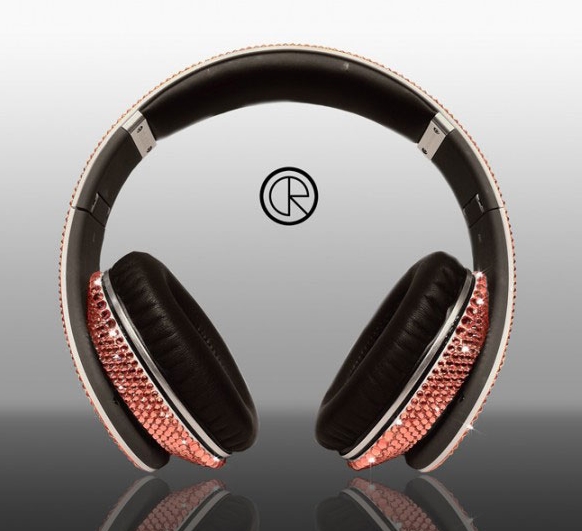
Luxury Gadgets/Swarovski Light Rose Dr Dre Beats Studio Headphones

With new Light Rose Swarovski studded headphones, Dr Dre studio will very likely be repeated, if not surpass the success achieved with their last CrystalRoc Dr. Dre Beats Headphones. With 4,3000 individual Swarovski Crystals, this headphones are so eye-catching.
Except fancy appearance Light Rose Swarovski studded headphones features precision-engineered, advanced speaker design, powered amplification, and powered noise cancellation. The gadget is featured with Beats Studio high definition powered isolation and is equipped with the monster cable, which is 1.3 meters long and can be easily fit in any phone like iPhone, Blackberry and other music phones. The headphones come with two years of warranty.
For £558 ($880), the cost of this set, you’ll get the perfect sound in a perfect package. 
[ via Crystal Rocked]
»»  read more

OmniTouch turns any surface into a touchscreen interface

 Shoulder-mounted OmniTouch prototype

In its current proof-of-concept iteration, which was prototyped at idea-rich Microsoft Research in Redmond, Washington, by PhD student Chris Harrison and his team, the rough-hewn shoulder mounted device resembles a sci-fi prosthetic weapon, but looks can be deceiving.
"We explored and prototyped a powerful alternative approach to mobile interaction that uses a body-worn projection/sensing system to capitalize on the tremendous surface area the real world provides," explains Harrison.
  The OmniTouch wearable interface projector
Like the proverbial "better" mousetrap, the concept of mobile interaction seems prone to constant tinkering. The OmniTouch draws from a blend of disciplines to overcome numerous issues that beset similar devices. Some approaches require placing markers on the fingertips but still can't discern whether the fingers are "clicked" (touching the surface) or hovering. Others can't "read" surfaces beyond those of the user's own body or they lack the ability to respond to touch/drag motions.
To surmount these hurdles, Harrison and his colleagues combined a PrimeSense short-range depth camera with a Microvision ShowWX+ laser pico-projector. The camera generated a 320x240 depth map at a rate of 30FPS, even for objects as close as 8 inches (20cm). The projector delivered a sharp, focus-free, wide-angle image independent of the surface's distance - a useful property in such applications. Both devices were then linked to a desktop computer.
 OmniTouch displays interface on user's hand
The OmniTouch gets its edge in finger position detection through a complex series of calculations that begins with the generation of the depth map. The second video below contains a detailed description of the process which enables the device to determine whether one's fingers are floating above a surface of actually contacting it. The inputs yielded closely approximate those of touchscreens and mice, so the possibilities for the OmniTouch are seemingly endless. Let's hope the wait for a commercial version isn't.
The paper, OmniTouch: Wearable Multitouch Interaction Everywhere, by Chris Harrison, Hrvoje Benko and Andy Wilson was presented in the Proceedings of the 24th Annual ACM Symposium on User Interface Software and Technology (Santa Barbara, California, October 16 - 19, 2011)
(Source: Chris Harrison)
»»  read more

18 Oct 2011

Throwable ball camera captures panoramic images

The 36 CMOS sensor ball camera (Photo courtesy Jonas Pfeil)
Taking pictures is about to get a lot more fun if computer engineer Jonas Pfeil and his colleagues have anything to say about it. A recent graduate from the Technical University of Berlin, Pfeil and his team designed and built a working prototype "ball" camera- a foam-studded sphere (about 8 inches in diameter) peppered with 36 tiny 2-megapixel cell phone cameras. Throw it in the air and it captures an image at the top of the ball's trajectory. Talk about redefining photography- one day, snapping pics may give way to "tossing" them.
Panoramic images, with their large width to height ratio, are appealing because they better approximate the way we humans view the world. But capturing them typically requires a tripod, several camera positions and lots of stitching together. Pfeil's invention eliminates all that since the component images are captured simultaneously. That's especially handy since it also freezes moving objects that might otherwise blur or shift during the image-gathering process.
To view the roughly 72-megapixel images from the ballcam, the data is downloaded via USB port into a spherical panoramic viewer which will ship with the camera. The resulting images look similar to those on Google's Street View and can be similarly panned and zoomed to examine all the captured details.
The multi-faceted housing that holds the ball-cam together was fabricated with a 3D printer. Aside from the 36 STMicroelectronics quarter-inch CMOS camera modules, the well-padded interior also houses an accelerometer (to gauge toss acceleration and maximum height) and two Atmel microcontrollers to sync up and control all the cameras. Most of the components are fairly inexpensive, so while there's no price point yet, it's likely to be competitive with mid-range digital point-and-shoots.
"We used the camera to capture full spherical panoramas at scenic spots, in a crowded city square and in the middle of a group of people taking turns in throwing the camera," says Pfeil.
The team plans to demo their patent-pending new camera this December at SIGGRAPH Asia 2011, and it's sure to cause a stir. Hopefully it'll generate a marketing deal, too, because, as Pfeil notes, "above all we found that it is a very enjoyable, playful way to take pictures."
(GIZMAG)
Video Watch
Throwable Panoramic Ball Camera
»»  read more

15 Oct 2011

Palm Pre

    Official Site: www.Palm.com
    Company: Palm, Inc.
Specs: 802.11b/g; GPS; 320x480; HVGA; QWERTY; IM, SMS, and MMS; 4.76 oz; Accelerom
Palm has possibly saved the company by introducing its best phone ever to the crowds at CES 2009. The Palm Pre is a slider that has a 3.1-inch LCD touchscreen, a brand-spanking-new operating system (OS) and a curvaceous body you won't be able to keep your hands off of.
The Palm Pre hits shelves this Saturday and while it fails in many aspects compared to the iPhone (the App Catalog is incomplete, auto correct is anorexic, battery life is lackluster, and it's full of bugs), it gives Apple something to think about with its Push Gmail technology. This means that e-mail goes directly to your phone as opposed to you having to tell your Pre to fetch it.
For a company that was so hot during the Palmtop craze, Palm stumbled its way into the smartphone market, to be sure. However, the company is making up for lost time with a device and an OS that are both beautiful and perfectly matched. On the physical side, there's a 3.1-inch multitouch touchscreen with a gestures area that lets you interact with content with the flick of a finger, à la iPhone. The slide-out keypad offers able thumbers a good, tactile alternative to onscreen typing. The features list includes all the usual suspects, like Wi-Fi, GPS and 3G networking, as well as a 3.5-mm headphone jack and stereo Bluetooth, a 3MP camera and 8GB of storage space, as well as a USB port.
But really, the hottest part of the new phone is the OS. Putting a legacy OS into such a pretty case would be like bolting a Yugo engine into an Audi. With WebOS, Palm is slipping into something a little more comfortable. Gestures lets you easily flip your way through contacts and open apps (as well as shuffling through them like a deck of cards). Also, Palm Pre’s WebOS seamlessly merges IM and texting into one window, which is a nice touch in today's chat-heavy world. At the bottom of the screen there’s a dynamic notification dashboard that brings up alerts and new IMs as they arrive; it also lists missed calls and running media. Essentially, WebOS on Palm Pre is a robust and very polished OS.
The Palm Pre is definitely cool. It's the right mix of features and eye candy to give the iPhone and Android guys a run for their money. The USB port opens up storage options for those who find the onboard 8GB a little anemic, and the stereo Bluetooth eliminates the need for headphone wires. Oh, and the integrated keypad is a real boon for anyone who hates typing on a screen. For a handset that has as yet to be priced and will be available exclusively from Sprint, it's not clear if this will be an iPhone killer or not. Likely, it won't be, but it might just carve out a sizable niche for Palm -- and save the company to boot.
»»  read more

13 Oct 2011

LED Bulb Wirelessly Transmits Audio

Back in the late 90s, well-respected loudspeaker designer Cary Christie filed a patent for a "speaker light unit connected to [a] conventional electrical light socket." Seven years later, Kadence Designs referenced that patent when filing one for a similar-sounding product. In January 2010, Klipsch announced that product, the LightSpeaker, as "the first product of its kind to combine efficient LED lighting and wireless ambient sound into a single unit that installs like a light bulb." Although it was first to market and went on to win an award at the Consumer Electronics Show, less than two years later the whole LightSpeaker line is listed as discontinued on Klipsch's site. In the meantime, Artison -- which Christie founded in 2003 -- partnered with lighting company Osram Sylvania to create and recently release MusicLites, in some ways a 'newer' and improved take on the speaker-light.
Equivalent to a 65-watt reflector bulb, 10-watt MusicLites produce 500 lumens for an estimated 25,000 hours under "normal use." They contain a 70mm high-fidelity speaker with a frequency response between 50 Hz and 20 kHz, 25W of RMS power and up to 96 dB of output. Although they pump out good sound for their size, they're mainly meant to add ambient audio, rather than be primary speakers.
Installation is pretty simple: Screw the bulb into any standard light socket (including four-, five- or six-inch recessed lighting cannisters) and turn it on; plug a transmitter into the audio source (via USB, Apple 30-pin dock connector, 3.5mm mini jack or Toslink digital optical input); wait a few seconds for the two to automatically pair on the 2.4GHz wireless bandwidth, then press play and enjoy the tunes.
The handy remote can gradually dim the lights down to 10 percent. It also controls the audio of up to three different sources simultaneously playing throughout a system of five zones each containing twelve MusicLites. That's 60 light bulbs in all -- 61, if you count the one that appeared over your head when you pictured all the places you could put these.
Credit: MusicLites
»»  read more

AIAIAI Tracks/ Review

    Price: About $75    Official Site: www.AIAIAI.dk
    Specs: 40-mm driver; 23-Ohm impedance; 3.5-mm jack  Company: AIAIAI
Danish design house AIAIAI is a heavily collaboration-oriented idea incubator. The company’s cool, retro-flavored personal electronics accessories showcase the talents at Danish art and design houses like ThankYouForClapping and HuskMitNavn. The company’s Tracks headphones are a cool, hipster-friendly design by Copenhagen’s Kilo Design, which pays homage to the original Walkman headphones. These cans are perfect for the dude who likes neo-‘70s style and oversize glasses or uses the term “ironic” when referring to his T-shirt collection.
No newfangled earbuds here: the Tracks are a clean-line, on-ear design that echoes the headphones that a lot of us grew up with, but instead of cheap foam and a flimsy headband, the AIAIAI Tracks feature a brushed-steel brace and stylish cans that won’t come apart from use. The Tracks’ design features a couple of really nice touches: the brace eschews the usual sliding size adjustment in favor of a simple slot. It’s one less thing to break, makes for a more solid-feeling headband and looks pretty slick. The slots widen near the top so that you can disassemble the rig and carry it in the included carrying bag, and the kit comes with extra sliders so you can personalize the look.
On the technical side, the headphones boast 40-millimeter drivers with a sensitivity of 112 +/-3 dB and a 23-Ohm impedance. Essentially, this means that the speakers sound good, from the lows to the highs. We’re not talking about speakers that go above and beyond, but this is not a case of form over function; you’ll definitely like the sound.
The AIAIAI Tracks emit a certain Euro cool that is undeniable, even if it’s a little too much for those who don’t do all their shopping at, say Urban Outfitters. For the urban scenester, however, these are a very good buy. The disassembly feature is a nice touch, though it begs the question of why you’d want to take your headphones apart and put them in a bag when you should by strutting down the street with them on your head. Solid construction and good sound quality are like the Holy Grail for something that gets tossed around as much as a pair of headphones. On this point alone, the Tracks are a great choice. If your style leans more toward industrial-chic, spend a bit more on the Nixon Nomadic headphones, which up the metal quotient and wrap the cord in a sweet braided fabric sheath.
»»  read more
Related Posts .