Showing posts with label human body. Show all posts

25 Nov 2011

New method of nerve stimulation developed

Better Electrical Stimulation Could Help Damaged Nerves
Functional electrical stimulation (FES) was developed to help return lost function to patients with upper and lower extremity injuries and spinal cord injuries, among other applications. However, the devices, which work by stimulating neuronal activity in nerve-damaged patients, have a potential shortcoming in that the electrical currents needed for the treatment to work can also send errant signals to surrounding nerves, resulting in painful side effects.

Earlier this fall, a plastic surgery research team at Beth Israel Deaconess Medical Center (BIDMC) and an engineering team from the Massachusetts Institute of Technology (MIT), described a new method of nerve stimulation that reduces the device’s electrical threshold by 40 percent, compared with traditional FES therapy. Reported in the October 23 Advance On-line issue of the journal Nature Materials, the findings could help researchers develop a safer, more efficient FES therapy with fewer side effects.

“This new device works by manipulating the concentration of charged ions surrounding the nerve,” explains co-senior author Samuel J. Lin, MD, a surgeon in BIDMC’s Divisions of Plastic Surgery and Otolaryngology and Assistant Professor of Surgery at Harvard Medical School. “This could potentially mean reduced risk to surrounding nerves because less electrical current is required to stimulate the affected nerve.” The researchers additionally discovered that they could use the device to block signals in nearby nerve fibers, which could help prevent unwanted muscle contractions.
The research team, led by Lin and MIT Associate Professor Jongyoon Han, PhD, determined that by altering calcium ion concentrations in the fluid surrounding the nerves they could adjust the electrical impulses.
“Nerve fibers fire their signals based on the message they receive from the interaction of ions, or charged particles,” explains coauthor Ahmed M.S. Ibrahim, MD, a Research Fellow in BIDMC’s Divisions of Plastic Surgery and Otolaryngology. “We wanted to achieve the lowest current possible that would still result in positive results.” After testing the manipulation of sodium and potassium ions, the researchers determined that consistent results could be achieved by removing positively charged calcium ions from the fluid surrounding the nerves.

The newly designed method not only prevents electrical impulses from traveling along a nerve but also uses significantly less current required by existing FES therapy. “This could be of particular benefit for the treatment of patients with various forms of paralysis,” explains Lin. “The nerves that control movements and the sensory nerves that carry pain signals are extremely close together, so existing FES therapy has had limitations.”
The researchers conducted their study of this new electrochemical-stimulation method in the nerves of frogs and plan to later test it in mammalian nerves.

“This is an important step towards the design of a device to help patients suffering from nerve paralysis and chronic neurological conditions,” say Lin. “By bringing together biomedical and engineering research teams we have been able to successfully develop this new technique. Going forward, these types of collaborations will be absolutely crucial to creating new clinical treatments and enhancing patient care.”
In addition to Lin, Han and Ibrahim, study coauthors include Rohat Melik of MIT, Amr N. Rabie of BIDMC and Ain Shams University, Cairo, Egypt; David Moses of Rice University, Houston, TX; and Ara Tan of the University of Minnesota.
This study was supported, in part, by a Harvard Catalyst grant from the Harvard Clinical and Translational Science Center (National Institutes of Health) and the Massachusetts Institute of Technology.
»»  read more

5 Oct 2011

Fair-skinned people 'may need to take extra vitamin D supplements'

Pale-skinned people who are prone to sunburn may need to take vitamin D supplements, according to a new research.
The researchers at the Leeds University say that those with very pale skin may be unable to spend enough time in the sun to make the amount of vitamin D the body needs while also avoiding sunburn.
Their study suggests patients with the skin cancer melanoma may in particular need vitamin D supplements.
The researchers, however, cautioned that sunlight and supplements are not the only factors that can determine the level of vitamin D in a person's body.
The study defined the optimal amount of vitamin D required by the body as at least 60nmol/L.
However, at present there is no universally agreed standard definition of an optimal level of vitamin D.
"Fair-skinned individuals who burn easily are not able to make enough vitamin D from sunlight and so may need to take vitamin D supplements," Professor Julia Newton-Bishop, lead author of the study based in the Cancer Research UK Centre at the University of Leeds, said.
"This should be considered for fair-skinned people living in a mild climate like the UK and melanoma patients in particular," she said.
Researchers took the vitamin D levels of around 1,200 people and found that around 730 people had a sub-optimal level.
They found that those with fair-skin had significantly lower levels.
»»  read more

1 Oct 2011

Health guide/Balding Remedies

Two-thirds of us experience some degree of thinning hair by age 35. Yep, two-thirds by 35! Those in the minority can stop reading now (“McDreamy,” that’s you), but the majority of us must read on and weigh our options carefully. Today’s cosmetically concerned world offers countless solutions to the thinning-hair epidemic. So we need to examine the possibilities and choose the one right for us, individually.
For those fighting thinning hair, here’s a list of balding remedies that just might do the trick.
basic remedies
Some basic remedies exist in the hair-loss battle. These remedies are simple devices that provide low-cost tactics to camouflage your balding pate.
Clever/Strategic haircuts
The easiest solution is simply to work with what you have… left. Depending on the severity of your situation, you can work with a stylist to craft a haircut that works for you and your fading tresses: Longer bangs disguise receding hairlines and longer cuts make hair look fuller. Or, if you dare, go for a clipper cut or a clean shave; honesty is the best policy!
Thickening shampoos
Thickening shampoos line store shelves everywhere, but your best option is brands found at hair salons. (Ask your stylist for recommendations or try Paul Mitchell’s Tea Tree Lemon Sage Thickening Shampoo.) Thickening shampoos utilize natural extracts and chemicals to boost volume, “plump” hair strands and strengthen follicles. The idea is good in theory, but results vary: Some guys will see thicker, more voluminous hair, but for others it’ll be a wash -- literally.
Hair dyes and cover-ups
For thinning hair, the ever-faithful cosmetics industry offers several inventive dyes and cover-ups to create the optical illusion of hair. For instance, one option, Toppik, consists of organic keratin fibers that intertwine with your own hair, making your mane appear full and thick. Similar products exist and can be found easily online. Just remember these options are costly and sometimes obvious; the only person you may end up fooling is yourself.
pharmaceutical options
Only two FDA-approved balding “remedies” exist: Rogaine and Propecia. These medications go beyond cover-up attempts by trying to prevent loss and actually regrowing hair. Both drugs are serious alternatives and should be used in consultation with your doctor, even if one is available over-the-counter.
Rogaine
Since earning its FDA-approval in 1988, Rogaine (minoxidil) has become a household name. At its core, the product is a vasodilator -- a chemical that dilates the smooth muscles in blood vessels -- thus, when applied directly to the scalp, it revitalizes shrunken hair follicles and increases their size, eventually leading to thicker-looking hair and new hair growth. But proven results aside, Rogaine may not be the miracle cure you seek. The average user must apply it twice a day for four months before any results are visible (and results vary). That’s a big time and money investment for potentially miniscule results. On top of that, discontinuation usually leads back to square one within twelve months. And though side effects are generally mild, Rogaine can cause serious conditions like low blood pressure, vision loss, abnormal heart rhythms, and chest pain. Rogaine undoubtedly works for some, but it doesn’t work for all.
Propecia
Propecia (finasteride) earned its FDA pedigree almost ten years after Rogaine. An enzyme inhibitor, Propecia blocks DHT, a chemical that can shrink hair follicles until they’re almost nonexistent. What’s more, the drug has also caused hair to regrow in some cases. Average users saw results in about three months. (And similar to Rogaine, discontinuation leads back to where you started in less than a year.) One of Propecia’s best aspects is that it’s administered as a once-a-day pill. But the flip side is that it’s a prescription, so the price always varies and a prescription can be more difficult to obtain. And last but not least, some potential side effects make Propecia a double-edged sword: They range from decreased sex drive and sperm ejaculation to abdominal pain and impotence. Who needs hair if you can’t have sex?
surgical procedures
The most serious contenders looking for balding remedies opt for surgical procedures. Since the severity of each alternative varies, guys contemplating any of these options should carefully consider the expected outcome, cost and risk associated with each procedure.
Hair transplants
The most invasive surgical option in regards to balding remedied, hair transplants are more effective and less conspicuous than ever before. Today’s procedures are less painful, less expensive and exhibit less scarring but still require several visits to complete, which means an obvious transition period. Transplants operate by grafting tiny follicular units from hair-growing sections of the scalp to problem areas, so the tiny grafts will be visible until the transplant is finished. (Note: Sometimes “plugs” fall out, take three months to grow and are still visible afterward.) Several options exist (mini-grafts, micro-grafts and follicular-unit relocation), so conduct pre-consultation research before making a decision. Hair transplant surgeons and clinics are abound, so begin you’re research here. Should you go this route, a hair transplant could leave you with a much fuller head of hair; but once you’re in this hair club, it’s hard to get out.
Flap procedure
A more radical option, flap procedures are conducted in three phases and consist of surgically moving a flap of hair-growing scalp to a bald area. While the first two phases are minimally evasive, the third requires a section of skin be moved from point A to point B. But once completed, you have naturally growing hair where there was none before. These procedures can be highly effective when performed properly -- again, do your research on the front end -- but they do come with setbacks as well.
For one, there’s nothing subtle about the procedure: You’ll need bandages for a few weeks, and you’ll suddenly have hair once those come off. Also, scarring can occur at both the donor and relocation sites, so you may have new “hairlines” all throughout. Despite the time, cost and pain, flap procedures do provide a realistic solution to bald spots.
Scalp reduction
This one is just what it sounds like! In scalp reductions, bald areas of your scalp are surgically removed, and hair-baring tissue is stretched over these areas to offset the difference. Scalp reductions are usually performed in conjunction with flap procedures, but not always. Choosing this alternative means electing the most serious surgical option, and should only be pursued under the care of a highly reputable surgeon. If the procedure is not done properly, permanent “stretch-back” scars can appear at sites where the incisions were made -- sure, you’ll have less baldness on your head, but you’ll have jagged scarring to go with it.
it was there before
Thinning hair becomes an issue most of us have to face. Some will simply let nature run its course, and others will tackle it head-on. Regardless of which path we choose, we should know that several balding remedies do exist and the best option is always the one that makes us comfortable in our own skin.

»»  read more

29 Sept 2011

Weird News/Sperm Bank Rejects Redheads

photo: iStockPhoto
Can sperm banks discriminate against potential donors based on their hair color?
In countries where donations are in high demand -- Spain, Italy and Greece, there's less interest in sperm that might differ from the current demographics of the area. That is, people in these areas usually have brown eyes and brown hair, not lighter eye colors and red hair.
Donated sperm is used to impregnate women through artificial insemination. Single women wanting a child, couples with fertility issues and lesbian partners may use sperm bank services and other third party reproduction methods. Some men may give to sperm banks for their own personal use in the future, too.
After screening and being accepted as a donor, most men agree to a several-month commitment for donating. This also reduces the number of donors a given company will take on.
Banks reserve the right to accept men based on their height and weight as well. But rejecting potential donors based on physical appearance isn't foolproof. For example, one man passed on a rare genetic disease to multiple children through his donation. Though most banks check for a list of common genetic conditions, they seem to value a person's appearance just as much in some cases.
The director of Cryos International sperm bank said the company has refused donors based on hair color and skin traits because women want donations that more closely resemble their partners and others in their community.
Because Cryos has reached its storage capacity (70 liters of sperm, if you're wondering), company representatives say they have the right to be more selective with the physical attributes of donors.
But before writing off redheads, rest assured that their sperm is still a best-seller in Ireland and for women and couples with a preference for the trait.
»»  read more

25 Sept 2011

Understanding Alzheimer’s Disease

Image Credit : iStockphoto.com
By now, everyone is familiar with Alzheimer’s Disease (AD), a progressive disease of the brain that causes thinking and memory to become seriously impaired. However, despite the awareness of Alzheimer’s, the disease is still a little misunderstood.
More than just memory loss
In the early stages, the disease manifests as nothing more than mild forgetfulness, a problem that most people shrug off as a natural (and at times almost humorous) consequence of growing old. Soon, however, a person’s ability to understand, think and even communicate is affected. Behaviors may change and so too may emotions and mood. Topping it off, physical coordination and mobility may suffer, affecting an individual’s ability to perform even the simplest of daily tasks. The result can place a ton of pressure on the affected person’s family or caregiver.
Family burden -- the unseen
As many as 5.3 million people in the United States are currently living with Alzheimer’s. With more than 95% of those with AD being 65 or older, round-the-clock care is almost a necessity nowadays. This type of care, however, translates into one of two things, and more often both: stress and money.

The average lifetime cost of caring for someone with AD is $174,000. Broken down by year, this can amount to anywhere from $18,000 to upwards of $36,000, depending on the severity of symptoms. While the health care system will absorb some of these costs, look to the family to foot about 75% of that bill. But there’s more than just cold hard cash to consider when caring for someone with Alzheimer’s --  there’s stress, there’s tension, there’s conflict, and more. These are the unseen consequences of mental disease.
What to expect
While the burden of Alzheimer’s remains largely unseen, having a grasp on what to expect can go a long way toward lessening the impact of this disease.

Although early symptoms are manageable, as the disease progresses activities that most of us can easily perform on a day-to-day basis may become challenging to an AD patient. Daily tasks like bathing, dressing, eating, going to the bathroom, and falling asleep may require assistance. Even simple visits of someone with Alzheimer’s can quickly become a nightmare. Just imagine how you would feel having a loved one be unable to recognize who you are. It’s not just forgetfulness --- hostility, confusion and even hallucinations or delusions can afflict the typical patient.

Moving beyond issues regarding simple care, difficult decisions will undoubtedly creep to the forefront. Case in point: driving. At some point, the decision will need to be made that someone with AD can no longer drive; such a decision will likely fall on the shoulders of the family. Times like these will require communication, planning and honesty to prevent a meltdown.   

For many caregivers, however, there comes a point when they are no longer able to take care of loved ones at home. Choosing the best residential or nursing home then becomes a priority -- a decision that no one enjoys.
Despite the somewhat gloomy outlook portrayed above, with each passing day, hope for a cure becomes stronger.
Future cure?
A while back, AM introduced you to the notion that there may soon be treatments that will actually reverse the disease progression of AD as opposed to merely delaying the onset of symptoms like current treatments do. In the next five to seven years we may even see a vaccine. Yep, that’s right, a vaccine for Alzheimer’s. Given the current advancements in brain research and the speed at which this field of research is progressing, AD may one day be a thing of the past.

Since AD is a commonly occurring disease, thankfully there are a ton of resources online. If a loved one is diagnosed with Alzheimer’s, be sure to do some upfront research. Keep the family calm and willing to share responsibilities if in fact you choose to care for the affected person at home.

SOURCE :  ASKMEN.COM
»»  read more

5 Sept 2011

SC/New Treatments for Baldness?


New Treatments for Baldness? Scientists Find Stem Cells That Tell Hair It's Time to Grow
SOURCE: ScienceDaily

 Yale researchers have discovered the source of signals that trigger hair growth, an insight that may lead to new treatments for baldness.
The researchers identified stem cells within the skin's fatty layer and showed that molecular signals from these cells were necessary to spur hair growth in mice, according to research published in the Sept. 2 issue of the journal Cell.
"If we can get these fat cells in the skin to talk to the dormant stem cells at the base of hair follicles, we might be able to get hair to grow again," said Valerie Horsley, assistant professor of molecular, cellular and developmental biology and senior author of the paper.
Men with male pattern baldness still have stem cells in follicle roots but these stem cells lose the ability to jump-start hair regeneration. Scientists have known that these follicle stem cells need signals from within the skin to grow hair, but the source of those signals has been unclear.
Horsley's team observed that when hair dies, the layer of fat in the scalp that comprises most of the skin's thickness shrinks. When hair growth begins, the fat layer expands in a process called adipogenesis. Researchers found that a type of stem cell involved in creation of new fat cells -- adipose precursor cells -- was required for hair regeneration in mice. They also found these cells produce molecules called PDGF (platelet derived growth factors), which are necessary to produce hair growth.
Horsley's lab is trying to identify other signals produced by adipose precursor stem cells that may play a role in regulating hair growth. She also wants to know whether these same signals are required for human hair growth. Other authors from Yale are lead author Eric Festa, Jackie Fretz, Ryan Berry, Barbara Schmidt, Matthew Rodeheffer and Mark Horowitz.
The work was funded by the National Institutes of Health and the Connecticut Stem Cell Research Program.
»»  read more

28 Aug 2011

Sc/Heat in Chili Peppers Can Ease Sinus Problems

Hot chili peppers are known to make people “tear up,” but a new study led by University of Cincinnati allergy researcher Jonathan Bernstein, MD, found that a nasal spray containing an ingredient derived from hot chili peppers (Capsicum annum) may help people “clear up” certain types of sinus inflammation.
The study, which appears in the August 2011 edition of Annals of Allergy, Asthma & Immunology, compares the use of the Capsicum annum nasal spray to a placebo nasal spray in 44 subjects with a significant component of nonallergic rhinitis (i.e., nasal congestion, sinus pain, sinus pressure) for a period of two weeks.
Capsicum annum contains capsaicin, which is the main component of chili peppers and produces a hot sensation. Capsaicin is also the active ingredient in several topical medications used for temporary pain relief. It is approved for use by the U.S. Food and Drug Administration and is available over the counter.
“Basically, we concluded that the spray was safe and effective on non-allergic rhinitis,” Bernstein says of the study which showed that participants who used a nasal spray with Capsicum reported a faster onset of action or relief, on average within a minute of using the spray, than the control group.
Non-allergic rhinitis is an upper respiratory condition not caused by allergies but instead caused by environmental factors such as weather, household chemicals or perfumes; however, there are some people who have no triggers or don’t know what triggers are causing the inflammation, Bernstein says.
This is the first controlled trial where capsaicin was able to be used on a continuous basis to control symptoms. It is considered a significant advance, “because we don’t really have good therapies for non-allergic rhinitis,” says Bernstein, adding that in previous trials the ingredient was too hot to administer without anesthesia.
The study was funded by Dynova Laboratories. Bernstein, a professor in the division of immunology, allergy and rheumatology, at the UC College of Medicine, is a paid consultant for Dynova.
»»  read more

24 Aug 2011

Science/ Top 10 Missing Links

Every few years scientists unearth the bones of humanity's forefathers. From Lucy to the Hobbits of Flores Island -- we are gradually seeing building the puzzle of mankind's evolution.
1 Neanderthal
Photo Credit: Mauro Cutrona
Stocky and squat and well suited for the cold, Neanderthals looked distinctly different from modern humans. But they were like us in other ways: they buried their dead, cared for their sick and injured and may have been capable of language and music. Scientists recently put together a complete Neanderthal skeleton and are working on the genome.
2 Cro-Magnon
Credit: public domain
These people looked identical to modern humans and lived in Europe between 35,000 and 10,000 years ago. Their cave paintings and sculptures are the earliest known examples of art by a prehistoric people.
3 Homo floresiensis
Credit: National Geographic Society/ Peter Schouten
It turns out those Floresians were actually on to something. For centuries, their mythology described a race of very small human-like creatures called the Ebu Gogo. Hardly anyone took them seriously, however, until 2003, when word broke that a new species of diminutive hominids was discovered on the Indonesian island.
4 Homo erectus
Credit: Wikimedia commons user Steveoc 86
For H. erectus, it may have paid to be dense. According to one theory, males rammed each other with their thick skulls in order to win females. H. erectus is generally believed to be the direct ancestor of modern humans and also the first hominid to live in caves and
5 Homo ergaster
Credit: Flickr user flowcomm
Scientists can't decide whether this African hominid is just a failed predecessor of H. erectus or the rightful ancestor of modern humans. It had a thinner skull than H. erectus and was more proficient at making tools and using fire.
6 Homo habilis
Credit: Wikimedia commons user Lillyundfreya
Many scientists believe H. habilis is the missing link between the ape-like hominids like Lucy and the more human-like ones that came after. It had long ape-like arms but walked on two feet and was capable of creating crude tools.
7 Paranthropus boisei
Credit: Wikimedia commons user Lillyundfreya
If P. boisei and its relatives weren’t such picky eaters, we might not be here to wonder about them. They split from the line leading to modern human some 2 million years ago and lived alongside our ancestors for millions of years, but died out after failing to adapt their diets.
8 Paranthropus aethiopicus
Credit: Guérin Nicolas
This early ape-like hominid walked on two legs and lived between 2.8 million and 2.2 million years ago. Based on skull measurements, scientists concluded this species had the smallest adult hominid brain ever discovered.
9 Australopithecus africanus
Credit: Flicker user flowcomm, Sterkfontein Caves
A. africanus was an early descendent of Lucy and lived in Southern Africa between 2 million and 3 million years ago. Its brain was larger than Lucy's and its facial features were more human-like.
10 Australopithecus afarensis
Credit: Wikimedia commons user 1997
The most famous member of this species is Lucy, an adult female skeleton discovered in 1974 and nicknamed after a Beatles song. Lucy lived about 3.18 million years ago and was fully capable of walking and running on two legs.


SOURCE- LIFESCIENCE.COM

»»  read more

22 Aug 2011

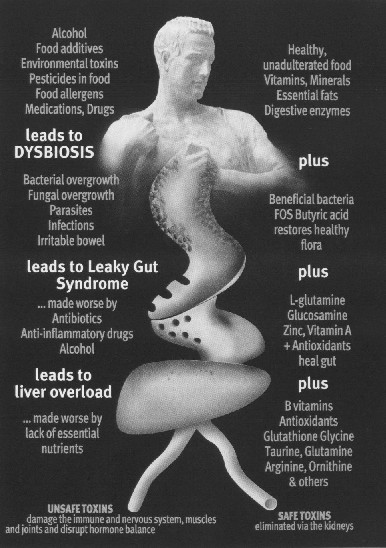
Understanding Diseases/Leaky Gut Syndrome

Your Intestinal Lining
The lining of your intestines plays a crucial role in your health, in part as a barrier that keeps undigested food particles, waste, and bacteria from entering your bloodstream. In leaky gut syndrome, or hyperpermeability, this lining gets inflamed and irritated, which compromises its ability to serve as a barrier, and also reduces its ability to properly reabsorb water.
Autoimmunity
When this damage due to inflammation occurs, the lining "leaks" and enables toxins and bacteria to enter your bloodstream. These leaked substances are not normally present in your blood and do not belong there, so your body responds with an autoimmune reaction to what it perceives as invaders, meaning that your immune system launches an attack on your own body. A variety of symptoms can result, including excessive gas and bloating, cramps, and sometimes more serious disorders such as fibromyalgia.
Immune Exhaustion
As a result of accumulating toxins, immune exhaustion can occur from your immune system working overtime to combat the continuous influx of foreign material from your leaking gut. One reason this happens is that nearly three quarters of your immune system resides near or in your digestive tract, which tells you just how important your GI tract is.
Opportunistic Infection
Another consequence of this leakage is that bacteria can become overly abundant in your bloodstream, which subjects you to a greater likelihood of opportunistic infections. Normally, you would not be susceptible to these infections, but the weakened state of your immune system due to leaky gut syndrome makes you less able to fight them off. This again can lead to more serious conditions, like septicemia.
Adrenal Fatigue
Hyperpermeability can also lead to adrenal exhaustion. Your adrenals are two small glands situated in close proximity to your kidneys that release hormones responsible for your ability to cope with stress (particularly cortisol), as well as directly affecting the functioning of your kidneys through the release of aldosterone. Over time, your leaking gut impedes the ability of these important glands to properly do their job.
Fatigue And Stress
In the early stages of LGS, there is no measurable difference in adrenal output, which can be determined by measuring your cortisol levels. However, as the syndrome progresses, your cortisol levels drop and you are said to be suffering from adrenal exhaustion. Once this happens, you may experience fatigue, excessive craving for sleep, insomnia, and dependence on caffeine and high-calorie snacks to keep you going.
Natural Healing
In summary, leaky gut syndrome can lead to a variety of other symptoms by allowing toxins and bacteria that shouldn't be there into your bloodstream, precipitating an autoimmune response, allowing opportunistic infection, and inducing adrenal fatigue. Fortunately, while there is no simple clinical test that will determine that you definitively suffer from this condition, a range of secondary symptoms are indicative to the attuned health care practitioner - and more importantly, it is completely treatable in a natural, healthy way.
If you suspect you may be afflicted with this condition, don't lose hope! An abundance of information is available to help you determine whether or not hyperpermeability is your problem and exactly what steps you can take to allow your body to heal itself. Don't hesitate to see a natural health care professional and begin down the road to feeling better.

»»  read more

21 Aug 2011

Sc/How Estrogen Could Help Protect Women from Cardiovascular Disease


 The sex hormone estrogen could help protect women from cardiovascular disease by keeping the body's immune system in check, new research from Queen Mary, University of London has revealed.
Add caption

The study has shown that the female sex hormone works on white blood cells to stop them from sticking to the insides of blood vessels, a process which can lead to dangerous blockages.
The results could help explain why cardiovascular disease rates tend to be higher in men and why they soar in women after the menopause.
The researchers compared white blood cells from men and pre-menopausal women blood donors. They found that cells from premenopausal women have much higher levels of protein called annexin-A1 on the surface of their white blood cells.
The scientists also found that annexin-A1 and estrogen levels were strongly linked throughout the menstrual cycle.
White blood cells play a vital role in protecting the body from infections. When they are activated they stick to the walls of blood vessels. This process normally helps the cells to tackle infection but if it happens too much, it can lead to blood vessel damage, which in turn can lead to cardiovascular disease. However, when annexin-A1 is on the surface of these white blood cells, it prevents them from sticking to the blood vessel wall.
The new research shows that estrogen can move annexin-A1 from inside the white blood cell, where it is normally stored, to the surface of the cells, thereby preventing the cells from sticking to blood vessel walls and causing vascular damage. This may have important implications in cardiovascular disease.
Dr Suchita Nadkarni from the William Harvey Research Institute, Queen Mary, University of London, who led the research, said: "We've known for a long time that estrogen protects pre-menopausal women from heart disease, but we don't know exactly why. This study brings us a step closer to understanding how natural estrogen might help protect our blood vessels.
"We've shown a clear relationship between estrogen levels and the behaviour of these white blood cells. Our results suggest that estrogen helps maintain the delicate balance between fighting infections, and protecting arteries from damage that can lead to cardiovascular disease.
"Understanding how the body fights heart disease naturally is vital for developing new treatments."
The study was co-funded by the British Heart Foundation, the Wellcome Trust and the National Institutes of Health Research (NIHR).


»»  read more

19 Aug 2011

Why the Human Heart Can't Regenerate Itself


 Stem cell researchers at UCLA have uncovered for the first time why adult human cardiac myocytes have lost their ability to proliferate, perhaps explaining why the human heart has little regenerative capacity.
The study, done in cell lines and mice, may lead to methods of reprogramming a patient's own cardiac myocytes within the heart itself to create new muscle to repair damage, said Dr. Robb MacLellan, a researcher with the Eli and Edythe Broad Center of Regenerative Medicine and Stem Cell Research at UCLA and senior author of the study.
Unlike newts and salamanders, human adults cannot spontaneously regrow damaged organs such as the heart. However, recent research suggests that mammals do have the ability to regenerate the heart for a very brief period, about the first week of life. But that ability is quickly lost. But if we had it once, MacLellan said, maybe it is possible to regain that ability.
Published in the Aug. 8 issue of the peer-reviewed Journal of Cell Biology, MacLellan's study suggests it might be possible to turn back the cellular clock to a time when cardiac myocytes had the ability to proliferate and re-grow heart muscle.
"These salamanders and other lower organisms have the ability to de-differentiate cardiac myocytes, or take them back to an earlier, more primitive state, which allows them to re-enter the cell cycle, creating new heart muscle," said MacLellan, who also is an associate professor of cardiology and physiology. "In mammals, we've lost that potential. If we knew how to restore that, or knew the reason why adult myocytes can't do it, we could try to figure out a way to use nature's methods to regenerate the heart."
During human development, cardiac myocytes are made by progenitor stem cells and proliferate to form the heart. Once the heart is formed, the myocytes transform from immature cells into mature cells that cannot proliferate. That's not so for newts and salamanders, whose cardiac myocytes can go back and forth between immature, or primitive, states to proliferate and repair damage and then revert back into mature cells once the damage is repaired.
»»  read more

13 Jun 2011

Sc/Attractive Men Have Long... Ring Fingers

There are intricate links between male exposure to testosterone in the womb, the development of physical traits and what turns on the opposite sex.
THE GIST
  • During the study, factors such as male odor and face symmetry were also tested on a sample of women aged 18 to 34.
  • Where many of the tests were inconclusive, the length of a man's ring finger produced unambiguous results.
  • The longer the ring finger (compared with the shorter index), the greater the likely impact of testosterone. 


The longer a man's fourth or ring finger is compared to his index finger, the more likely he is to be judged attractive by women, according to a study released Wednesday.

The longer a man's fourth or ring finger is compared to his index finger, the more likely he is to be judged attractive by women, according to a study released Wednesday.
The results, published in the British Royal Society's journal Biological Sciences, unveil intricate links between foetal exposure of males to hormones, the development of certain physical traits, and what turns on the opposite sex.
It also adds to a growing body of research -- conducted under the banner of evolutionary psychology -- suggesting that the drivers of human behavior are found, more than previously suspected, in "nature" rather than "nurture."
Earlier studies had already shown that the size ratio between the fourth and second fingers, especially of the right hand, is a reliable indicator of the extent a man was exposed to testosterone while still in the womb.
The bigger the gap between a longer ring finger and a shorter index, the greater the likely impact of the hormone.
For the new study, scientists led by Camille Ferdenzi of the University of Geneva designed an experiment to find out if women are drawn to the telltale signs of high testosterone levels in men -- a symmetrical face, a deeper voice, a particular body odor -- who have this more "masculine" finger configuration.
More than 80 women university students between 18 and 34 looked at pictures of 49 similarly aged men, and were asked to evaluate them for masculinity and attractiveness.
Smaller groups of women listened to recordings of the male voices, and smelled samples of their body odor, taken from cotton pads worn under the arm for 24 hours.
"The aim was to understand what makes a man attractive," and whether at least some of those qualities "were in part conditioned by the foetal environment," Ferdenzi said in an interview.
For the visual test, the results were unambiguous. "The longer the ring finger compared to the index -- that is, the greater the exposure to testosterone -- the more attractive the face was rated," she said by phone.
"We also found that attractiveness and symmetry in the face are highly correlated."
Such a preference might have evolved to boost a female's chances of reproductive success through mating with a more virile partner, she said.
Surprisingly, however, women did not consistently tag the same men as "masculine".
Nor did their preferences for voice or odors correspond to the longer ring-finger males.
"There wasn't any relation between the 2D-4D" -- 2nd digit, 4th digit -- "ratio and the reactions of the women to odor," Ferdenzi said.
One reason, she speculated, may be that voice and body odor are more dependent on fluctuating levels of adult testosterone than on pre-natal testosterone.
The ring-index finger ratio has also proven to be a useful indicator for gauging the risk of prostate cancer, likewise tied to high levels of testosterone.
Research published in December showed that the chances of developing the disease drop by a third in men whose index finger is longer than their ring finger.
Other studies have also found a link between exposure to hormones before birth and the development of other diseases, including breast cancer and osteoarthritis.
Discovery News
»»  read more
Related Posts .