Showing posts with label robots. Show all posts

23 Nov 2011

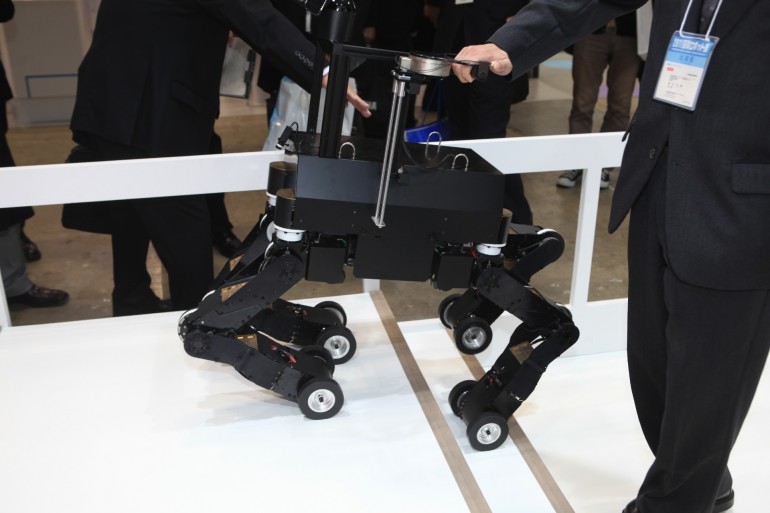
Robotics/Four-legged robot "guide dog" by Japan's NSK corporation

robodog by Japan's NSK corporation
Guide dogs for the visually impaired provide an important service and help provide a welcome sense of autonomy to physically-challenged individuals. Unfortunately, the highly-skilled canines require about US$30,000 in training over several months, and always seem to be in short supply. The growing demand for these specialized animal companions gave a group of engineers from Japan's NSK corporation and the University of Electro-Communications just the impetus they needed to design a mechanical solution, and the robotic guide dog was born.
"Raising a guide dog takes a long time, and a dog can only work for about 10 years," said Katsuyuki Sagayama from NSK's Emerging Technology Research Center. So the number of guide dogs can't be increased instantly. Also, some people don't like having animals around. So we've developed this robot, as a way of doing similar things to a guide dog,"
The four-legged, eight-wheeled mechanical companion rolls on flat surfaces and can even tackle stairs. It employs attitude, shape and position data from an innovative hack of Microsoft's Kinect gaming device to sense stair number and width.
Sagayama pointed out that there are sensors on the legs, as well. "If we put a sensor on the head, the robot can see what's ahead, but it has blind spots around the legs. So the distance image sensor on the head is used to recognize steps overall, while information around the legs is obtained using proximity sensors."
To keep the user's grip solid and prevent the need to hunch over on stairs, the handle varies in height and angle. An intuitive force sensor on the end of the grip directs the robot's movement: push forward and it moves straight ahead, twist it and the robot turns. The "robodog" speaks with a computerized female voice, with which it conveys details about the surroundings, as well as instructions to the user on how to avoid obstacles. It will also eventually respond to voice commands, a function that will make it even more similar to the real dogs it's designed to replace.
While the rather noisy prototype is well thought-out, there are still many design and safety issues to be solved before a commercial version (still many years away) will be ready for market.
"We haven't considered the safety aspects very much yet," Sagayama said. "We've finally reached the level where the robot can recognize and climb stairs. So what we want to think about now is safety; for example, how to avoid falling, how to recover and keep climbing if a fall does happen, and how to prevent the user's fingers from getting caught when the robot moves."
Though there's no substitute for the love a dog can lavish on its owner, this device may eventually give many of those less fortunate than us a chance to safely be mobile and more independent. To us, that's several steps in the right direction.
GIZMAG
-------------------------------------------------------------------------------------------------------
»»  read more

16 Nov 2011

Weird but helpful/This Robot stops people from snoring

Robot Jukusui-kun meaning “Deep Sleep.”
Snoring can be a real pain for couples, and in particular the person who isn’t snoring. There are a number of remedies to stop snoring including oral strips, mouth guards, special pillows, and those nose strips that are meant to help keep your airways open.
In Japan, they have come up with a much more advanced solution that takes the form of a robotic polar bear pillow.
This is definitely a case of “only in Japan,” but if it does stop someone snoring then I think many a husband or wife would welcome this bear into the bedroom with open arms.
The polar bear pillow is officially called Jukusui-kun, which translates to mean “Deep Sleep.” It is aimed at sleep apnea sufferers, and monitors the person sleeping with their head on its belly through a pulse-oxygen meter worn on their wrist, a conductive sheet underneath the bed sheets to remove the need for wires on or around the sleeper, and microphones located inside the bear.
The sleeper’s vital stats are fed into the system before sleep occurs. The microphone monitors the loudness of snoring, while the wrist monitor keeps an eye on oxygen in the blood. As that oxygen level falls the level of snoring increases, at which point the bear goes into action and tickles the sleeper’s face gently with its arm. The aim of this action is to get the person to turn and at least decrease or even stop the snoring, but at the same time doing so without waking them up.
The Deep Sleep system is the creation of Dr. Kabe from Wasaeda University in Japan. It was put on display at the International Robot Exhibition 2011 currently underway in Tokyo.
(VIA GIZMAG)
---------------------------------------------------------------------------------------------------------------------
»»  read more

15 Nov 2011

Miniature robot, pro rider?

Masahiko Yamaguchi's remote-controlled miniature robot
Riding a bike can be challenging enough for humans, so seeing inventor Masahiko Yamaguchi's remote-controlled miniature robot tooling along on an equally miniature bicycle is quite a thrill.
"I'm interested in artificial intelligence, and in that context, I think intelligence and skills have equal value," said Yamaguchi. "So my purpose in creating this robot was to pursue intelligence from the skills side. While I was thinking of suitable topics, my local science museum demonstrated a cycling robot. So I decided to consider cycling as the skill, and build a bicycle robot."
The pint-sized rider pedals with its own feet and maintains its balance by adjusting the handlebars as needed. To keep track of tilt and make corrections to prevent falling over, Yamaguchi made his own control board with a SH7125 CPU core and incorporated a Tamagawa Seiki TAG201 gyro into the design. A proportional-integral-derivative controller (PID) governs the robot's balancing action.
"PID control is a classical control method. It's used to calculate how far to turn the handlebars when the frame tilts. By calculating proportional, integral, and differential components for the tilt, and adding them, the system calculates how far to turn the handlebars when the frame tilts. Also, the robot needs to decide which direction to go in, so we use a remote control to instruct it," Yamaguchi explained.
Miniature robot waves onlookers
Because its mini-ride has no brakes (the little bicycle is fixed-gear), the operator can stop it simply by having the robot remove its feet from the pedals and put them on the ground.
"From now on, I'd like to link this robot's skill to its intelligence. I personally don't like using a remote control for the robot. I'd like to make the robot intelligent enough to ride by itself. This system is the first step toward doing that."
Source: Diginfo.tv
»»  read more

10 Nov 2011

Robotics/Jumping spiderbot made using 3D printing technique

When it comes to deciding on a form of locomotion for their creations, roboticists have plenty of options to choose from. While many go for the tried and tested tank-like tracks or wheels, nature is also a veritable treasure trove of inspiration. That's just where Fraunhofer researchers have turned with a new eight-legged robot modeled on the same principle that moves spider legs. Not only does the design give the spiderbot the agility and stability of real spiders when getting around on the ground, it also features special joints that allow it to jump.
Like its biological brethren, the spiderbot is extremely stable, keeping four of its legs on the ground at any one time while the remaining four legs turn and ready themselves for the next step. Diagonally opposed members can also move simultaneously and bending the front pairs of legs pulls the spiderbot's body along, while stretching the rear legs pushes it.
As real spiders don't have extensor muscles at each of its leg joints, they rely on a sudden change in blood pressure in addition to the extensor muscles found on some joints to force the legs to extend rapidly and provide the full extension of the legs required for jumping. Borrowing this design, the researchers fitted the spiderbot's eight 20 cm (8 inch)-long legs and its body with pneumatically operated elastic drive bellows that bend and extend its legs with the force required to get it to jump.
The control unit, valves and compressor pump that provide the means of locomotion are located in the robot's body, which can also be fitted with various measuring devices and sensors, depending on the job at hand.
Instead of producing the robot using conventional mechanical-engineering technologies, the Fraunhofer team turned to a 3D printing process called selective laser sintering (SLS) that sees thin layers of a polyamide powder applied one at a time and melted into place using a laser. Not only does this process allow complex geometries and inner structures to be produced, but the resulting robot is also very lightweight and cheap to produce.
"We can use SLS to produce one or even several legs in a single operation; this minimizes assembly effort, saves materials and reduces the time it takes to build a robot. With the modular approach, individual parts can be quickly swapped as well. Our robot is so cheap to produce that it can be discarded after being used just once - like a disposable rubber glove," says Ralf Becker, a scientist at the Fraunhofer Institute for Manufacturing Engineering and Automation (IPA).
Although the spiderbot is still just a prototype, the researchers envision it could be used to explore environments that are hazardous or too difficult to access for humans, such as natural disaster areas and industrial or reactor accident sites. It could also be used to assist first responders and fire departments by broadcasting live images or tracking down hazards or leaking gas.
The Fraunhofer team will be displaying a prototype of the robot at the EuroMold 2011 trade fair that runs from November 29 to December 2 in Frankfurt.3
_______________________________________________________________________
»»  read more

8 Nov 2011

Honda shows smarter robot, helps in nuclear crisis

honda's human-shaped robot asimo
Honda's human-shaped robot can now run faster, balance itself on uneven surfaces, hop on one foot and pour a drink. Some of its technology may even be used to help out with clean-up operations at the stricken Fukushima nuclear plant.
Honda's demonstration of the revamped "Asimo" on Tuesday at its Tokyo suburban research facility was not only to prove that the bubble-headed childlike machine was more limber and a bit smarter.
It was a way to try to answer some critics that Asimo, first shown in 2000, had been of little practical use so far, proving to be nothing more than a glorified toy and cute showcase for the Honda Motor Co. brand.
Honda President Takanobu Ito told reporters some of Asimo's technology was used to develop a robotic arm in just six months with the intention of helping with the nuclear crisis in northeastern Japan.
The mechanical arm can open and close valves at Fukushima Dai-ichi nuclear power plant, which went into meltdown after the March tsunami, according to Honda. The automaker is working with the utility behind the problem plant, Tokyo Electric Power Co., to try to meet demands to bring the plant under control.
Ito acknowledged that the first idea was to send in Asimo to help out, but that was not possible because the robot cannot maneuver in rubble, and its delicate computer parts would malfunction in radiation.
But in Tuesday's demonstration, Asimo was able to walk without falling over 2 centimeter (0.8 inch) padded bumps on the floor.
asimo
It can also now jog faster than it did in 2005, at 9 kilometers per hour (5.6 mph), instead of the earlier 6 kph (3.7 mph), pushing better with its toes so its run was smoother and not as jerky.
Asimo was also able to distinguish the voices of three people spoken at once, using face recognition and analyzing sound, to figure out that one woman wanted hot coffee, another orange juice, and still another milk tea.
The new Asimo got improved hands as well, allowing individual movement of each finger, so it could do sign language.
"My name is Asimo," it said, making the signs of its words with stubby fingers.
It also opened a thermos bottle and gracefully poured juice into a paper cup.
Ito said Asimo had developed autonomous artificial intelligence so that it could potentially maneuver itself through crowds of people, without remote control or stopping each time to check on its programming.
But he acknowledged that making robotics into a practical business will take more time, meaning Asimo wasn't about to show up in any home soon.
"Maybe at the start this was a dream of engineers to make a machine that was close to a human being, like Astro Boy," he said. "We think Asimo is good."
Other manufacturers are also developing robots, eager to cash in on the expected needs of Japan's rapidly aging population.
Toyota Motor Corp., Japan's top automaker which makes the Prius hybrid and Lexus luxury models, is among those to have jumped on the robotics bandwagon.
In the past, it has shown robots that can play the violin and talk like receptionists. Last week, it showed a computerized device that latches on to the body to help old or sick people walk and keep balance.
Honda, which makes the Odyssey minivan and Accord sedan, has developed similar brace-like gadgets to help people get about.
Neither the Toyota nor Honda product is on sale yet.
Still, experts say such research is important to keep up.
"Maybe it can't be put to use right away, but it is definitely a technology that we should keep working on to advance," Hiroshi Kobayashi, a mechanical engineering professor at Tokyo University of Science, said of the new Asimo.
"It is common for what we achieve in research to turn out later to lead to many products," said Kobayashi, who has developed experimental robots.
STORY BY AP
»»  read more

3 Nov 2011

Japan's Toyota unveils nursing robots

Patient Transfer Assist
 Fujita Health University senior assistant professor Yukari Suzuki (L) demonstrates a prototype robot 'Patient Transfer Assist' reducing the heavy physical burden of moving patients, developed by Japan's Toyota Motor Corporation, during a press preview at a showroom in Tokyo, on November 1. (AFP Photo/Kazuhiro Nogi)
AFP /Car giant Toyota on Tuesday unveiled nursing and healthcare robots aimed at helping the frail and the elderly, as the company seeks to capitalise on Japan's ageing society.
The four robots are designed to help people who have difficulty walking and to give nurses a helping hand with lifting immobile patients.
Toyota, one of the world's biggest automakers, said it had applied technology developed in cars, such as precise control of motors at high speeds, in the design of the robots.
Balance Training Assist
 A man stands on a two-wheeled "Balance Training Assist" robot, developed to support training for people with impaired balance, during a news conference to showcase Toyota Motor Corp's new robots aimed at supporting nursing and healthcare efforts in Tokyo November 1, 2011. The robot, incorporating the latest in advanced technologies developed by Toyota, is part of the Toyota Partner Robot series and aims for commercialization from 2013, according to the company. REUTERS/Yuriko Nakao

"Everyone is thinking it's hard to predict the future, but definitely the future is an ageing society," said Eiichi Saito, professor at Fujita Health University, which jointly developed the robots.
"These kind of robots will help people who might have trouble being mobile on their own to be independent."
The Independent Walk Assist robot is strapped to the user's leg and uses sensors to predict movements and augment their power and strength.
Independent Walk Assist
Fujita Health University Professor Eiichi Saito, wearing an "Independent Walk Assist" robot, walks during a news conference to showcase Toyota Motor Corp's new robots aimed at supporting nursing and healthcare efforts in Tokyo November 1, 2011. The robot, mounted onto a paralysed leg, helps the knee to bend to facilitate natural walking. The robot, incorporating the latest in advanced technologies developed by Toyota, is part of the Toyota Partner Robot series and aims for commercialisation from 2013, according to the company. REUTERS/Yuriko Nakao
The Walk Training Assist robot is designed to help those who have suffered a stroke or injury to regain the use of their legs in a natural way.
The Patient Transfer Assist, which combines weight-supporting arms and a mobile platform, is intended to help caregivers lift patients into and out of bed, with arms that act in a similar way to human limbs, Toyota said.
Balance Training Assist
 A Toyota Motor Corp. staff plays a TV soccer game as she demonstrates a "balance training assist" robot during a Toyota event displaying experimental hi-tech health care robots at a Toyota showroom in Tokyo Tuesday, Nov. 1, 2011. The mobility aid works like a skateboard to help people relearn balance. (AP Photo/Itsuo Inouye)
The two-wheeled Balance Training Assist robot is aimed at rehabilitation, allowing patients to play sports such as tennis or football as part of their therapy.
Toyota is looking to launch the products commercially in 2013 and is initially looking only at the Japanese market.
»»  read more

1 Nov 2011

Robotics/Timeless Belt Climbing Platform-II wall climbing bot

The TBCP-II can transfer from horizontal to vertical surfaces over inside corners (as seen here) and outside corners
Wall-climbing, tank-like robot
Researchers have used a variety of technologies to give robots the ability to climb walls, such as magnets, rolling seals and electro-adhesive properties. But when it comes to wall-climbing robots its hard to go past the humble gecko for inspiration. The gecko's specialized toe pads containing hair-like structures that allow it to scale smooth vertical surfaces have already provided inspiration for the four-legged Stickybot and now researchers at Canada's Simon Fraser University Burnaby (SFU) claim to be the first to apply the gecko's wall-climbing technique to a robot that operates like a tank.
The researchers created adhesives that mimic the dry, but sticky toe pads of the gecko, also known as dry fibrillar adhesives, by using a material called polydimethylsiloxane (PDMS) that was manufactured to contain very small mushroom cap shapes that were 17 micrometers wide and 10 micrometers high.
"The thin, flexible overhang provided by the mushroom cap ensures that the area of contact between the robot and the surface is maximized," says Jeff Krahn. "The adhesive pads on geckos follow this same principle by utilizing a large number of fibers, each with a very small tip. The more fibers a gecko has in contact, the greater attachment force it has on a surface."
The researchers say applying the adhesive to tank-like robots driven by belts instead of legs offers several advantages. Tank-like robots have a simplified mechanical design and control architecture and also boast increased mobility and can be easily expanded if there is the need to increase the load a robot is carrying.
The 240 g (8.46 oz) robot developed by the SFU researchers, which has been given the catchy name of the Timeless Belt Climbing Platform (TBCP-II) has been fitted with a multitude of sensors that allow it to detect its surroundings and change its course accordingly. It is also able to transfer from a flat horizontal surface to a flat vertical surface over both inside and outside corners at speeds of up to 3.4 cm/s (1.34 in/s).
The SFU researchers say the wall-climbing technology employed in TBCP-II has wide-ranging potential applications, including inspecting pipes, buildings, aircraft and nuclear power plants, and in search and rescue operations.
The team's study A tailless timing belt climbing platform utilizing dry adhesives with mushroom caps was published today in the journal Smart Materials and Structures.
Source: GIZMAG
»»  read more

31 Oct 2011

Robotics/HyQ - robotic Lipizzaner does more than just prance

Under development at Istituto Italiano Di Tecnologia (IIT) by a group of researchers led by Professor Darwin Caldwell, this Hydraulically actuated Quadruped robot is being groomed to navigate rough terrain, jump and run at speeds up to 15 km/h (9 mph).
Unlike Boston Dynamics' quadrupeds, HyQ is not a heavy-payload machine designed strictly for military applications. Instead, the robot could be used in rescue missions, on construction sites, for forestry applications and whenever there is a need to access areas not easily accessible to ordinary machines. However, before HyQ becomes part of the everyday landscape, it has another important role to play as an open source research platform.
HyQ is already quite a capable beast. It is fast, it is robust, it can squat jump, rear like a horse, move in an unnervingly insect-like fashion or kick a cardboard box. All these different types of movements were achieved through torque control, whereby the robot calculates what torque should be applied to each joint. The brain responsible for the calculations is a modest Linux-running PC.
In order to ensure the high joint speed and torque necessary to perform all these stunts, HyQ has been fitted with 12 joints (3 per leg), of which eight are actuated by hydraulic cylinders and four are handled by brushless DC motors. Each of the light-weight aluminum and stainless steel legs offers three degrees of freedom (one in the knee and two in the hip), which guarantees flexibility of movement.
However, the most important leg design feature is that they are actively compliant. The position and torque of the legs is smoothly controlled by a set of high resolution encoders and load cells (position and force sensors) fitted on each joint. The stiffness of every limb can be quickly adjusted by changing the hydraulic flow of the actuators. This allows the robot to perform highly dynamic tasks, such as running and jumping, because the shocks and vibrations are instantly absorbed by the actuators.
But, as could be expected of a research platform, the leg design is still a work in progress. Several foot designs are still being considered. The aim is to find the most energy efficient solution that would store energy from one step to the next and at the same time would help soften the impact of the foot as it lands on the surface.
HyQ's trunk is made of stainless steel and a folded, 3mm thick sheet of aluminum alloy. The 1 m (3.28 feet) long, 50 cm (1.64 feet) wide and 98 cm (3.21 feet) tall robot weighs 90 kg with the hydraulic power supply on board, and 70 kg with external hydraulics. Hydraulic actuation offers high power density, high torque output and velocity. It also allows for high bandwidth torque control.
The downside is that the components are still rather bulky and not very energy efficient, but that is something the researchers at IIT's Department of Advanced Robotics intend to change. They also want to make HyQ power-autonomous, endow it with a head with a built in stereo camera and a laser range finder and give it an arm with a gripper.
Source: IEEE Spectrum
»»  read more

29 Oct 2011

Robotics/Olly: the web-connected robot that converts pings to odors

What if there were a way to add smells to the things you see every single day on the internet? To some, just the thought of that there scenario would induce nausea. To others -- primarily those who spend their days Googling various rose gardens around the globe -- it just might be the extra dimension to surfing that they've been waiting for. If you happen to find yourself tucked into that second camp, we'd like to introduce you to Olly, the web-connected robot that's capable of emitting smells based on inputs from the 'net. The critter was dreamed up by Tim Pryde and the folks surrounding the Don-8r (Foundry, if you're curious), and while there's currently no way to purchase one, instructions are forthcoming to produce your own with a 3D printer. In fact, it's recommended that users build a few, stack 'em up and connect different inputs (Twitter, Instagram, your mum's vegetarian cooking blog) to each one. It's the perfect cacophony... or the perfect disaster, depending on your browsing habits.
»»  read more

24 Oct 2011

Robotic Bug Gets Wings, Sheds Light On Evolution of Flight

Adding wings to a robotic bug improved running performance and stability. However, the boost may not have been good enough for flight. (Credit: Image by Kevin Peterson, UC Berkeley Biomimetic Millisystems Lab, All rights reserved.)
When engineers at the University of California, Berkeley, outfitted a six-legged robotic bug with wings in an effort to improve its mobility, they unexpectedly shed some light on the evolution of flight.
Even though the wings significantly improved the running performance of the 10-centimeter-long robot -- called DASH, short for Dynamic Autonomous Sprawled Hexapod -- they found that the extra boost would not have generated enough speed to launch the critter from the ground. The wing flapping also enhanced the aerial performance of the robot, consistent with the hypothesis that flight originated in gliding tree-dwellers.
The research team, led by Ron Fearing, professor of electrical engineering and head of the Biomimetic Millisystems Lab at UC Berkeley, reports its conclusions online on Oct. 18, in the peer-reviewed journal Bioinspiration and Biomimetics.
Using robot models could play a useful role in studying the origins of flight, particularly since fossil evidence is so limited, the researchers noted.
First unveiled by Fearing and graduate student Paul Birkmeyer in 2009, DASH is a lightweight, speedy robot made of inexpensive, off-the-shelf materials, including compliant fiber board with legs driven by a battery-powered motor. Its small size makes it a candidate for deployment in areas too cramped or dangerous for humans to enter, such as collapsed buildings.
A robot gets its wings
But compared with its biological inspiration, the cockroach, DASH had certain limitations as to where it could scamper. Remaining stable while going over obstacles is fairly tricky for small robots, so the researchers affixed DASH with lateral and tail wings borrowed from a store-bought toy to see if that would help.
"Our overall goal is to give our robots the same all-terrain capabilities that other animals have," said Fearing. "In the real world, there will be situations where flying is a better option than crawling, and other places where flying won't work, such as in confined or crowded spaces. We needed a hybrid running-and-flying robot."
The researchers ran tests on four different configurations of the robotic roach, now called DASH+Wings. The test robots included one with a tail only and another that just had the wing's frames, to determine how the wings impacted locomotion.
With its motorized flapping wings, DASH+Wings' running speed nearly doubled, going from from 0.68 meters per second with legs alone to 1.29 meters per second. The robot could also take on steeper hills, going from an incline angle of 5.6 degrees to 16.9 degrees.
"With wings, we saw improvements in performance almost immediately," said study lead author Kevin Peterson, a Ph.D. student in Fearing's lab. "Not only did the wings make the robot faster and better at steeper inclines, it could now keep itself upright when descending. The wingless version of DASH could survive falls from eight stories tall, but it would sometimes land upside down, and where it landed was partly guided by luck."
The flapping wings improved the lift-drag ratio, helping DASH+Wings land on its feet instead of just plummeting uncontrolled. Once it hit the ground, the robot was able to continue on its way. Wind tunnel experiments showed that it is aerodynamically capable of gliding at an angle up to 24.7 degrees.
Tree-dwellers vs. ground-runners
The engineering team's work caught the attention of animal flight expert Robert Dudley, a UC Berkeley professor of integrative biology, who noted that the most dominant theories on flight evolution have been primarily derived from scant fossil records and theoretical modeling.
He referenced previous computer models suggesting that ground-dwellers, given the right conditions, would need only to triple their running speed in order to build up enough thrust for takeoff. The fact that DASH+Wings could maximally muster a doubling of its running speed suggests that wings do not provide enough of a boost to launch an animal from the ground. This finding is consistent with the theory that flight arose from animals that glided downwards from some height.
"The fossil evidence we do have suggests that the precursors to early birds had long feathers on all four limbs, and a long tail similarly endowed with a lot of feathers, which would mechanically be more beneficial for tree-dwelling gliders than for runners on the ground," said Dudley.
Dudley said that the winged version of DASH is not a perfect model for proto-birds -- it has six legs instead of two, and its wings use a sheet of plastic rather than feathers -- and thus cannot provide a slam-dunk answer to the question of how flight evolved.
"What the experiments did do was to demonstrate the feasibility of using robot models to test hypotheses of flight origins," he said. "It's the proof of concept that we can actually learn something useful about biological performance through systematic testing of a physical model."
Among other robotic insects being tested in the Biomimetic Millisystems Lab is a winged, bipedal robot called BOLT (Bipedal Ornithopter for Locomotion Transitioning) that more closely resembles the size and aerodynamics of precursors to flying birds and insects.
"It's still notable that adding wings to DASH resulted in marked improvements in its ability to get around," said Fearing. "It shows that flapping wings may provide some advantages evolutionarily, even if it doesn't enable flight."
The National Science Foundation's Center of Integrated Nanomechanical Systems and the U.S. Army Research Laboratory helped support this research.
Credit: University of California - Berkeley.

»»  read more

22 Oct 2011

Robots to Help Children With Autism

Bandit the robot helps children understand social cues and emotional responses. (Robotics Research Lab at University of Southern California)
An endearing little robot named Bandit may be the newest technology to help children with autism better understand social cues and emotional behavior.
Researchers at the Robotics Research Lab at University of Southern California have created studies for children with autism to interact and play with Bandit, a small human-like robot with movable eyebrows and mouth, and motion sensors that allow him to back away or move forward.
The designers hoped to create a balance between human and robot so that he is approachable and engaging without being too realistic or intimidating.
"In autism, there was already anecdotal evidence that children with autism often respond favorably to robots and show social behaviors they do not display with unfamiliar people," Maja Mataric, co-director of the Robotics Research Lab at USC, told ABCNews.com. "Some work had already been done with toy-like robots before we got involved in the research. We were specifically interested in using human-like child-sized robots which would serve as peers, not toys, in the interaction with children."
In initial pilot experiments with the robots, Mataric and colleagues found that children with autism exhibited unexpected social behaviors, including pointing, initiating play, imitating the robot and even showing empathy.
"We were very encouraged by these responses and have been developing new robot capabilities to enrich the interaction," Mataric said.
"One of our successes is the development of software that can analyze the movement of the child interacting with the robot and determining, automatically, whether the child is having a positive, desirableinteraction or not," said David Feil-Sefer, a PhD student who has worked on all the autism studies with Mataric.
Mataric said she first became interested in using technology for developmental treatments when she realized that it could be used to fill the "care gap" in personalized medicine.
Many populations consist of individuals who need one-on-one personalized care, she said, but that care can require many hours per day, for years or even a lifetime.
"Bandit is more simplistic looking with obvious emotional expressions," said Dr. Stefani Hines, developmental and behavioral pediatrician with the Beaumont Health System's Center for Human Development in Michigan. "He's probably less intimidating than human beings for children with autism. We may be able to use him to fade into naturalistic settings."
About one percent of American children ages 3 to 17 have an autism spectrum disorder and it is the fastest-growing developmental disorder, according to the Autism Society.
"Researchers know that to help children with autism, they need to develop new, more effective interventions," said Debra Dunn, outreach director for the Center for Autism Research at Children's Hospital of Philadelphia. "Some children with autism spectrum disorders have an affinity for technology and for machines and may be particularly engaged during this therapy."
Eye tracking research has shown that children with autism prefer looking at objects rather than human faces. They have difficulty understand facial expression and even sometimes recognizing a person's identity. But the lack of experience in reading faces could be contributed tot that difficulty in facial recognition, Dunn said.
»»  read more

20 Oct 2011

Robotics/The $400,000 Poop-Scooping Robot

Image: GRASP Lab
We've all seen them, casually standing there, fiddling with their phone or gazing at the clouds, as if their dog isn't dropping a deuce right there on the sidewalk. I'm talking about the people who can't be bothered to clean up after Fido has done his business. Sure, no one likes picking up dog turds with a plastic bag, but I don't particularly like hop-scotching around Dachshund droppings while on my evening promenade.
Thanks to some researchers over at the University of Pennsylvania's GRASP Lab, both culprits and victims of curbside canine malfeasance should have reason to rejoice.
Say hello to the Perception Of Offensive Products and Sensorizied Control Of Object Pickup, also known as POOP SCOOP. It's a robot designed by the GRASP Lab researchers that is capable of finding and removing 95 percent of pooch's poo at a sidewalk-sparkling rate of one ppm (that's poo per minute).
The robot uses color cameras to scan for Potentially Offensive Objects for Pickup of the high fiber variety. When they're identified, the robot uses a standard store-bought pooper scooper to gobble-up the piles and place them in a bucket. If POOP SCOOP's aim is off, it will try again.
For now, the robot exists as a clunky, tongue-and-cheek project, but the technology is nothing to scrape your shoe about. What is, however, is the robot's $400,000 price tag. With plastic bags freely available after each bodega run, or this more affordable biodegradable option, I suspect the robot won't be catching on anytime soon, especially when it costs as much as a Lamborghini.
Perhaps with a few modifications and price reduction, we could see the POOP SCOOP patrolling sidewalks everywhere. Until then, please pick after your dog...or watch your step.
[Via Inhabitat]
»»  read more

17 Oct 2011

The First Humanoid Robot Astronaut Powers Up Aboard the ISS

This Space Station's Not Big Enough for the Two of Us NASA
Our favorite Twitter ‘bot--no, like an actual robot that tweets--is out of the box and live-tweeting its new life on the International Space Station. Robonaut 2 was actually unboxed several months ago (it was delivered by the final Discovery mission in February) but has been sitting idly, waiting for the crew to get around to firing it up. Now R2 is plugged in, and man is it ever chatty.
“Those electrons feel GOOD!,” R2 tweeted yesterday as its visual systems were powered on. “One small step for man, one giant leap for tinman kind.”
Har har. But humanoid humor aside, this is a big step for those who have been following R2’s progress from the labs at NASA to his launch aboard Discovery to his arrival at the ISS (R2 has been tweeting all of this along the way). It is the first humanoid robot ever taken into space, and he very well could be the model for many future generations of humanoid helper ‘bots launched aboard orbiting spacecraft and perhaps even on a future deep space mission. Along the way, future versions of R2 may even assist ISS astronauts during spacewalks.
Right now, R2 is only a waist-up humanoid; his torso is anchored to a pedestal from which he can use his arms to help human crew members in the orbiting lab. But a pair of legs is being designed for R2 and could launch to the ISS in 2013, at which point it will become something of a real life C-3PO capable of following around its human counterparts, getting into all kinds of scrapes, and providing somewhat flat comic relief.
[io9]
»»  read more

15 Oct 2011

Robotics/SOINN the 'Thinking' Robot

This robot is not pre-programmed, but instead problem-solves based on knowledge and experience.
Instead of performing tasks based on a computer program, this robot problem solves on the fly.
Robots that learn from experience and can solve novel problems -- just like humans -- sound like science fiction.
But a Japanese researcher is working on making them science fact, with machines that can teach themselves to perform tasks they have not been programmed to do, using objects they have never seen before.
In a world first, Osamu Hasegawa, associate professor at the Tokyo Institute of Technology, has developed a system that allows robots to look around their environment and do research on the Internet, enabling them to "think" how best to solve a problem.
"Most existing robots are good at processing and performing the tasks they are pre-programmed to do, but they know little about the 'real world' where we humans live," he told AFP. "So our project is an attempt to build a bridge between robots and that real world.
The Self-Organizing Incremental Neural Network, or "SOINN," is an algorithm that allows robots to use their knowledge -- what they already know -- to infer how to complete tasks they have been told to do.
SOINN examines the environment to gather the data it needs to organize the information it has been given into a coherent set of instructions.
Tell a SOINN-powered machine that it should, for example: "Serve water."
Without special programs for water-serving, the robot works out the order of the actions required to complete the task.
The SOINN machine asks for help when facing a task beyond its ability and crucially, stores the information it learns for use in a future task.
In a separate experiment, SOINN is used to power machines to search the Internet for information on what something looks like, or what a particular word might mean.
Hasegawa's team is trying to merge these abilities and create a machine that can work out how to perform a given task through online research.
"In the future, we believe it will be able to ask a computer in England how to brew a cup of tea and perform the task in Japan," he said.
Like humans, the system can also filter out "noise" or insignificant information that might confuse other robots.
The process is similar to how people can carry on a conversation with a traveling companion on a train and ignore those around them, or can identify an object under different lighting and from various angles, Hasegawa said. "Human brains do this so well automatically and smoothly so we don't realize that we are even doing this.
Similarly, the machine is able to filter out irrelevant results it finds on the web.
"There is a huge amount of information available on the Internet, but at present, only humans are making use of such information," he said. "This robot can connect its brain directly to the Internet."
Hasegawa hopes SOINN might one day be put to practical use, for example controlling traffic lights to ease traffic jams by organically analyzing data from public monitors and accident reports.
He also points to possible uses in earthquake detection systems where a SOINN-equipped machine might be able to aggregate data from numerous sensors located across Japan and identify movements that might prove significant.
In a domestic setting, a robot that could learn could prove invaluable to a busy household.
"We might ask a robot to bring soy sauce to the dinner table. It might browse the Internet to learn what soy sauce is and identify it in the kitchen," said Hasegawa.
But, cautions the professor, there are reasons to be careful about robots that can learn.
What kinds of tasks should we allow computers to perform? And is it possible that they might turn against us, like in the apocalyptic vision of Stanley Kubrick's film "2001: A Space Odyssey."
"A kitchen knife is a useful thing. But it can also become a weapon," he said.
While Hasegawa and his team have only benign intentions for their invention, he wants people to be aware of its moral limits.
"We are hoping that a variety of people will discuss this technology, when to use it, when not to use it," he said. "Technology is advancing at an enormous speed.
"I want people to know we already have this kind of technology. We want people with different backgrounds and in different fields to discuss how it should be used, while it is still in its infancy."
»»  read more

12 Oct 2011

Romo the robot uses your smartphone as its brain

When you think about it, smartphones are more than just fancy phones - they're actually tiny portable computers. Given that so many people now own these tiny computers, why should they have to pay to buy another computer that's built into an electronic device, when they could instead just use their existing smartphone as the "brain" of that device? That's the approach that has been taken by products such as the Bubo camcorder rig, and now also by Romo-The Smartphone Robot.
Romo is the creation of Seattle robotics designers Peter Seid and Phu Nguyen.
The hardware consists of a tracked, motorized acrylic base incorporating an analog circuit board, two motors, and an accessory port/stand that can accommodate a mounted smartphone or iPod touch. The base is powered by a rechargeable lithium-ion battery that can be juiced up via an included USB cable.
Users load one of the Romo apps onto an iOS or Android phone, place it in the mount on the robot, then use a computer, tablet, or a second smartphone to remotely control the robot through the first phone. In cases where the robot has been preprogrammed to carry out a set of commands, which can be done drag-and-drop style right on the smartphone, only the one Romo-mounted phone would be required.
One of the apps that has already been created lets users spy on other people, using a real-time feed from the robot phone's camera. Onscreen directional arrows on the controlling device's screen allow users to steer. There's also an augmented reality game in which Romo users race against each other, and a color-tracking app that causes the robot to follow objects of a given color.
Seid and Nguyen invite suggestions for other apps.
Romo is currently in the developmental phase, with funds for commercial production currently being raised on Kickstarter. A pledge of US$78 will get you a Romo of your own, once they're ready to roll.
»»  read more

7 Oct 2011

EMYS the emotional robot

Humanoid robots are set to become a common sight in coming decades, but how can we improve the way we interact with our future robotic companions? Developing robots that - unlike the expressionless mask worn by the famous ASIMO - can convey "emotion" holds one of the answers this question. That's why Polish researchers from the Wroclaw University of Technology have developed EMYS (EMotive headY System) - a turtle-like robotic head that attempts to mimic human emotions using an array of basic facial expressions.
EMYS is able to move its head, eyes and eyelids to display a range of emotions including happiness, sadness and surprise. It is comprised of three cylindrical disks to form its head, two ball shaped eyes and a neck. The top and bottom disks are movable while the middle disk is fixed to the supporting structure. Located on the middle disk are EMYS eyeballs which are endowed with eyelids and are able to rotate and eject. The movement of these components in unison or on their own is how EMYS attempts to convey emotion. The movements can be at high or low intensities to communicate emotional nuances - for example, to display different levels of "happy". Its skeleton is made of aluminum, its body made from strong and heat resistant plastic and there are also plans to mount EMYS on a self-balancing platform on two wheels called FLASH.
EMYS is controlled by PC with signals sent to its various internal servos and motors from its vision and sound acquisition systems. The main sensory input is its vision system. Inside the middle disc lies a Logitech Quickcam Sphere, stripped of its body and pan and tilt mechanism. The system can perform human face detection to compute the number and position of visible faces and EMYS is also able to determine if the person is new or has been seen before as well as react and respond to sound stimuli.
An emotion identification experiment conducted on a test group of adults, EMYS was asked to display the emotions of happiness, sadness, surprise, anger, weariness and disgust along with a "neutral" emotion. Children and students clearly identified most of EMYS face configurations with surprise, disgust, neutral, weariness, anger and happiness being the most easily identifiable.
EMYS is designed and constructed as a part of the Living With Robotic and Interactive Companions (LIREC) project which explores how we live with digital and interactive companions and develops their ability to read and display emotion. It is a segment of the EU's Seventh Framework Programme which bundles all research related EU initiatives together under a common roof.
( Via Gizmag)
»»  read more

4 Oct 2011

Robotics/Robot Dog Readies For Combat

Boston Dynamics has unveiled the latest in combat escorts: the AlphaDog.
AlphaDog is a robot that unlike most can walk and keep its balance. While walking robots have made the rounds for some time -- Honda's ASIMO is one example -- the big challenge has been getting them to keep their balance and move at a reasonable speed.
Most military escorts are vehicles. But vehicles don't work without roads, and in many parts of the world there aren't any. In a country such as Afghanistan, the pack mule is still a common method of carrying things -- the U.S. military even trains soldiers in how to handle them. But mules need food and can be difficult to handle for people who don't have experience with animals. They also might run away when they hear gunfire.
So the Department of Defense, through the Defense Advanced Research Projects Agency, sought alternatives. Waltham, Mass.-based Boston Dynamics, started by a group of MIT grads that were interested in robotics, used DARPA funding to experiment. The group came up with a method of using an array of gyroscopes, range finders and shock absorbers designed to help the robot "see" its environment and mimic the way an actual four-legged animal walks.
The big advance was in understanding that animals (and people) are not perfectly stable when they walk. It's actually more of a controlled fall. Also, it turns out to be unnecessary to try and calculate exactly where a foot has to go for each step ahead of time. Far easier is to look at regions where the next step might have to be and calculate an approximation. That approximation can be fed back into the robot's "brain" and used to recalculate balance.
One of the early prototypes was BigDog, a quadruped robot powered by a two-stroke engine. It is loud (a two-stroke is the same type that powers a chainsaw) but it worked, able to travel a dozen miles and carry 340 pounds. AlphaDog expands on that -- it carries larger loads and can move about the same distance. It will also be considerably quieter. (The demonstration model in the company's videos is powered by electricity, but this would not likely be practical in a real-world situation).
Both AlphaDog and BigDog can also do something few robots can: regain their balance after getting pushed and get up after being knocked over. They can also negotiate rough terrain. Most walking robots lose balance easily (and can't get up).
AlphaDog isn't the only kind of robot Boston Dynamics is experimenting with; other models the company makes walk on two legs and climb.
»»  read more

3 Oct 2011

Robotics/Dragon Runner 10

QinetiQ North America has unveiled its latest Micro Unmanned Ground Vehicle (MUGV) based on its Dragon Runner platform. The new Dragon Runner 10 (DR10) is built around the basic Dragon Runner design and is intended for military and first responder duties. At just 15 inches (38 cm) long, 13.5 inches (34 cm) wide and 5.8 inches (15 cm) tall, and weighing just under 10 pounds (4.5 kg), the DR10 is small and light enough to be carried in a standard-issue pack and be thrown into buildings and hostile environments for reconnaissance and surveillance missions.
With the ability to carry payloads of up to five pounds (2.3 kg), the DR10 is compatible with DR20 payloads and can be fitted with a variety of sensors, radios, cameras and a robotic arm. Its day and night sensors allow it serve as a team's forward eyes and ears, while also delivering remote sensors, setting counter-IED charges, gathering intelligence and conducting surveillance. It is controlled by a wearable controller at distances of up to 2,130 feet (650 m) and can be fitted with tracks or wheels dependent on the terrain to be covered.
When thrown, the DR10 has the ability to automatically flip video images, antennae and controls upon landing and it will travel at speeds of 4 mph (6.4 km/h) on slopes of up to 45°. Its standard battery will provide up to two hours of power, which can be supplemented by an external battery pack to provide over six hours of operation and a quick in-service recharge capability.
QinetiQ says the DR10 is suited for supporting small military units and patrols, as well as assisting first responder teams.
(Source: Gizmag)
»»  read more

1 Oct 2011

Robotics/Panasonic to unveil new helper robots

Panasonic's new HOSPI-Rimo communication assistance robot
With the aging of populations in many countries around the world, particularly Japan, there are ever increasing numbers of elderly to care for, but relatively fewer younger people to do the job. Robots have long been seen as a means of filling the gap and Panasonic is set to unveil its latest technology designed to do just that. The three robotic devices set to make their debut at the upcoming 38th International Home Care & Rehabilitation Exhibition (H.C.R.2011) in Tokyo include a communication assistance robot and new models of the company's Hair-Washing Robot and RoboticBed.

    Panasonic's updated RoboticBed
Panasonic's "HOSPI" automatic medication delivery robot has already made it into hospitals in Japan and other countries where it is used to sort and transport medications to nurse stations. The HOSPI-Rimo employs the same self guiding technology and high-definition visual communications technology found in HOSPI, but is tasked with serving as an intermediary to provide communication between people who are bedridden or have limited mobility to communicate and others, such as an attending doctor somewhere else in the hospital or far flung friends and family, as if they were interacting face to face.
    Panasonic's updated Hair-Washing Robot
Like its predecessor that was unveiled at last year's H.C.R.2010, Panasonic's new Hair-Washing Robot can perform all the tasks of your favorite hairdresser - minus the gossip - from wetting to shampooing, rinsing, conditioning and drying, as well as a spot massage. Panasonic has updated this latest model to feature washing arms with more fingers - 24 up from 16 - and improved mechanics that Panasonic says delivers a more comfortable wash.
Panasonic's new HOSPI-Rimo communication assistance robot
The third robotic device is the latest version of Panasonic's RoboticBed, which was first introduced at H.C.R.2009. It is an electric bed that is more than meets the eye, transforming into an electric wheelchair and back again. Panasonic says this latest model sees the implementation of a number of improvements requested by both caregivers and recipients, including a simplified control interface, and also addresses practical and safety issues identified under the Project for Practical Applications of Service Robots coordinated by an independent Japanese administrative agency called NEDO (New Energy and Industrial Technology Development Organization).
Panasonic will unveil the new HOSPI-Rimo and updated Hair-Washing Robot and RoboticBed at H.C.R.2011, which runs from October 5 to 7, 2011 at the Tokyo Big Site.
»»  read more

25 Sept 2011

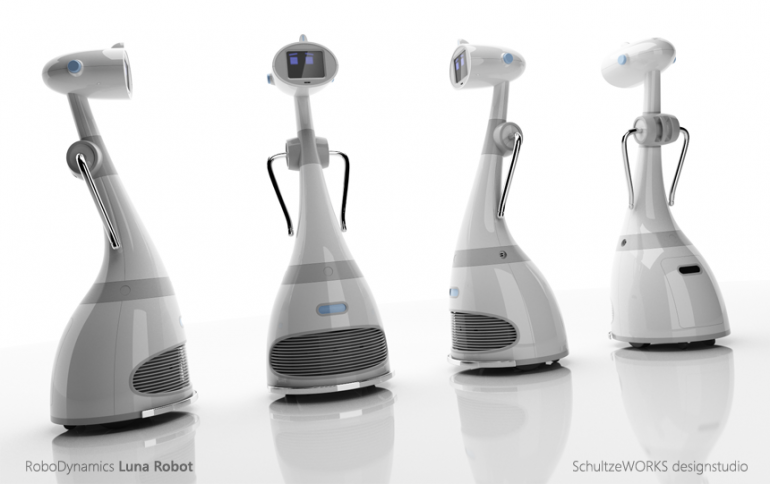
Robotics/The mysterious debut of Luna the personal robot

Ah, the personal robot. While flying cars and jetpacks are now here – for some people – we still don't have robots that help us out around the house. However, maybe we soon could. This week, California's RoboDynamics introduced its Luna personal robot to the world. While the company currently isn't providing too much other information, her(?) makers are calling Luna "a breakthrough in robot design."

Luna was designed for RoboDynamics by SchultzeWORKS, an industrial design studio also based out of California. The robot incorporates the hardware, firmware, and drive train already used in RoboDynamics' Telepresence internet-connected Low-cost Robot (TiLR).
According to the press release, Luna is the world's first personal robot to be expandable via expansion ports, fully programmable with open standards, and affordable. No further specifics are provided on hardware, software, or just what it is that she could do for you, although she does apparently have a carrying handle in the back, and unarticulated pipe-like arms that can swing up to carry a tray.
IEEE Spectrum,  however, states that Luna has a Dual Core Atom 2 GHz processor, a Linux-based operating system, and up to 32 GB of storage. Interaction is possible via an 8-inch capacitive touchscreen, a three-microphone array with speakers, wireless and cellular communication, an 8-megapixel camera, and a 3D sensor. She runs on a 12-volt battery, for 4-8 hours per charge.
The IEEE website also reports a projected price of just US$1,000, although the first models (which should ship later this year) will go for $3,000.
We'll let you know when more information comes our way. In the meantime, you can see Luna in action, in the rather rustic video below.
»»  read more
Related Posts .