Showing posts with label Wildlife Pictures. Show all posts

25 Nov 2011

Endangered species (Special Photography)

Tarzan's chameleon
Named after the town of Tarzanville in Madagascar where it was discovered in 2009, Tarzan's chameleon is one of the most colourful of the 61,900 species on this year's updated Red List. Calumma tarzan is critically endangered and one of 22 terrestrial reptiles listed as threatened in Madagascar, mainly because tropical forests are being cleared.
(Image: Jörn Köhler)
Coco de Mer (Coconut poachers)
Prized for its supposed aphrodisiac properties, the infamous Seychelles plant  (Lodoicea maldivica) is in even greater danger than before, moving up the list from vulnerable to endangered. IUCN says the plant is under threat from fires and illegal harvesting of its kernels. Despite strict regulations governing collection and sale of its seed, a significant black market exists for its kernals. Globally, a fifth of plants face extinction.
(Image: Jean-Christophe Vie)
Tuna
Five of eight species of tuna are now in the threatened or near-threatened categories, including the endangered Atlantic bluefin (Thunnus thynnus) pictured here. The others in trouble are the southern bluefin, the bigeye, the yellowfin and the albacore. The hope is that the listings will help governments introduce and enforce safeguards to preserve them.
(Image: © OCEANA /Keith Ellenbogen)
Hopping pharmacies
 Amphibians got this name because they are rich in natural, medically useful substances. Now many are endangered, and the 26 newly discovered amphibians added to the Red List this year include the blessed poison frog (Ranitomeya benedicta), discovered 2008 in Peru, imperilled by habitat loss and the international pet trade.
(Image: Jason Brown)
Rhino
From now on, the only place you'll see this subspecies of black rhino from western Africa is in photographs or stuffed in museums. That's because this year, the western black rhino (Diceros bicornis longipipes) is officially extinct, and others are clinging on by a thread. In all, the IUCN says that a quarter of all mammals are at risk of extinction. It's not all bad news though. One of conservation's success stories is (Ceratotherium simum simum), a subspecies of the African southern white rhino, which has soared in number from less than 100 individuals to 20,000 since the end of the 19th century.
(Image: Richard Emslie)
-----------------------------------------------------------------------------------------------------------------------------------
»»  read more

21 Nov 2011

Wildlife Photographer of the Year 2011/pictures

The winners of the 2011 Veolia Environnement Wildlife Photographer of the Year have been announced. The prize attracts the world's best and culminates in an exhibition at the Natural History Museum, London. From oil-covered birds to death-defying mountain goats, these are our favourites.
Tiptoe Lark
Henrik Lund shot this horned lark against a stark wintry background for graphic effect. The Eremophila alpestris reaches up for seeds to eat.
(Image: Henrik Lund/Veolia Environnement Wildlife Photographer of the Year 2011)
Beavering
It's not bringing a bunch of flowers home – this underwater shot by Louis Marie Préau highlights the cutting and building capacity of the beaver (Castor), and its strong swimming skills.
Beavers are prolific builders and highly adapted to log trees and branches. They use these to build the dams and lodges that provide them protection and easy access to food.
Four to eight members make up a family unit and pairings are monogamous. Beavers ferociously defend their territories, which they mark out with scents.
(Image: Louis Marie Préau/Veolia Environnement Wildlife Photographer of the Year 2011)
Touching Romance
Dmitry Monastyrskiy's macro image shows two yellow sac spiders (Cheiracanthium punctorium) up close atop a plant. A female, after mating, will build a silk tube sac and wrap both herself and her eggs within it.
The spiders are poisonous, although their bites usually result in little more than localised discomfort and pain.
(Image: Dmitry Monastyrskiy/Veolia Environnement Wildlife Photographer of the Year 2011)
A Stack of Suitors
Marcel Gubern caught this self-stacked group of green turtles (Chelonia mydas) busy mating underwater off the coast of the Malaysian state of Sabah, which is on the island of Borneo. The turtles migrate long distances between feeding grounds and hatching spots and mate in shallow waters.
Here, a single female is courting numerous males. Female sea turtles can store sperm in their oviducts for long periods of time and so can produce numerous offspring by different fathers from a single mating session.
(Image: Marcel Gubern/Veolia Environnement Wildlife Photographer of the Year 2011)
Balancing Act
Photographed in Glacier National Park, Montana, this mountain goat (Oreamnos americanus) effortlessly performs a death-defying climb. The goat's diet consists mainly of grass, sedge, lichen, and occasionally leaves and shoots – Here, precariously wedged between the rocks, the goat is reaching out for a tasty lick of rock that can provide mineral nutrients such as sodium, calcium, potassium or sulphate.
Mountain goats are agile and highly adapted for their environment: a cloven hoof offers dexterity and soft, padded soles provide traction and grip.
Positioned on a bridge crossing a nearby gorge, Joel Sartore kept his distance, using a long lens to get the shot without startling the creature.

(Image: Joel Sartore/Veolia Environnement Wildlife Photographer of the Year 2011)

Cold Embrace
Photographed in the French Alps at an altitude of around 2000 metres, these hardy common frogs (Rana temporaria) live across much of Europe, spreading as far north as the Arctic circle. During mating, a male will cling to a female using specially evolved "nuptial" pads on his first fingers. However, these two frogs are both male. The larger size of the one at the front may have confused the other into thinking it was a female.
Females can lay as many as 4000 eggs at a time, which are fertilised by the male as they are released.
(Image: Cyril Ruoso/Veolia Environnement Wildlife Photographer of the Year 2011)
------------------------------------------------------------------------------------------------------------
»»  read more

31 Oct 2011

Near Passerine Photos

Rainbow Bee-Eaters
Photograph by Jenny Hall
A beautiful pair of rainbow bee-eaters; this shot was taken in my backyard in the top end of Australia's Northern Territory. The male is the one with the longer center tail feather.
Kea
Photograph by Tzachy Rachamim
During our trip to New Zealand, we went to the Mueller hut, an alpine hut that overlooks Cook Mountain, the highest mountain in New Zealand. While going uphill to get a better view, four keas (mountain parrots) flew above us and landed right next to us in order to investigate what we were doing. (This is a very curious bird.) This is one of the keas landing next to us.
Macaws
Photograph by Kraig Darnell
A lucky shot at the San Diego Zoo
Pigeons
Photograph by Ky Lu
When I visited the famous Ge Er Temple in Qinghai Province, China, I saw some pigeons flying over the stupas and some lifting and some landing. Taking the moment, I took this one.
Pigeons Scattering
Photograph by Animesh Hazra
Wings of freedom at Mecca Masjid, Hyderabad
Northern Flickers
Photograph by Mike Paterson
One of a series of shots displaying the mating ritual of a pair of northern flickers
Pileated Woodpecker
Photograph by Edward Mattis
Pileated woodpecker over Loxahatchee National Wildlife Refuge

Blue-Tailed Bee-Eater
Photograph by Yangchen Lin
A blue-tailed bee-eater bursts through the surface in an exuberant spray of water, its wings beating at full thrust to regain cruising altitude. Tropical birds like bee-eaters, swallows, and swifts take frequent dives to clean and cool themselves in the warm climate. But this maneuver is more risky than it seems; the birds must maintain sufficient momentum throughout submergence to become airborne again and avoid drowning.
Kingfisher
Photograph by Torben Andersen
One morning in September, the kingfisher arrived on the branch with a fresh fish. The kingfisher smashed the fish against the branch at high speed to kill it. After the kill, the fish was eaten and the kingfisher left for another one. Shot in a local lake in Denmark.
Kingfisher Flying
Photograph by Torben Andersen
One early morning in August, the kingfisher I spotted left the tree and went up in the air over the lake, looking over the lake for a fish. This time with the front toward the sun and me, I took my shots. This is one of them.
Yellow-Billed Hornbill
Photograph by Karl Daniels
Yellow-billed hornbill from Kruger National Park in South Africa. I had a fun-filled week with shots of African buffalo, elephant, and cheetah.
Cuckoo
Photograph by Chuck Koenecke
I had tried without success to get close enough for a good shot of this beautiful cuckoo and was just switching to a longer lens when suddenly he flew right into my lap! Luckily, I didn't fall over and was able to snap this quick shot before he flew off.
Indian Ringneck Parrot
Photograph by Mikaela Fox
This is a shot taken on my patio of my male Indian ringneck parrot, Baby.
Nuttall’s Woodpecker
Photograph by Iryna Dronova
The woodpeckers apparently broaden their menu from insects that actually live in the wood to delicious offerings of the fruit trees. This seems to be a female Nuttall's woodpecker (Picoides nuttallii) feeding on a ripe pear. The photo was taken in Oakland, California, in November 2009.
»»  read more

29 Oct 2011

Special Photography/Waterbirds

 Black Skimmer
Photograph by Mario Goren, My Shot
Common Tern
Photograph by James Galletto, My Shot

Seagulls Feeding
Photograph by Dale Williamson, My Shot
Swimming Pelicans
Photograph by Arnou Kunz, My Shot
Fishing Pelican
Photograph by Roger Lee, My Shot
Snapping Pelican
Photograph by Ryan Kennedy, My Shot
Seabird With Fish
Photograph by Carly Saxon, My Shot
Blue-Footed Booby
Photograph by Daniel Gautreau, My Shot
Flying Puffin
Photograph by Richard Seeley, My Shot
Swimming Loon
Photograph by April Stampe, My Shot
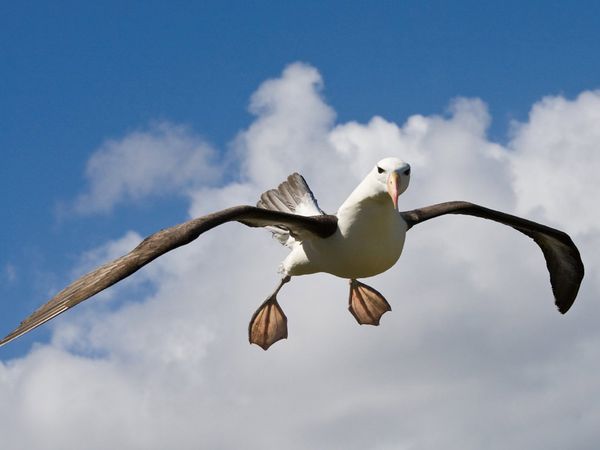
Black-Browed Albatross
Photograph by Allan Hansen, My Shot
___________________________________________
Courtsey: NATIONAL GEOGRAPHIC
»»  read more

22 Oct 2011

Special Photgraphy/Into the Amazon Rainforest

The “lungs of our planet” have been attributed to the Amazon rainforest, also known as Amazonia. This Amazon jungle, or the Amazon basin in South America, covers over 1.7 billion acres acres (7,000,000 square kilometers); the actual tropical rainforest is spread over 1.4 billion acres and 9 countries: Brazil, Peru, Colombia, Venezuela, Ecuador, Bolivia, Guyana, Suriname and French Guiana. 60% of the Amazon jungle is contained within Brazil. The Amazon represents over half the remaining rainforests worldwide and contains the largest and most species-rich tropical forest system on our planet. Amazonia grew around the Amazon River which is the longest river, the largest river, and the basin has the largest area in the world. The Amazon River has total flow greater than the top ten world’s rivers combined. The biodiversity of this wet tropical forest could boggle the brain; one in ten animal species lives here and it is the largest collection of living plants on the globe . . . and much of the Amazon is still unexplored. It definitely should be protected for the tropical jungle paradise may hold the keys, yet to be discovered, to cure countless diseases.
A Yagua (Yahua) tribeman demonstrating the use of blowgun (blow dart), at one of the Amazonian ‘islands’. (Photo by JialiangGao www.peace-on-earth.org)
The photographer wrote of the ‘Wild Boy’, “His eyes reflects the nostalgia of an almost extinct World. Wearing an Amazon Toucan, traditionally used only for the sacred dances and very special moments, this boy is learning from the Shamans the traditional dances of the Kotococha culture, a knowledge which is only transmitted from the shaman to the few chosen by word of mouth. Origin: Ecuadorian Amazon rainforest, Kotococha tribe.” (Photo by Gustavo Morejón)
Monkeys hanging out in the tropical jungle. (Photo  by Worldwide Happy Media)
You might see a Tupi ‘red bird,’ also known as the scarlet ibis, one of the most beautiful Brazilian birds, because of the color of their plumage. (Photo by J.Gil Photography)
The biodiversity in these wet tropical forests is mind-blowing. It is home to the largest collection of living plant and animal species in the world. One in ten known species on this planet lives in the Amazon Rainforest. Amazonia is home to around 2.5 million insect species, tens of thousands of plants, and more than 2,000 birds and mammals. So far, at least 40,000 plant species, 2,200 fishes, 1,294 birds, 427 mammals, 428 amphibians, and 378 reptiles have been scientifically classified within this region. One in five of all bird and fish species live here. The Scarlet Macaws above are indigenous to the American tropics. The photographer wrote, “Red-and-Green Macaws DO grow on trees in the Amazon.” (Photo by Billtacular)
Or you might see an Amazonian ‘Godzilla.’ Photo  by Laurent
 In Amazonia, you might even stumble upon an Emerald Boa. Eek! (Photo by Free Pet Wallpapers)
Looking down at the ‘lungs of the planet.’ (Photo  by Wallpapers Diq)
The photographer explained, “On the Tambopata River in the Peruivan Amazon Rainforest, a group of kids play football on a tiny sand island in the middle of the river.” (Photo by Mike Cooper)
Toucan, the earl of Amazonia.(Photo Tambako the Jaguar)
Amazonian Sunset.( Photo by New7Wonders of Nature)
Native village of Chipitiere, in the Cultural Zone of Manu National Park, Peru. (Photo by Martin St-Amant)
Amazon Poison Dartfrog, also known as the Reticulated Poison Frog, can be found at the inflows of the 
Amazon River in Peru live high up in the rainforest. The photographer also noted that these very little beauties are only about 15-20 mm in size. (Photo by Dominik Hofer)
Brazilian Amazon. (Photo  by Горящий тур)
»»  read more
Related Posts .