
 'Best Kept Secret' (Washington Square Press) 'Best Kept Secret' (Washington Square Press) By Amy Hatvany Moms who drink are usually a punch line. This novel tells a much more serious story about what happens to a single mom when her take-the-edge-off glass of wine at the end of the night turns into addiction. |
 'Maine' (Knopf) 'Maine' (Knopf) By J. Courtney Sullivan Three generations of an Irish Catholic family reunite, as they do each summer, in the family’s cottage in Maine, in Sullivan’s second novel, which has a compelling title and a godawful cover. Secrets are kept (will Maggie tell her slacker Brooklyn boyfriend about her pregnancy?), booze is consumed (will eldest daughter Kathleen fall off the wagon?), and judgments are rendered (a mother comments acidly to her daughter that “it looks like you’ve lost a few). In a book crammed with memorable women, it’s Alice, the family’s prickly, proud, haunted matriarch, who will stay with you the longest. |
 'The Red Thread' (W.W. Norton & Company) 'The Red Thread' (W.W. Norton & Company) By Ann Hood In Rhode Island, infertile couples start down the path that will lead them toward the babies that were meant to be theirs. First-world stories of infidelity and unhappiness can’t compete with the heartbreaking tales of how the girls who will come to America came to be orphaned in the first place. |
 'Before You Suffocate Your Own Fool Self' (Riverhead) 'Before You Suffocate Your Own Fool Self' (Riverhead) By Danielle Evans Short stories can be the perfect choice for summer – each tale the perfect length for an afternoon at the beach. Evans’ stories deal with the Questions of Race, parsed by characters who are smart, sarcastic, occasionally bitter and always funny. |
 'Exposure' (Ballantine Books) 'Exposure' (Ballantine Books) By Therese Fowler Boy meets girl. Boy loves girl. Boy, at girl’s urging, texts nude pictures of himself to her phone. Girl’s father finds phone…and all hell breaks lose, with the arrest of both parties as just the first in a series of things that go wrong and get worse. Compulsively readable and a timely, cautionary tale in our age of TMI. |
 'The Nobodies Album' (Anchor) 'The Nobodies Album' (Anchor) By Carolyn Parkhurst Is it a murder-mystery? Is it the tale of a woman learning – reluctantly and belatedly – to be a mother? Or a character study of how novelists manipulate truth to suit their purposes? Parkhurst’s third novel is all of the above…and it’s accompanied by a sly, tongue-in-cheek promotional effort (seriously. Look her up on YouTube). |
 'Faith' (Harper) 'Faith' (Harper)By Jennifer Haigh Combines the best descriptive writing of literary fiction with the plot twists of a thriller. A priest in Boston is accused of molesting a young boy. The truth –as revealed by his sister, his brother, his accuser and the father’s own father – is a lot more complicated than that. |
 'Silver Sparrow' (Algonquin) 'Silver Sparrow' (Algonquin) By Tayari Jones Dishy, twisty, secrets about two daughters: one from her father’s public family, the other from the family on the side. |
 'The Magician King' (Viking) 'The Magician King' (Viking) By Lev Grossman Lev Grossman’s "The Magicians" was billed as Harry Potter for grown-ups – call it ‘Dirty Harry,’ or Hogwarts with hook-ups. In the sequel, published in August, teenage magician Quentin Coldwater – now a king in the Narnia-esque land of Fillory – goes on a hero’s quest, with wondrous, and tragic, results. |
 'The Story of Beautiful Girl' (Grand Central) 'The Story of Beautiful Girl' (Grand Central) By Rachel Simon On the proverbial dark and rainy night in 1968, two strangers show up at a widow’s doorstep. They’ve got a secret – they’ve escaped from an institution for the incurable and “feeble-minded” – and a baby. Their story, by the author of "Riding The Bus With My Sister," is a compelling and heartbreaking read, in part because this country’s treatment of the disabled and the different, not so very long ago, was so tragic. |
Showing posts with label best reads. Show all posts
Showing posts with label best reads. Show all posts
29 Aug 2011
Top10 books for the beaches /Jennifer Weiner's selections:
28 Aug 2011
The Memory of Love by Aminatta Forna/Book Review

Aminatta Forna (Author)
2011 Orange Prize for fiction Shortlist
2011 Commonwealth Writers’ Prize
Paperback: 464 pages Publisher: Grove Press; 1 edition Language: English
ISBN-10: 080214568X ISBN-13: 978-0802145680
"A subtle and complex exploration of both the psyche of a war-torn African state and the attractions which it holds for an outsider. Forna is a writer of great talent and courage, one who never shies away from asking the difficult question."-Monica Ali
“Delivering us to a common center, no matter where we happen to be have been born, Aminatta Forna tackles those great human experiences of love and war, of friendship, rivalry, of death and triumphant survival. Often darkly funny, written with gritty realism and tenderness, The Memory of Love is a profoundly affecting work.”—Kiran Desai
Book Description
Since its publication in hardcover, Aminatta Forna’s The Memory of Love has been hailed as a book of rare beauty and importance, and has been shortlisted for the 2011 Orange Prize for Fiction and selected for the January 2011 Indie Next List. With astounding depth and elegance, it takes the reader through the haunting atmosphere of a country at war, delicately intertwining the powerful stories of two generations.
In contemporary Freetown, a devastating civil war has left an entire populace with secrets to keep. In the capital hospital Kai, a gifted young surgeon is plagued by demons that are beginning to threaten his livelihood. Elsewhere in the hospital lies Elias Cole, a man who has stories to tell from the country’s turbulent postcolonial years that are far from heroic. As past and present intersect, Kai and Elias are drawn unwittingly closer by Adrian, a British psychiatrist with good intentions, and into the path of one woman at the center of their stories.
A work of breathtaking writing and rare wisdom, The Memory of Love seamlessly weaves together the lives of these three men to create a story of loss, absolution, and the indelible effects of the past—and the very nature of love.
From Publishers Weekly
Forma, recipient of a Hurston/Wright Legacy Award for Ancestor Stones, returns to Africa's troubled conscience in this admirable if uneven outing. Adrian Lockheart is a well-meaning English psychologist who embarks on a temporary post at a Sierra Leone hospital intending to modernize treatment of the long-neglected schizophrenics, transients, and scarred victims of civil war who walk the hospital grounds. He soon meets his match in the elderly ex-professor Elias Cole, who speaks eloquently of his country's turbulent history--and also of his passion for the wife of a more radically minded colleague whose eventual disappearance Cole may be implicated in. As the holes in Elias's story widen, Adrian falls for a patient's daughter and into conflict with a surgeon, and ripples from the unexamined past threaten the present. Yet Forma's material doesn't measure up to the book's length. The book's prolixity, combined with scenes that drag or come off as forced, certainly doesn't ruin the experience, but it does occasionally glut what amounts to a heartening cry for moral responsibility in the thick of maddening injustice.
From Booklist
Set in Sierra Leone at the turn of the twenty-first century, Forna’s absorbing second novel (after Ancestor Stones, 2006) revolves around three very different men. British psychiatrist Adrian Lockheart has fled his failing marriage in England in the hopes of doing some good in Sierra Leone. Adrian becomes fascinated by two of his patients, elderly Elias Cole, a former university professor, and Agnes, a woman lost in a fugue state. The dying Cole reveals to Adrian, Scheherazade-like, how he fell in love with a radical colleague’s wife in the late 1960s, while Adrian must piece together the details of Agnes’ life. Adrian finds a friend in a haunted young surgeon, Kai, who is contemplating leaving the country. Kai questions some of Adrian’s risky decisions, such as his intention to track Agnes down once she leaves the hospital, but it is Adrian’s involvement with a local woman from Kai’s past that shocks the young doctor. Fate and tragedy intertwine in this stunning and powerful portrait of a country in the aftermath of a decade of civil war.
___________________________________________
Praises
“Forna has achieved something…startling and impressive here. Here is a luminous tale of passion and betrayal….Forna’s sharp eye spares no one its brutal honesty…. And she writes to expose what remains after all the noise has faded: at the core of this novel is the brave and beating heart, at once vulnerable and determined, unwilling to let go of all it has ever loved.”— New York Times Book Review
“[An] elegantly rendered novel of loss and rehabilitation in the aftermath of Sierra Leone's long civil war….As Kai, Adrian and Elias are revealed in flashbacks and fragments, the novel coalesces into an ambitious exploration of trauma and storytelling….Forna advances the story through tightly executed scenes…time bombs that detonate once their context becomes clear.”—San Francisco Chronicle
“The real pleasure of Forna’s storytelling is in her scrutiny of her characters’ inner lives and her ability to connect their choices to the moral dilemmas of a traumatized society.”—The New Yorker
"She threads her stories like music, imperceptibly into the reader's consciousness. One is left hauntingly familiar with the distant and alien; not quite able to distinguish the emotional spirits of fiction from the scars of real experience." —The Times (London)
"Forna weaves an intricate tapestry of betrayal, tragedy and loss; expertly drawing together the threads that link the sick old man, the brilliant doctor with dreams of leaving his troubled homeland, the wounded English psychologist and the young woman who links the three of them in a common bond of love… [Forna] moves deftly between the enchantments of different narratives: the therapeutic, the confessional, the traumatic—flashbacks, nightmares, hauntings, fugue states where stories are lost or distorted beyond recognition and the sweetly joyous themes of new love, renewal, springing hope, second chances." — The Telegraph, April 2010 (UK)
“Aminatta Forna’s brilliant new novel takes an oblique look at the Sierra Leonean civil war of the 1990s. . . Forna writes like a scientist, not only in the accuracy of her descriptions but in the way she selects which incidents to highlight, turning each scene into a metaphor that reverberates with meaning beyond the event itself…you feel that what she is reaching for is economy of phrasing, aptness of imagery, exactness of description, and she achieves that perfectly. This is a remarkable novel: well researched, well thought out, well written – the kind that deserves to be on the Booker shortlist.”—Helon Habila, The Guardian (UK)
"Aminatta Forna's two previous books explored, with elegance and empathy, the conflicts endemic to Sierra Leone. Her second novel continues Forna's examination of unpalatable truths while sacrificing none of her talent as a storyteller." — The Sunday Telegraph (UK)
"Through the complicated connections between characters, Forna explores a country’s history: the violence and chaos of war, the scars, the hope and determination and the uncertainty of rebuilding." — The Sunday Times (UK)
______________________________________________
Reader's Review
I took my lead from The New York Times' top rated review of The Memory of Love and was not disappointed. The narrative takes place either side of the civil war in Sierra Leone. Elias, an elderly university professor tells his story to Adrian Lockheart, a British psychologist. Meanwhile Adrian becomes friends with a young Sierra Leonian surgeon Kai Mansaray. The book encompasses a multitude of themes. How do people live and love in war? Where is the line between inaction and complicity? Can you really ever heal trauma, or do people simply learn to live with what has happened? The story unwinds slowly and richly. Cole's voice is one of wrecked grandeur as he tells his story to Adrian. But can he be trusted? Is he telling the whole truth, or as his daughter says: 'There are things about him you don't know.' Gradually the story gathers page turning pace. This is not an easy novel, the author doesn't spoon feed the reader, but forces them to think. I found the characters and themes lingered long after I finished reading. Brilliant!
Let the Great World Spin: A Novel /Book Review

Colum McCann (Author)
WINNER OF THE 2011 IMPAC DUBLIN LITERARY AWARD
WINNER OF THE 2011 IMPAC DUBLIN LITERARY AWARD
Paperback: 400 pages
Publisher: Random House Trade Paperbacks (December 2, 2009)
Language: English
ISBN-10: 0812973992
ISBN-13: 978-0812973990
Product Dimensions: 8.1 x 5.3 x 0.9 inches
Let the Great World Spin is the critically acclaimed author’s most ambitious novel yet: a dazzlingly rich vision of the pain, loveliness, mystery, and promise of New York City in the 1970s.
Corrigan, a radical young Irish monk, struggles with his own demons as he lives among the prostitutes in the middle of the burning Bronx. A group of mothers gather in a Park Avenue apartment to mourn their sons who died in Vietnam, only to discover just how much divides them even in grief. A young artist finds herself at the scene of a hit-and-run that sends her own life careening sideways. Tillie, a thirty-eight-year-old grandmother, turns tricks alongside her teenage daughter, determined not only to take care of her family but to prove her own worth.
Elegantly weaving together these and other seemingly disparate lives, McCann’s powerful allegory comes alive in the unforgettable voices of the city’s people, unexpectedly drawn together by hope, beauty, and the “artistic crime of the century.
From Publishers Weekly
McCann's sweeping new novel hinges on Philippe Petit's illicit 1974 high-wire walk between the twin towers. It is the aftermath, in which Petit appears in the courtroom of Judge Solomon Soderberg, that sets events into motion. Solomon, anxious to get to Petit, quickly dispenses with a petty larceny involving mother/daughter hookers Tillie and Jazzlyn Henderson. Jazzlyn is let go, but is killed on the way home in a traffic accident. Also killed is John Corrigan, a priest who was giving her a ride. The other driver, an artist named Blaine, drives away, and the next day his wife, Lara, feeling guilty, tries to check on the victims, leading her to meet John's brother, with whom she'll form an enduring bond. Meanwhile, Solomon's wife, Claire, meets with a group of mothers who have lost sons in Vietnam. One of them, Gloria, lives in the same building where John lived, which is how Claire, taking Gloria home, witnesses a small salvation. McCann's dogged, DeLillo-like ambition to show American magic and dread sometimes comes unfocused—John Corrigan in particular never seems real—but he succeeds in giving us a high-wire performance of style and heart.
From Booklist
After the rigors of Zoli (2007), his historical tale of Romani life, best-selling literary novelist McCann allows himself more artistic freedom in his shimmering, shattering fifth novel. It begins on August 7, 1974, when New Yorkers are stopped in their tracks by the sight of a man walking between the towers of the World Trade Center. Yes, it’s Philippe Petit, the subject of the Academy Award–winning documentary Man on Wire and one of McCann’s many intense and valiant characters. The cast also includes two Irish brothers: Corrigan, a radical monk, and Ciaran, who follows him to the blasted Bronx, where he encounters resilient prostitute Tillie and her spirited daughter Jazzlyn. Gloria lives in the same housing project, and she befriends Claire of Park Avenue as they mourn the deaths of their sons in Vietnam. McCann’s hallucinatory descriptions of a great city tattooed and besmirched with graffiti, blood, and drugs in the midst of a financial freefall are eerie in their edgy beauty, chilling reminders of how quickly civilization unravels. Here, too, are portals onto war, the justice system, and the dawning of the cyber age. In McCann’s wise and elegiac novel of origins and consequences, each of his finely drawn, unexpectedly connected characters balances above an abyss, evincing great courage with every step.
Frank McCourt's Review
Now I worry about Colum McCann. What is he going to do after this blockbuster groundbreaking heartbreaking symphony of a novel? No novelist writing of New York has climbed higher, dived deeper.
Trust me, this is the sort of book that you will take off your shelf over and over again as the years go along. It’s a story of the early 1970s, but it’s also the story of our present times. And it is, in many ways, a story of a moment of lasting redemption even in the face of all the evidence.
There are dozens of intimate tales and threads at the core of Let the Great World Spin. On one level there’s the tightrope walker making his way across the World Trade Center towers. But as the novel goes along the “walker” becomes less and less of a focal point and we begin to care more about the people down below, on the pavement, in the ordinary throes of their existence. There’s an Irish monk living in the Bronx projects. There’s a Park Avenue mother in mourning for her dead son, who was blown up in the cafés of Saigon. There are the original computer hackers who "visit" New York in an early echo of the Internet. There’s an artist who has learn to return to the simplicity of love. And then--in possibly the book’s wildest and most ambitious section--there’s a Bronx hooker who has brought up her children in “the house that horse built”--“horse” of course being the heroin that was ubiquitous in the '70s.
All the voices feel realized and authentic and the writing floats along. This was my city back then--and now. McCann has written about New York before, but never quite as piercingly or as provocatively as this. This is fiction that gets the heart thumping.
The stories are interweaved so that it is one story, on one day, in one city, and yet it is also a history of the present time. In Let the Great World Spin, you can’t ignore the overtones for today: suffice it to say that the novel is held together by an act of redemption and beauty. I didn’t want to stop turning the pages.
I’m really not sure what McCann will do after this, but this is a great New York book, not just for New Yorkers but for anyone who walks any sort of tightrope at all. And yes, it doesn’t surprise me that it takes an Irishman to capture the heart of the city.
____________________________________________________
PRAISES
“Every character … grabs you by the throat and makes you care. McCann's dazzling polyphony walks the high wire and succeeds triumphantly.”–Emma Donoghue, author of The Sealed Letter
“What a book! Complex and captivating … a very sensual novel.”–John Boyne, author of The Boy in the Striped Pajamas
“Stunning… [an] elegiac glimpse of hope…It’s a novel rooted firmly in time and place. It vividly captures New York at its worst and best. But it transcends all that. In the end, it’s a novel about families – the ones we’re born into and the ones we make for ourselves.”–USA Today
“McCann…both resurrects and redeems the horrors of Sept. 11, creating a metaphorical landscape of human endurance in the face of unspeakable tragedy…. This is McCann's gift, finding grace in grief and magic in the mundane.”–San Francisco Chronicle,
“Mesmerizing…A Joycean look at the lives of New Yorkers changed by a single act on a single day….Colum McCann’s marvelously rich novel…weaves a portrait of a city and a moment, dizzyingly satisfying to read and difficult to put down.”–Seattle Times
___________________________________________________
Reader's Review:
Colum McCann's "Let the Great World Spin" follows the lives of a group of individuals immediately before and after Philippe Petit walked a tightrope between the World Trade Center on August 7, 1974. Although the book does not feature Petit as one of its central characters, the lives of all of the main characters intersect with Petit's walk in a key way, creating a neat puzzle around the event. The book looks at people from all walks of life in NYC in the 1970s--from Bronx hookers to a Park Avenue matron. As the lives of each of these people comes together you wonder who will survive this vicious city, where people and souls seem to be eaten alive.
This was the first work I had ever read by McCann, and wow, was I impressed. McCann is a master storyteller and the way he weaves words together creates such vivid pictures, you feel like you can smell the smoke from the burning Bronx. While this novel wasn't my typical style--it is much darker and rawer than what I typically read--McCann's literary gifts can only leave a reader in awe. I did have a few problems with the structure of the novel--the jumping from character to character sometimes felt jumpy and abrupt, but I think this technique was intended to jar the reader--mimicking the realities of life in 1970s New York. The ending also felt out of place to me.
27 Aug 2011
Top10 books for the beaches by Harlan Coben
'A Faithful Place' (Penguin)
By Tana French

French is my favorite discovery over the past year. Beautifully written and to use movie-speak, it's "Angela's Ashes" meets a haunting thriller. Lyrical and moving.
'Adrenaline' (Grand Central)
By Jeff Abbott

Are you looking for the heir apparent to Jason Bourne? Jeff Abbott's aptly titled book is the most gripping spy story I've read in years.
'Swim Back to Me' (Knopf)
By Ann Packer

It starts with coming of age novella, then there are some poignant short stories — and finally we have another novella with the same character three decades later. Wise and heartbreaking and beautifully written.
'Misery Bay' (Minotaur Books)
By Steve Hamilton

I'm often asked to recommend a detective series readers might have missed. This is it. Hamilton has been flying under the radar with his Alex McKnight series for too long. "Misery Bay" will change that, I hope.
'Maine' (Knopf)
By J. Courtney Sullivan

A poignant, heartbreaking story about three generations of women and the beachfront Maine home, won in a barroom bet, that unites them all. "Maine" is that summer novel you’ll want to share with a friend – and, like summer itself, you’ll wish it would never end.
'Long Gone' (Harper)
By Alafair Burke

One day, Alice Humphrey goes to her job to find the gallery is gone, stripped bare… and oh there’s a dead body on the floor. A page turner from a major talent.
'Save Me' (St. Martin's Press)
By Lisa Scottoline

A great thriller and a wonderful rumination on motherhood, bullying and the decisions we make. Scottoline has never been better – and that’s saying something.
'Sixkill' (Putnam Adult)
By Robert B. Parker

Parker died last year. This is the last Spenser mystery – the greatest detective series of all time — written by the master himself. If you haven’t discovered Spencer or Parker, here is your chance. RIP, Bob.
'In The Garden of Beasts' (Crown)
By Erik Larson
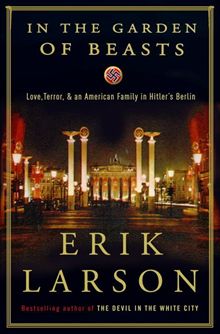
I don’t read much nonfiction, but Larson’s portrait of Berlin during the early years of Hitler’s reign, told from the viewpoint of the US Ambassador and his impetuous daughter, is both gripping and educational.
'Between Shades of Gray' (Philomel)
By Ruta Sepetys

Sepetys has penned a harrowing and heartbreaking novel about Lina, a 16 year old Lithuanian girl, who is sent to a forced-labor camp during the Russian invasion of 1939. Beautifully written and important, this Young Adult novel is for Grades 7 to 12.
25 Aug 2011
Washington: A Life/Book Review

By Ron Chernow
Winner of 2011 Pulitzer Prize for fiction autobiography
Book Info-
Hardcover: 904 pages
Publisher: Penguin Press HC, The (October 5, 2010)
Language: English
ISBN-10: 1594202664
ISBN-13: 978-1594202667
TOP REVIEWS
From Booklist
With so much that can be said—and said positively—about this magisterial biography, it is difficult not to write a review as long as the book itself. Given the distinction of the author, who wrote, among other single and collective biographies, the glowingly reviewed Alexander Hamilton (2004), readers can safely assume from the outset that what lies ahead of them is a vastly enlightening, overwhelmingly engaging treatment of a great man. The subject of the book needs only, by way of identification, the one word that Chernow uses as his title: Washington. Another book on Washington? is a question rendered pointless by this one, which happens to be the author’s masterpiece. Definitive Washington is the point and effect of this biography. Our first president is thought of as more marble statue than living, hurting, loving human; however, Chernow’s Washington stands not in the opposite corner as hot-blooded and animated. Washington spent a lifetime practicing control of his passions and emotions; his innate virtues, undenied and even celebrated here, were sharpened and focused by the man’s suppression of a natural volatility. “His gift of silence” and of “inspired simplicity,” as the author so aptly terms Washington’s strongest suits, supported his consequent leadership as general and as president.
From Publishers Weekly
In his introduction, veteran biographer Chernow is clear about his goals. Using the recent "explosion of research," he wants to render George Washington "real" and "credible," to replace "frosty respect" with "visceral appreciation." In many respects, Chernow succeeds. He gives us a Washington who starts with limited education and means and, through a remarkable combination of timely deaths, an incredible capacity for hard work, a shrewd marriage, astonishing physical hardiness and courage, a propensity for land speculation, and a gift for finding influential patrons, transforms himself into a soldier, well-to-do planter, local official, and eventually the only real choice to command the Continental army, preside over the Constitutional Convention, and serve as the first president. Chernow makes familiar scenes fresh (like the crossing of the Delaware) and expertly brings the provisional revolutionary and early Republican eras to life. Along the way, however, he mistakes "visceral" for ardent; while he never hides Washington's less than saintly moments or shirks the vexed question of slavery, he often seems to ignore the data he's collected. Examples of shady dealing are quickly followed by tales of Washington's unimpeachable ethics or impeccable political savvy. At times it feels as if Chernow, for all his careful research and talent for synthesis, is in the grip of a full-scale crush. The result is a good book that would have been great if better edited, and if Chernow had trusted that Washington's many merits, even when accompanied by his faults, would speak for themselves.
"Tenaciously researched...This new portrait offers a fresh sense of what a groundbreaking role Washington played, not only in physically embodying his new nation's leadership but also in interpreting how its newly articulated constitutional principles would be applied...deeply rewarding."
-New York Times
"Just as he resuscitated Alexander Hamilton in a heralded 2004 biography, Ron Chernow now resurrects Washington...[A] remarkable book."
-Entertainment Weekly
"Today, books about Washington continue to appear at such an astonishing rate that the publication of Ron Chernow's prompts the inevitable question: Why another one? An obvious answer is that Chernow is no ordinary writer. Like his popular biographies of John D. Rockefeller and Alexander Hamilton, his 'Washington'...is vivid and well paced."
-New York Times Book Review
"Magisterial...the brilliant biographer Ron Chernow, author of the National Book Award-winning The House of Morgan, demonstrates in his magnificently written, richly detailed and always compelling Washington: A Life just how and why his subject attained such an exalted status."
-Book Page
"Whether he's debunking the legend of Washington's wooden teeth (ivory that cracked and discolored over time) or the purely fictional tale of the cherry tree, the massive yet briskly paced Washington: A Life is a rollicking read, sure to redefine perceptions and correct assumptions."
-Kirkus Reviews
24 Aug 2011
Happy Birthday: A Novel/Book Review

Happy Birthday: A Novel
Danielle Steel (Author)
Hardcover: 352 pages
Publisher: Delacorte Press (July 19, 2011)
Language: English
ISBN-10: 0385340303
ISBN-13: 978-0385340304
Product Description
In this beguiling new novel, Danielle Steel tells the story of three very different people, each of whom, on the same day, reaches a crucial turning point in life—a rite both bittersweet and full of hope, a time to blow out the candles, say goodbye to the past, and make a wish for the future.
Valerie Wyatt is the queen of gracious living and the arbiter of taste. Since her long-ago divorce, she’s worked hard to reach the pinnacle of her profession and to create a camera-ready life in her Fifth Avenue penthouse. So why is she so depressed? All the hours with her personal trainer, the careful work of New York’s best hairdressers, cosmetic surgeons, and her own God-given bone structure and great looks can’t fudge the truth or her lies about it: Valerie is turning sixty.
Valerie’s daughter, April, has no love life, no rest, and no prospect of that changing in the foreseeable future. Her popular one-of-a-kind restaurant in downtown New York, where she is chef and owner, consumes every ounce of her attention and energy. Ready or not, though, April’s life is about to change, in a tumultuous transformation that begins the morning it hits her: She’s thirty. And what does she have to show for it? A restaurant, no man, no kids.
Jack Adams once threw a football like a guided missile. Twelve years after retiring from the NFL, he is the most charismatic sports analyst on TV, a man who has his pick of the most desirable twentysomething women. But after a particularly memorable Halloween party, Jack wakes up on his fiftieth birthday, his back thrown out of whack, feeling every year his age.
A terrifying act of violence, an out-of-the-blue blessing, and two extremely unlikely love affairs soon turn lives inside out and upside down. In a novel brimming with warmth and insight, beginning on one birthday and ending on another, Valerie, April, and Jack discover that life itself can be a celebration—and that its greatest gifts are always a surprise.
23 Aug 2011
Please Look After Mom/Book Review

Kyung-Sook Shin
Publisher: Knopf (April 5, 2011)
Language: English
ISBN-10: 9780307593917
ISBN-13: 978-0307593917
ASIN: 0307593916
Product Description
A million-plus-copy best seller in Korea—a magnificent English-language debut poised to become an international sensation—this is the stunning, deeply moving story of a family’s search for their mother, who goes missing one afternoon amid the crowds of the Seoul Station subway.
Told through the piercing voices and urgent perspectives of a daughter, son, husband, and mother, Please Look After Mom is at once an authentic picture of contemporary life in Korea and a universal story of family love.
You will never think of your mother the same way again after you read this book.
Top Review
“We may know her favorite color, or flower, or meal. But how well do sons and daughters, even when grown, really understand what motivates their mothers? Please Look After Mom is a suspenseful, haunting, achingly lovely novel about the hidden lives, wishes, struggles and dreams of those we think we know best. . . . Shin’s deft use of second person lends this story an instant intimacy. . . . There are few ways to describe this story that don’t involve the word ‘devastating.’ Seemingly small details explode into larger meaning at a pace that takes one’s breath away. The depth of each character’s guilt and regret over Mom’s absence—and what they wish they’d said and done differently—is palpable. The story deftly juxtaposes images of modern Korea with wartime Korea, of city living with country life, of ultra-processed ramen with the crumbly dust of freshly dug potatoes, of Mom lugging heavy jars of homemade pickles and elixirs on the train ride from her country house to nourish her children in the big city. As the family grapples with its newfound understanding of the woman they thought they knew, we’re given a window onto the culture and customs of Korea, its food, festivals, traditions and family dynamics. This book is not for those who crave easy resolution; just like family, it prompts worry, consternation, guilt, heartbreak, and tears. Shin’s style of writing makes it simple for readers to transpose their own families into such a scenario, and the onslaught of emotion that the narrative evokes is strangely cathartic. But, just like family, this novel also delivers ultimate gifts: moments of gorgeous lucidity, love that knows no depth, beauty in the details of many long-held memories.” —The Seattle Times
“Intimate . . . Reflective meditations on motherhood and a ruminative quest to confront mysteries . . . [The novel’s] accumulating voices form a kind of instrumental suite, each segment joined by the same melody of family nostalgia, guilt and apology, and each occasionally plucking away at several larger motifs: country vs. city living, illiteracy vs. education, arranged marriages vs. modern dating, traditions vs. new freedoms. . . . [Please Look After Mom] will strike a chord with many readers, stimulating their own recollections or regrets. Truth be told, I called my mom well before the book’s final page, feeling the need to look after her a little myself.”— The Washington Post
“Haunting . . . Fervent . . . but also sinuous and elusive . . . Details, unembellished and unsentimental, are the individual cells that form this novel’s beating heart. . . . [Shin] re-create[s] a life through fragmented family recollections [and] leads the reader on a switchback journey to the past, historical and personal. . . . The novel’s language—so formal in its simplicity—bestows a grace and solemnity on childhood scenes . . . The rhythms of agrarian life and labor that Shin deftly conveys have a subtle, cumulative power. With each description, the relentless tide of the past erodes the yielding ground of the present to reveal the contours of one woman’s life. . . . Memory is the only guide and the least reliable one . . . Revelation arrives quietly, but truth remains the sole property of the lost.”—, Boston Sunday Globe
“A great literary masterpiece [that] perfectly combines universal themes of love and loss, family dynamics, gender equality, tradition, and charity with rich Korean culture and values.”
— Seattle Post-Intelligencer
“Titles to Pick Up Now: This best-seller set in the author’s native Korea examines a family’s history through the story of the matriarch, mysteriously gone missing from a Seoul train station.”
—the Oprah Magazine
“[Please Look After Mom] can be read on several levels, as a metaphor for the impressions of the past as they linger in the present, as a story of mothers and children, husbands and wives. It describes one woman’s self-sacrifice so that the next generation may realize their dreams, instead of putting them to the side as she had to. . . . It reveals the emergence of a post-war metropolitan society in the twentieth century . . . A captivating story, written with an understanding of the shortcomings of traditional ways and modern life. It is nostalgic but unsentimental, brutally well observed and, in this flawlessly smooth translation, it offers a sobering account of a vanished past. It is the seventh novel by the much-praised Kyung-sook Shin and the first to be translated into English after a best-selling 1.5 million print run that changed the face of publishing in Korea in 2008. We must hope there will be more translations to follow.”
—The Times Literary Supplement
“Quite apart from the universal sentiment it expresses so well, Please Look After Mom is intriguing for its X-ray insight into the mind and experience of an uneducated woman born to generations of subsistence farmers in a remote, mountainous region of the old Hermit Kingdom. It is a cultural leap that most modern readers could scarcely imagine, but it occurs with miraculous ease over the book’s 237 pages. . . . Shin uses the remorseful memories of the lost mother’s loved ones to personalize the cultural chasm that separates modern Koreans from their immediate, pre-industrial past.”
— Globe and Mail (Canada)
10 books you really should have read in high school
It's never too late — they're probably in your teenager's book bag right now
Credit : Jennifer Worick
High-schoolers often have to slog through classics when they’d rather be hanging out with their friends or doing just about anything else. You might have felt the same way, heading to a football game or slumber party rather than drowning in "Moby Dick." But there’s a reason your English teacher pleaded with you to read these books. Crack them open or download them to an e-reader and get reacquainted with the likes of Jay Gatsby, Hester Prynne, and, indeed, Mr. Darcy.
“I think that there are characters that it would be a shame not to meet like Atticus Finch in 'To Kill a Mockingbird' or Holden Caulfield in 'The Catcher in the Rye'" said Misha Stone, Reader Services Librarian at The Seattle Public Library. “I borrow from what world-renowned librarian Nancy Pearl says, and I will paraphrase here — everyone has a different definition of what would be considered a classic, but there are also books that it would be a shame to go through life not reading. There are books that speak to the human condition and the world we live (and lived) in in astonishing, thought-provoking, and life-changing ways.”
In no particular order and omitting a lot of astonishing books:
‘Frankenstein’
By Mary Shelley

With all the movies and real-life stories about people mucking around with genes and DNA ('Rise of the Planet of the Apes,' anyone?), here’s the classic cautionary tale that touches on themes of man vs. science, man vs. nature, and man vs. God. It’s the whole monster enchilada. With the hubris of youth and intellect, Victor Frankenstein reanimates a creature from a pastiche of body parts. The creature is a sore for sight eyes and only finds compassion from a blind man, who teaches him to speak and read. Others, however, are not quite so welcoming and it’s not long before the estranged creature and his creator become locked in a deadly game of cat and mouse.
‘The Scarlet Letter'
By Nathaniel Hawthorne

Religious guilt, adultery, single parenting. These themes may be ripped from today’s headlines but they go back centuries, to the earliest years of our nation. Hawthorne explores these heavy concepts with the most compelling of stories and enduring images: Hester Prynne, with a scarlet A sewn on her bodice, raises her daughter in a small Puritanical (i.e. judgmental) community. She refuses to reveal the name of her lover, despite the fact that her long-lost husband Roger Chillingworth shows up wanting to exact some psychological revenge.
‘The Catcher in the Rye'
By J.D. Salinger

This was the most censored book in U.S. high schools between 1961 and 1982. What seems like a dream to most of us—romping around New York unattended for several days—becomes a story of modern-day alienation and ennui. Original emo boy Holden Caulfield is expelled from prep school and heads for Manhattan, soliciting a prostitute, bungling a date with an old girlfriend, hanging out with his little sister, seeking advice from a former teacher, and making plans to go West. He may be in the big city, but he feels utterly alone and misunderstood, something most of us, at one time or another, can relate to.
‘The Great Gatsby'
By F. Scott Fitzgerald (HarperCollins)

One of the great American novels about the American dream, Fitzgerald’s masterpiece is the story of Jay Gatsby, a self-made man who moves to Long Island to impress and woo back his lost love Daisy. Things don’t exactly goes as planned—in fact, they couldn’t get much worse for Gatsby—making the book a reminder that money and ambition can’t buy you love or respect, just a lot of square footage and custom-tailored suits. And when you get a load of Daisy’s husband, you’ll realize that money can’t buy you class, either.
‘Pride and Prejudice’
By Jane Austen
(Michael O'Mara; Elibron Classics)

Social classes and the search for an eligible man go back a long way. Before match.com, there were epistolary relationships, and the touch of a hand or a sidelong glance spoke volumes. Watch out for when Mr. Darcy does declare his intentions. “My feelings will not be repressed. You must allow me to tell you how ardently I admire and love you.” Who wouldn’t swoon at that? Well, Elizabeth Bennet for one, but she soon has a change of heart, if not for his ardor and brooding good looks, then for Mr. Darcy’s beautiful grounds at Pemberley. A tart and tasty bonbon of manners and courtship.
‘Siddhartha’
By Herman Hesse

There’s a lot of talk today about meaningfulness and being present, thanks to yoga and Eckhart Tolle. Hesse’s story, about the spiritual journey of a man who lived at the time of the Buddha, offers up additional inspiration in your search to be one with everything. Siddhartha starts his life as a contemplative young man but restless, moves onto a worldly, sensual life, which he eventually rejects in favor of asceticism as a means of achieving enlightenment. His experiences, along with a humble river, help him to gain understanding.
‘Lord of the Flies’
By William Golding


Skip another season of "Survivor" and read about what happens to a bunch of kids when left alone after their plane crashes on a deserted island. Hint: it’s not a fun and games, there’s no Jeff Probst, and the only prize is survival. Golding’s novel is chilling, showing how easily society can unravel. You’ll be shaken to your core, and you’ll never look at a conch shell quite the same way again.
‘The Adventures of Huckleberry Finn'
By Mark Twain


Where a little freedom in "Lord of the Flies" goes a long, dangerous way, Huck hits the road, or in this case, the Mississippi River to escape an abusive drunkard of a dad. He meets up with runaway slave Jim and the two of them embark on a journey along the river. During the course of their adventures, they happen upon grifters, feuding families, and characters of the savory and unsavory variety. While the novel is primarily about freedom, it is one of the first to deal with prejudice, Huck and Jim’s friendship providing the narrative thread that anchors the book.
‘To Kill a Mockingbird’
By Harper Lee


Racial tensions, class, justice, loss of innocence, and straight-up courage weave themselves through Lee’s Southern Gothic novel. Told through the eyes of young Scout Finch, "Mockingbird" centers around a wrongly accused black man on trial for rape and the barely latent prejudices that surface during the court case. But it’s so much more. Atticus Finch is among the noblest characters in American fiction, a white lawyer defending his client in the face of threats to his family. If that’s not enough, there’s Boo Radley, the best-named recluse in all of literature. It’s Lee’s only novel but she hit it out of the park.
‘The Fountainhead’
By Ayn Rand


Rand always sparks a lot of controversy for her Objectivist philosophy but this story of Frank Lloyd Wright-like architect Howard Roark is a testament to absolute vision and belief in oneself. Rather than compromise, Roark again and again refuses to dull his shine, collaborate, or otherwise give in, no matter the consequences. In our current era of energetic social networking and personal branding, it’s refreshing to think about being a “prime mover,” rather than submitting to design by committee or playing to the lowest common denominator.
21 Aug 2011
The Fiery Trial- Book Review

The Fiery Trial: Abraham Lincoln and American Slavery
Eric Foner
Winner of 2011 Pulitzer Prize for history
Hardcover: 448 pages
Publisher: W. W. Norton & Company; 1St Edition edition (October 4, 2010)
Language: English
ISBN-10: 0393066185
ISBN-13: 978-0393066180
From Publishers Weekly
A mixture of visionary progressivism and repugnant racism, Abraham Lincoln's attitude toward slavery is the most troubling aspect of his public life, one that gets a probing assessment in this study. Columbia historian and Bancroft Prize winner Foner (Free Soil, Free Labor, Free Men) traces the complexities of Lincoln's evolving ideas about slavery and African-Americans: while he detested slavery, he also publicly rejected political and social equality for blacks, dragged his feet (critics charged) on emancipating slaves and accepting black recruits into the Union army, and floated schemes for colonizing freedmen overseas almost to war's end. Foner situates this record within a lucid, nuanced discussion of the era's turbulent racial politics; in his account Lincoln is a canny operator, cautiously navigating the racist attitudes of Northern whites, prodded--and sometimes willing to be prodded--by abolitionists and racial egalitarians pressing faster reforms. But as Foner tells it, Lincoln also embodies a society-wide transformation in consciousness, as the war's upheavals and the dynamic new roles played by African-Americans made previously unthinkable claims of freedom and equality seem inevitable. Lincoln is no paragon in Foner's searching portrait, but something more essential--a politician with an open mind and a restless conscience.
Top Review
Starred Review. Original and compelling….In the vast library on Lincoln, Foner’s book stands out as the most sensible and sensitive reading of Lincoln’s lifetime involvement with slavery and the most insightful assessment of Lincoln’s—and indeed America’s—imperative to move toward freedom lest it be lost. An essential work for all Americans. (Library Journal )
Do we need yet another book on Lincoln?... Well, yes, we do—if the book is by so richly informed a commentator as Eric Foner. Foner tackles what would seem to be an obvious topic, Lincoln and slavery, and manages to cast new light on it.... Because of his broad-ranging knowledge of the 19th century, Foner is able to provide the most thorough and judicious account of Lincoln's attitudes toward slavery that we have. The New York Times Book Review
A well orchestrated examination of Lincoln’s changing views of slavery, bringing unforeseeable twists and a fresh sense of improbability to a familiar story. (The 2011 Pulitzer Prize Committee )
While many thousands of books deal with Lincoln and slavery, Eric Foner has written the definitive account of this crucial subject, illuminating in a highly original and profound way the interactions of race, slavery, public opinion, politics, and Lincoln's own character that led to the wholly improbable uncompensated emancipation of some four million slaves. Even seasoned historians will acquire fresh and new perspectives from reading The Fiery Trial. (David Brion Davis, author of Inhuman Bondage: The Rise and Fall of Slavery in the New World )
Subscribe to:
Posts (Atom)


